Israel-Iran Energy War Disrupts Global LNG Supply for Years
Qatars LNG Facility Damage Forces 3-5 Year Repair, Contract Cancellations Attacks on Ras Laffan disrupt global supply, triggering force majeure on con
Current Access Level “I” – ID Only: CUID holders, alumni, and approved guests only
Get the latest as our experts share their insights on global energy policy.
On February 28, the US and Israel launched new attacks on Iran targeting primarily the country's leadership, security forces, and missile program.
Hear in-depth conversations with the world’s top energy and climate leaders from government, business, academia, and civil society.
Nearly a month in, the conflict in Iran appears to have hit a critical inflection point. Over the weekend, President Trump gave Iran a 48-hour ultimatum to open...
Find out more about our upcoming and past events.
This roundtable is open only to currently enrolled Columbia University students. To register, you must sign in with your UNI. The Center on Global Energy Policy (CGEP) at...

Managing Director and Portfolio Manager, Energy and Tactical Credit Opportunities, PIMCO
Daniel Sternoff:
Events in the Middle East are changing quickly and the complexities of understanding the global energy landscape grow deeper by the hour. Join me as we talk to leading experts on the latest developments in the region and what it means for the rest of the world. Welcome to our Rapid response series, the Iran Conflict Brief, a special edition of the Columbia Energy Exchange podcast. I’m Daniel Sternoff, a senior fellow at the Center on Global Energy Policy.
Good afternoon. We are recording this podcast on March 23 at 6:30 PM in Washington DC, 2:00 AM in Tehran and two 30 and 1:30 AM respectively in Abu Dhabi and Riyadh.
The conflict in Iran has been raging for nearly a month and appears to have hit a confusing inflection point. Over the weekend, president Trump gave Iran a 48 hour ultimatum to open the Strait of Hormuz or have its power infrastructure bombed.
Iran credibly said that would trigger reciprocal attacks on GCC energy infrastructure. Trump’s ultimatum turned into a Monday morning taco. The President postponed those strikes after productive talks with Iran on ending the war talks that Iran denied are even happening if President Trump’s takes a diplomatic exit ramp. Now the war would end with severe destruction to Iran’s conventional forces. But with Tehran having demonstrated that its asymmetric capabilities, leave it the undisputed regional power over the Strait of Hormuz and in possession of 440 kilograms of highly enriched uranium. While diplomacy might be stirring, the US is also sending reinforcements with capabilities to try and open Hormuz by force.
Meanwhile, a supply shock of historic proportions is unfolding. Some 16% of world oil supply has been disrupted more than double the size of the 1970s oil shock and a fifth of world LNG supply has been shut in affecting 50% more gas volumes than the Russian gas crisis of 2022. Countries across Asia are curtailing demand, closing schools, rationing, cooking fuel, raising thermostats, and taking the stairs. The world’s largest release of strategic oil inventories will by weeks but not months.
For most advanced economies, the Trump administration has even eased oil sanctions on Iran to alleviate supply pressure. If ever there was a sign, you’re scraping the bottom of your bag of tricks. It’s providing economic relief to your enemy during war.
I’m joined today by Greg Sharenow, who leads the Commodity Portfolio Management Group with PIMCO, the asset management giant in Newport Beach, California. Greg co-managers PIMCO’s Energy and Tactical Credit Opportunity Strategies. And prior to joining PIMCO in 2011, he traded energy with Hess Energy trading Goldman Sachs and De Shaw. Greg has traded and invested through the commodity and economic cycles of the last quarter century, the China driven demand Supercycle, the global financial crisis, the COVID-19 pandemic. Greg understands short-term tactical markets while keeping his eyes firmly on long-term investment horizons, and I’ve asked him to join me to talk about current energy markets and potential medium-term implications of this crisis. Good afternoon, Greg. Good
Greg Sharenow (03:16):
Afternoon, Daniel. Thanks for the opportunity and for that beautiful introduction. I feel great about myself now.
Daniel Sternoff (03:23):
So Greg, you and I have probably spoken about every geopolitical event to impact energy markets for the better part of two decades from the Iraq War to Libya to the Russia Ukraine crisis. And with that perspective, investors have learned to mostly shrug off geopolitical risks as short-term volatility events. I mean, after all, that was the lesson of last June’s Israeli run war. It was short, it had little impact on production and was just a short price event. So coming into this crisis, oil traders have been looking for an opportunity to sell any price spikes on the assumption that Trump is just going to TACO. Do you think this crisis is different and given the scale, does it change how you think about pricing in geopolitical tail risk and commodity portfolios?
Greg Sharenow (04:10):
Certainly the scale of this event, as you noted in your intro, is meaningfully larger than any energy shock that’s been in my trading and my research experience personally, you have to go study the history books to see disruption of the supply chain anywhere approximating the scope and scale. And it’s not just oil, it’s not just natural gas, it’s helium, it’s methanol, it’s fertilizer, it’s a tremendous amount of dependencies and we’re just talking about things that come out of the energy chain. You also have aluminum. This is a truly disruptive event and it’s event that has clearly extended beyond the recent events in the Middle East. And you can go as far back to 2019, which isn’t that long ago where we had the Abqaiq attack from Iran at that period of time with significant considerations. And that was also a short-lived spike as Saudi Arabia approved and Saudi Aramco approved very effective in restarting that production.
(05:13):
But I think there’s two things we have to always assess right now to determine what the ultimate impact would be on portfolios and risk to the economy have to do with the duration of the supply disruption. If you think about the Strait of Hormuz, I think of it almost like a pipeline. And you were talking about the Asian economies that have felt the brunt of the impact initially because the shortest pipeline from supply point to consumption point and has experienced the most immediate disruption when that pipeline’s been severed. And then you have obviously the impacts on the rest of the world that are taking more time to filter through. So the question is when does that pipeline, when does that flow get restarted? And the other question is what capacity has been lost? So we know from gutter that we’ve lost two LNG production chains for three to five years.
(06:03):
We’ve lost a capacity at the Shell gas to liquids plant, not full plant, but a partial loss, and that’s for years. So these are things that ends up having a much more meaningful impact for a longer period of time. So when we’re trying to figure out what the ultimate sum of the loss supplies and the duration of it, we have to know both when the flow will begin and when the production capacity over Zoom. The one area where I probably am a little less worried about is refiners. As we’ve seen in Russia refiners, they’ve been attacked on a regular basis and three weeks later many of the refinery units have been restarted. And maybe that’s a little optimistic. There’s some of them will take longer, but a lot of redundancies in some of these world-class refineries that may actually not have the long-term implications, but certainly on the production asset side. And the reason why there was a lot of concern when Trump mentioned that would attack Iran’s energy infrastructure and Iran would reciprocate is that that’s capacity could be lost and have profound implications for prices for more than a short period of time, but for a longer tail years in some cases,
Daniel Sternoff (07:12):
Right? So I mean it seems right now the best case outcome now might be we have a couple more weeks of fighting then a ceasefire and a restoration of most world energy flows and maybe relatively minimal damage to core production and export facilities. And the worst case scenario is this escalates further. We have additional damage and MOUs is disrupted for a very long time. So we don’t yet know, obviously the markets are incredibly volatile. I mean today alone we had a $20 swing in the price of Brent. I mean potentially this is a short sharp inventory event and potentially it’s something that’s more meaningful. And obviously if it’s short-term volatility, you I’m sure roll with that from an investment perspective. But when the world changes, that’s when you need to potentially adjust. Do you think this is one of those moments, and I wonder if you could speak about how you view this if this turns out to be a more lasting event?
Greg Sharenow (08:17):
Yeah, so I think there’s a couple of things. We could talk about how my investors use commodities as part of a portfolio. We could talk about how we think about individual commodities. One thing you can say regardless of those two outcome choices that you said is that security of supply, which already was climbing in terms on the ladder of individual countries and their thought processes regarding their own investments and how they approach their own energy over time was started in 2020 when we had the COVID related supply disruptions, then Russia and now we have another one. So you’re going to keep on accelerating the need for energy investment all around the world. You’re going to probably accelerate the need for strategic resource piling like we’ve seen in rare earth minerals being very public, but we’re also are going to need more in energy as well.
(09:12):
You’re also going to need to invest in rebuilding military industrial capacity, which has been spent and more countries are probably moving along that direction. So there’s a pretty meaningful tailwind to CapEx that’s coming on top of the AI revolution that’s coming on top of the energy transition. And when you start adding all that up, you start saying, well, that’s a lot of material demand that we’re going to have to meet through incremental supplies at a time where we’re worried about availability of the key input to a lot of that production chain, which is energy. So I think in terms of a secular issue, regardless of which choice or which outcome we are in a shorter term disruption or a longer term one, we know we’re going to be in a pretty meaningful commodity intensive CapEx cycle as a function of these events. Now in terms of how do you manage a portfolio when you don’t know is this a two week additional event or six months or I’m throwing out a number I haven’t thought a lot about, I’m just putting out something long enough that it’s not brief anymore. It makes it challenging, but it also means that when you’re an investor and you’re thinking about your risks, having commodity linked exposure, having natural resource equity exposure is something that a lot of investors have been reviewing if they didn’t already have or if they already had and then they’re in a better position to use it to offensively rebalance are the conversations we are having a lot.
Daniel Sternoff (10:42):
Right. Well, how do you think about the scenarios? So that makes a lot of sense. I mean obviously there’s a lot of drivers that have been working in the background that as you just mentioned, are clearly beneficial to diversification into commodities and a world of deglobalization, emphasis on supply chain security over economic efficiency, AI infrastructure, electrification themes, and now all of the defense rebuilding that you flagged. So clearly that’s energy intensive, it’s inflationary, but how do we think about that in the context of a supply shock or a potential supply shock on the scale of what’s unfolding in Horus right now? So if we lose 10 or 14 million barrels per day for months, I mean we simply have to get to a price where we start to constrict demand, and I dunno what that price is. The record high for crude oil was $147 a barrel. Maybe we go up to one $60 or $180 in a no Hormuz scenario. But what we saw before the global financial crisis as we went to $147 and then fell all the way down to $40, and obviously a supply shock of this scale and a price spike of that is ultimately a headwind to growth. So how do you think about that from an investment and asset allocation standpoint?
Greg Sharenow (12:12):
Well, I think we are spending a lot of time thinking about where your marginal demand is lost. First, you named a bunch of countries and regions where they’ve been proactive. They haven’t waited until they ran out purely that they’ve taken proactive stance to shorten work weeks, a couple weeks off school work more remote as you mentioned. But then you have [unclear] airlines and announce curtail of capacity. If you start trying to go down the demand curve, the problem you have is if you look at when have you lost 10 million barrels of demand in a given point of time and it’s really been COVID and that was a full scale shutdown of global travel, airline demand went down by three and a half, 4 million barrels a day. That is a shock that you wouldn’t have this time purely because of lack of travel, gasoline demand went down something like seven or 8 million barrels per day globally.
(13:10):
You wouldn’t have that again this time. It will take a lot more work to take the pound of flesh out of the economy to get that adjustment to happen. So when you start talking about what prices that is, we’re venturing into the unknown. If that is the adjustment that the market has to make, you’re going to find pain the hard way. And when we talk about $147 in Brent. Dubai has been one $60 to one $70. And for those who are listening, Dubai is a marker of crude in the Middle East, heavier, medium sour grade, but that’s an area where you’ve seen crude trading at a much higher level. And even if you look at the physical markets in the North Sea, crude oil that trade at roughly the same price as Brent have traded $10 per hour premium today. So there is real signs of distress in the physical markets. Jet fuel is trading $250 a barrel. I mean these are numbers that at this point to say $200 is the right or $250 is the right. I don’t know. There’s not a whole lot you can say you’re going to need to get it if we don’t restart supplies in the somewhat near future.
Yeah, I mean I think just untenable to think about the loss of Hormuz for that amount of time and we’re probably not yet priced for that and don’t know whether that will happen. But thinking through that scenario a little bit, obviously the oil shocks of the 1970s 1973 affected about 7% of world oil supply. Right now were affecting more than double that. Maybe it’s short, but if it goes on, it’s of an order of magnitude difference and the seventies oil shocks spurred enormous changes in the world energy system. So oil demand and power generation was backed out. We saw smaller and more efficient cars. We saw nuclear coming in countries like France and Japan, and if we’re heading into this kind of a crisis, it’s in a world already thinking about energy security and security of supply chains and obviously this is a big gas crisis, maybe even more so than oil. If this is where we’re heading into and certainly if we see more lasting damage, what fuels or technologies or regions do you think are likely to benefit?
Greg Sharenow (15:37):
The consumer in the United States will not be nearly benefiting, but certainly the country as a whole because of a net energy exporter and some other countries that obviously have the similar dynamic will be the net beneficiary. But in terms of tech regions, I would’ve said going back six months ago that Middle East would be one of the best because they’ve been investing tremendous amount in alternate energy and diversifying their economies. Obviously this has been a negative shock. You end up with not many winners though if you’re in a situation where the petrochemical supply chain is getting starved because of lack of feedstock, that cascades down to all manufacturing, all consumer goods. I actually was hearing recently that the air cargo from India to the United States has gone up by like 200% in terms of cost because the normal freight would’ve been through the Middle East. So there’s no real winners in that other than obviously the energy producers who benefit at the expense of the global consumers and certainly the global south developing economies, broadly speaking will bear some of the disproportionate burden without any savings to help them buffer their consumption.
Daniel Sternoff (16:53):
What about China?
Greg Sharenow (16:54):
Well, unfortunately that kind of veers a little bit onto the politics in some respects because you can debate whether or not China benefits from the changing politics of the Middle East now, but certainly they took a lot of initiative in recent years not only to build up inventories in case of emergency, but they’ve also pivoted their economy to having lower energy intensive and transportation fuels. In many ways their on-road transportation demand peaked probably a year or two or three ago at this point and have been generally going south. So it’s better to have been in that case than where they were if they had stayed on the trend lines from 2019 and before where they would easily be like 15, 20% higher in fuel consumption. So their policy is to use more LNG and trucking, take more pipe gas from Russia, alternate energy electric vehicles, we’ll help them on the margin even if they are still a big energy importer and their proactive building of inventories will help them on the margin weather the storm a little bit better than if they had not done that.
Daniel Sternoff (18:10):
Do you think this could be an inflection point for clean energy? Chinese — obviously a big exporter of solar panels, battery storage, EVs, could this inflect even higher on the back of this crisis?
Greg Sharenow (18:27):
I think energy security is now moved into a world where it’s all above. So the nuclear renaissance has been still progressing. This only helps that while the US may be going backwards on wind, wind is growing elsewhere, solar’s growing elsewhere. So obviously BYD probably has as a major Chinese brand exporting electric vehicles will have a better marketing environment now on a global scale than they would’ve had maybe two weeks ago. But the durability that will have a lot to do with how long energy prices stay higher. But I think in terms of policy, there’s no doubt that you’re going to see all energy winning in this environment. Whether or not you’re producing more energy of traditional hydrocarbons or you’re producing more energy of alternate, you have no choice. Now you’ve had three lessons in the last five years about supply chain choice from a policymaker standpoint.
Daniel Sternoff (19:25):
Greg, let me ask you, what are you hearing from your investors? What are you seeing interest in? Are people wanting to jump into oil or are they scared of the volatility or how is this affecting what your investors are asking you for?
Greg Sharenow (19:44):
So I think we’ve been on a trend now for probably 18 months or even before this event where I actually meant more like 36 months where investors who got stung by the inflation shock in 2022 — which was way worse for non-US domiciled investors because their model for portfolio diversification was that their economies would benefit if you had a global manufacturing cycle that created the inflation impulse and they would have naturally strengthening local currencies and basically would benefit in that environment. Kind of like what happened in the two thousands where it was a very emerging market generated commodity super cycle and inflationary cycle, but the fact that it was a supply shock left a lot of emerging markets and non-US economies found themselves with a much less insulated than they had thought in their portfolio construction. So there’s been a broad reevaluation of real assets and their exposures to their portfolio.
(20:50):
So part of the reason you’ve seen more interest in gold as an example, but also you’ve seen more interest in broad commodities than we had seen in the maybe five or 10 years before this because inflation has been really quite aggressive or really quite impactful in the outturn of portfolios for several years. So I think that has led to a greater interest. Now recently, things are moving too quick to really kind of get a read on what investors are going to think about in six months, but certainly I think another bout of supply side driven inflation is going to keep commodities in the forefront and in particular commodities are the one liquid asset that in this times of stress you can actually sell to either meet margin calls or be offensive. So I’m actually in a weird position in terms of an asset class where in some respects if a client is liquidating their commodity holdings this month, you’re like, good for you. You had them for the right reason to then maybe go out and buy equities that have sold off so much. So we’re always going to have a little bit of a two-way flow of interest where a rebalancing will lead to net selling and then there’ll be new people who are like, I have to hedge these risks on an ongoing basis.
Daniel Sternoff (22:07):
You were speaking before about some of the ongoing drivers electrification ai. Do you think that this crisis will accelerate that or potentially complicated? I’m thinking about all of the AI data centers that have been going into the Middle East, some of which have suffered damage and it’s been an important center or is this something that will only reinforce electrification and the need to build out all that infrastructure in the United States?
Greg Sharenow (22:40):
Well, I think of them as slightly separate. I think AI is going to be a direction of investment because of the potential implications for companies and economies. I think that while there’s never going to be a smooth linear line and maybe not all the most rosy forecast will be realized because of real life fiscal constraints, whether it be losing a facility in the Middle East or whether it be lack of power or too many commitments relative to demand, but it’s still going to be a major tailwind of investment in terms of the energy side. I think you’re going to see a big prioritization of how you end up bringing the power to these plants and as a result, that’s going to be a meaningful, we’re already seeing in the United States where there’s pushback to building new plants if it has a positive impact on the cost associated for people who have to pay higher utility bills. So that tension is not fully resolved almost anywhere and have to, that’s a big part of the equation to determine also how fast AI can be built out is can we provide the energy? And you see some announcements that are like seven gigawatts of natural gas plants to fuel that AI generation and you’re like, wow, that’s seven nuclear plants like equivalent. It’s an unbelievable number that some of these are going to be. So they’re not all going to be met because of the scale and size, but the tailwinds are really there.
Daniel Sternoff (24:12):
Speaking of natural gas, I know we were speaking a lot about oil. How are you seeing this crisis relative to natural gas trends? Obviously we’ve taken out 20% of global LNG supply. Qatar was always seen as a stable, secure supplier, and now that is under a lot of question and there’s just not the kind of flexibility in gas that there is in oil that at least has some inventories and some buffers. How does this change your outlook towards natural gas demand growth and LNG?
Greg Sharenow (24:50):
So thankfully this didn’t happen in December or January. This happened at a relatively mild weather period of – still March, but tail end of winter has been relatively mild in most of the key demand locations. If this was not, this could have been a way more stressful moment. And we’ve seen fertilizer plants, we’ve seen steel plants, we’ve seen consumers of natural gas already losing some of their supplies and prioritizing other basic necessities first. So this is a pretty big moment in terms of the natural gas market. But in the longterm, I think the implications probably aren’t massive because at the end of the day, you’re going to need more gas to fuel the demand centers we’ve been talking about. You’re going to need probably more coal, even if it isn’t the green fuel. It’s cheaper and at least the natural gas market has the benefit of being able to ration demand from power where you can use more coal instead of natural gas right now, which is hard for an airline to ration demand to another fuel source or from diesel to the oil market in some respects because it has less immediate substitutes. If you go back to the two thousands like natural gas and oil were substituting on the margin in many places now that isn’t very common. So it’s actually harder in some respects for the oil market to adjust even though it has a little bit more natural buffers in the system, then natural gas or to lease has the ability to shed some load as we ramp up. I think coal prices are up like 35, 40%. It’s pretty good for a relatively surplus commodity.
Daniel Sternoff (26:31):
True coal prices are up. I think BYD and Chinese EV manufacturer shares are up as well. Kind of ironic, the market is telling us we need both alternative energy and coal. Do you think those are the right movements?
Greg Sharenow (26:55):
Certainly. I think the electrification has its tailwinds because of another supply shock, and I think to the standpoint that we have disruptions in LNG that persist, I mean, I don’t know if losing two trains is a loan to meaningfully change the LNG balances enough over the next two or three years to change the coal balances. I mean, I think that will be something we manage to, but if you’d start adding up additional losses beyond, I mean it gets harder and harder for the system to balance. So that’s where the outturn will be a lot very dependent on the duration and the supply losses if hopefully we don’t have additional ones. The LNG market was moving into a surplus, so losing two trains is not trivial. I mean it’s a good amount of LNG supplies over the course of the next three to five years. But the system overall I think can handle that. If it gets much bigger than we have to review.
Daniel Sternoff (27:54):
And how are you thinking about the backend of the crude oil curve? Obviously we’ve seen a big spike with a lot of volatility at the front. We’ve been, I mean today we traded between $115 and $95, but looking at December futures we’re closer to $80. What do you think that the shape of the curve is saying about expectations and do you think that is priced correctly?
Greg Sharenow (28:27):
Yeah, by the way, I think we went from $115 to 85 or $95 while I was brushing my teeth. I literally put my phone down. I looked at it again and I was like, wow, what happened? So I do think the longer end of the curve is usually anchored, and I’m talking about super long, like three, five years by a view of what the marginal cost of supply will be to deliver what really that has been relatively well anchored for the last 10, 15 years really. It maybe it rose during the Arab Spring when there was some uncertainty about lost capacity, but it’s been pretty well anchored by a view of what the marginal cost of shale would be. So the last time it was was when the two thousands, when it was not clear, we didn’t have shale technology, we didn’t know where the next incremental supply was, so everything was unanchored.
(29:14):
So I think the fact that the backend has gone up, it should go up. We are going to be having lower net capacity inventories in the market right now. Each week that goes by, that gets thinner and thinner. We’re going to need to rebuild inventories for all the residential oil heaters, oil consumers who would fill their tanks. My guess is they’re going to wait until the third quarter and just hope prices are lower. That’s our indication from the supply chain conversations we’re having. So you’re going to have a lot of late in demand. You’re going to have to rebuild the supply chain. You’re also going to have to return 20% more oil to the SPR in the United States. We just found out today that that’s the structure of their contract, and you’re going to have more countries that are probably going to look to build up their resiliency. So I think that will probably be a major support. The question is, do you end up imposing a lot of economic damage? As you said before in the intervening period that takes a longer time to recover. You could get supply back, but you’re dealing with other problems in the economy first. So that will determine if $80 outturn is cheap or not.
Daniel Sternoff (30:27):
Right. Do you think at that level it’s enough to turn shale back on? I mean, we’ve basically been flatlining as far as supply growth in the US with WTI in the sixties or even mid to high sixties are not really conducive to a return to growth. But do you think we should start to see a more meaningful supply response from the US?
Greg Sharenow (30:52):
It’s amazing. If you go back to 2018, 19 mid sixties would’ve been considered like a great drilling environment and a great environment for growth. We could have thought we’d have 800,000 barrels per day to a million barrels per day growth. Now, in the mid sixties, we’re holding production flat, and that’s a function of a maturation in the basin, a consolidation into bigger balance sheets where, and frankly, the C-suites of a lot of these oil and gas producers have because of hurting their investors for the better part of 20 years where they were outspending free cash flow, and with a shrinking investor base with considerations around ESG, they really pivoted and they’ve become a lot less responsive to price movements. So even when the events of Russia, we didn’t drill like we did before, it was a much more measured response and when prices came down, it’s been pretty measured. And I think that’s our operating assumption. So it’s probably one reason why when you look at Cal 27 prices, if you’re looking at prices around $70, it’s probably way too low. If you’re going to have any call on shale, which is a pretty good assumption, maybe $75 or $80 will help turn the needle a little bit more. But at the end of the day, I think we were moving into an environment where oil and gas producers are going to be better stewards of capital and as a result will be less responsive to price movements.
Daniel Sternoff (32:21):
Right. Well, I think certainly if we’re looking at an extended disruption that yes, the 2027 part of the curve is definitely looking cheap and probably has a lot more room to go, and I think maybe we can close it. I mean the US, we should turn on some supply, but I just don’t see how we have any answer at all for the kinds of volumes that we’re talking about right now. Hence, we’ll be heading into a different world if these worst case outcomes are what materialize.
Greg Sharenow (32:55):
The one thing, by the way, the one thing I would add though, the one that works for us, at least the service space has some spare capacity. We’ve had times in the past where we’ve had energy, the need to call on additional supplies, and the service sector was just out, stripped bare. It’s kind of, if you want to do gas turbine right now for power, that supply chain is 3, 4, 5 years minimum. If you want additional jack rigs, at least they’re relatively available. But at the end of the day, we’re not looking at a million brows per day growth, if that’s what the call is, which is kind of what we were growing in the first 10 years of the shale revolution anywhere near this price. We’re going to need to have a lot higher to do that.
Daniel Sternoff (33:43):
Yeah, absolutely. And of course, I don’t think there is any price that is capable of filling a 10 or 12 million barrel per day hole if that is where this conflict goes, which hopefully it will not. Greg, thank you for your time. Your insights are always among the best in the market, and I hope you are managing well through this volatility. Thank you for your time.
Greg Sharenow (34:08):
Thank you for having me on.
Daniel Sternoff (34:09):
That’s it for this episode of Iran Conflict Brief, a limited series from the Columbia Energy Exchange Podcast. Thank you again, Greg Sharenow and thank you for listening. The show is brought to you by the Center on Global Energy Policy at the Columbia University School of International and Public Affairs. I’m Daniel Sternoff. This podcast was produced by Mary Catherine O’Connor, Caroline Pitman and Kyu Lee. Greg Vilfranc engineered it. For more information about the show or the Center on Global Energy policy, visit us [email protected] or follow us on social media at Columbia U Energy. If you like this episode, leave us a rating on Apple, Spotify, or wherever you get your podcasts. You can also share it with a friend or colleague to help us reach more listeners. If you have any questions, comments, or feedback, we’d love to hear from you. Email us at Columbia Energy [email protected]. Thanks for listening.
Nearly a month in, the conflict in Iran appears to have hit a critical inflection point. Over the weekend, President Trump gave Iran a 48-hour ultimatum to open the Strait of Hormuz or face strikes on its power infrastructure, which Iran credibly warned would trigger reciprocal attacks on GCC energy infrastructure. President Trump then postponed those strikes after what the administration described as productive talks with Iran on ending the conflict—talks that Iran denied are happening.
Meanwhile, a supply shock of historic proportions is unfolding. Some 16% of world oil supply has been disrupted, more than double the volume disrupted during the 1970s oil shock. And a fifth of world LNG supply has been shut in, affecting 50% more volume than the 2022 Russian gas crisis. The world’s largest release of strategic oil inventories will buy weeks but not months for most advanced economies.
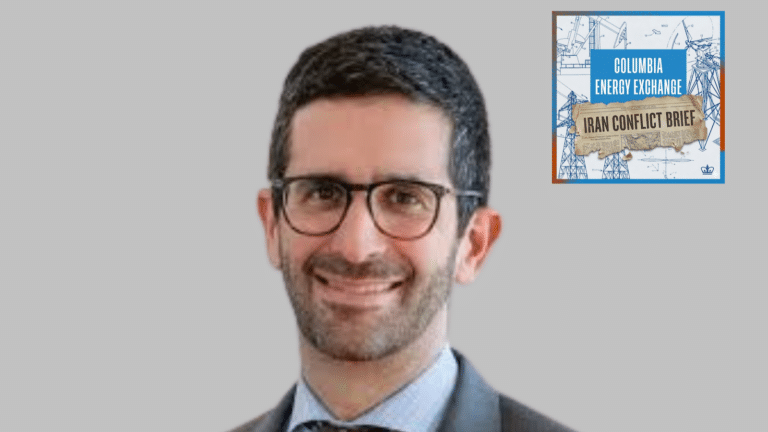
In this episode of the Iran Conflict Brief, host Daniel Sternoff speaks with Greg Sharenow about how the energy shocks are reshaping the investment landscape.
Greg leads the commodity portfolio management group at asset management firm PIMCO. He co-manages PIMCO’s Energy and Tactical Credit Opportunities strategies. Prior to joining PIMCO in 2011, he traded energy at Hess Energy Trading, Goldman Sachs, and D.E. Shaw.
As the conflict in the Middle East enters its 20th day, events on the ground have shifted into a critical new phase marked by direct strikes on core...

The climate policy landscape in the US is in flux. Last month, the Environmental Protection Agency repealed its own power to regulate greenhouse gases. Two weeks later, the...

As the US-Israeli military campaign against Iran enters its third week, the complexities of the global energy landscape are deepening by the hour. Shut-ins of Middle Eastern upstream...

In energy markets, all eyes are on the Strait of Hormuz. As of March 11, 2026, this vital passage is effectively closed to tanker traffic, stranding almost a...
Media reports suggest the Trump Administration is considering restrictions on US oil exports. Officials have said such measures are not under discussion, according to media reports, but the...
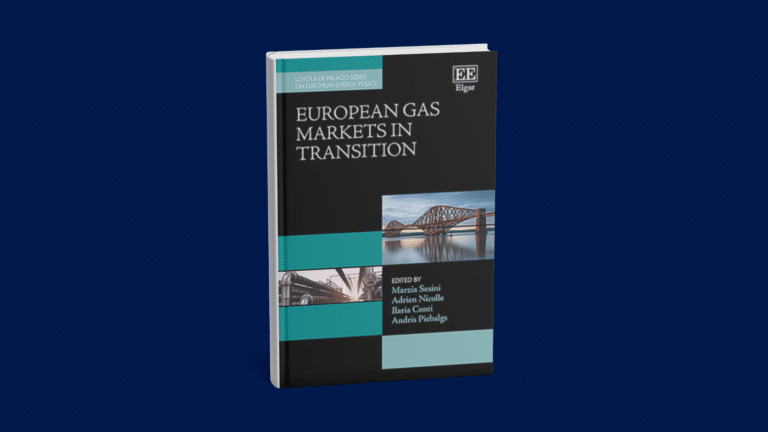
Anne-Sophie Corbeau and leading experts explore how Europe's gas sector is being reshaped by geopolitical shocks.
Iran has among the world's largest natural gas resource bases, but its ability to supply regional and global markets is constrained by sanctions, underinvestment, and limited export infrastructure.
From the east to west and north to south, in red states and blue states, attention to data centers is skyrocketing in state capitals across the United States.