Current Access Level “I” – ID Only: CUID holders, alumni, and approved guests only
Campus open to active affiliate Columbia University ID (CUID) holders and approved guests only.
Columbia students, faculty, and staff can use the guest registration portal to register up to two same-day guests. Alumni can use the portal to register for campus same-day access as well. Learn more below.
This website uses cookies as well as similar tools and technologies to understand visitors’ experiences. By continuing to use this website, you consent to Columbia University’s usage of cookies and similar technologies, in accordance with the Columbia University Website Cookie Notice.
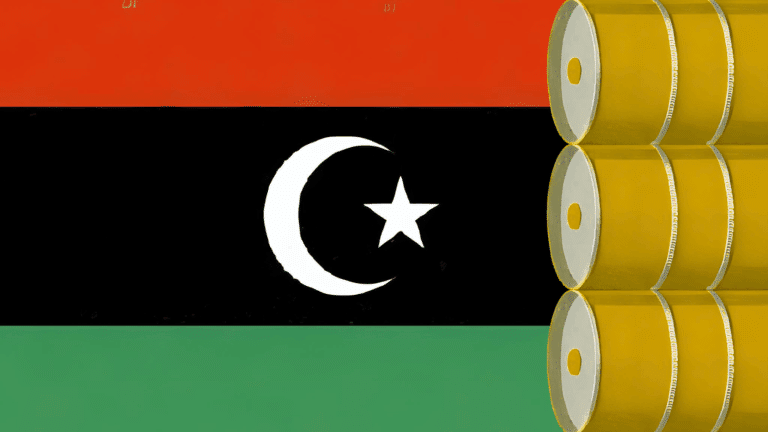
President Donald Trump said one reason that the U.S. will “run” Venezuela and “indefinitely” control its oil sales is because "years ago" Venezuela "took our oil away from us" and "stole our assets." That’s an oversimplification of what happened when Venezuela assumed greater control of its energy sector.
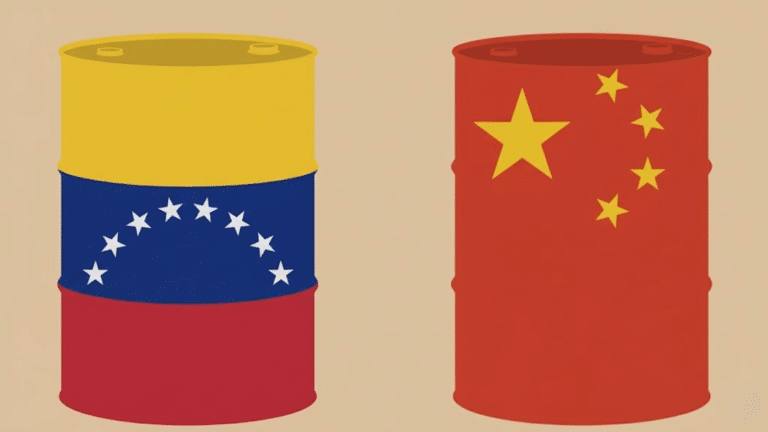
The US intervention in Venezuela may jeopardize both the flow of discounted Venezuelan oil to China's teapot refineries and the role of Chinese oil companies in Venezuela’s upstream business.
Great power competition—particularly between the United States and China—is intensifying. This rivalry is reshaping everything from technology supply chains and energy security to the future of artificial intelligence. ...
The Center on Global Energy Policy at Columbia University SIPA's Women in Energy initiative and Accenture invite you to join us for an evening of conversation and networking...
Event
• Accenture – One Manhattan West
395 9th Ave, New York
About Us
We are the premier hub and policy institution for global energy thought leadership. Energy impacts every element of our lives, and our trusted fact-based research informs the decisions that affect all of us.
The Center on Global Energy Policy at Columbia University SIPA is pleased to host a virtual webinar with experts from Kenya, India, and Brazil to discuss and better understand the landscape of PCCM regulatory frameworks across countries.
Panelists include:
Gautam Jain, Senior Research Scholar, Center on Global Energy Policy
Luisa Palacios, Adjunct Senior Research Scholar, Center on Global Energy Policy
Thiago Barral, Undersecretary for Implementation, Secretariat of Carbon Markets, Ministry of Finance, Brazil
Ressa Kombi, Climate Change Office in Charge of Carbon Markets, Kenya
Apara Sharma, Programme Lead, Carbon Markets Team, Council on Energy, Environment and Water (CEEW), India
Project-based carbon credit markets (PCCMs)—which enable the issuance, use, and trading of credits from projects that avoid, reduce, or remove greenhouse gas emissions—are emerging as a key tool for companies to meet several objectives, including emission-reduction targets, compliance obligations, investor expectations, and disclosure requirements. While PCCMs have been expanding, the pace of annual carbon credit issuance has slowed in the last couple of years due to integrity concerns.
To address this, the Integrity Council for the Voluntary Carbon Market (ICVCM) has proposed rigorous standards for the supply side, and the Voluntary Carbon Markets Integrity Initiative (VCMI) has done so for the demand side. But these standards are voluntary and, therefore, nonbinding. Establishing national regulation frameworks could provide enforceable safeguards to improve market trust by ensuring the environmental integrity of credits and help scale up the market.
For more information about the event, please contact [email protected].
Join us on February 25 for an in-depth, student-only conversation. Registration is required, and space is limited. The Center on Global Energy Policy at Columbia University SIPA’s Women...
Event
• Center on Global Energy Policy
1255 Amsterdam Ave Floor 1, New York, NY 10027
On January 1, 2026, the European Union's highly-anticipated Carbon Border Adjustment Mechanism (CBAM) will take effect. Introduced in 2023, CBAM will require the importers of certain carbon-intensive goods...
Center on Global Energy Policy (CGEP) at Columbia SIPA, the Columbia Global Center in Rio, and Insper are proud to host a high-level discussion on the future of...
Event
• R. Quatá, 300
Vila Olímpia, São Paulo
Brazil
As the Israel-Iran conflict continues to unfold, it remains unclear whether a ceasefire will hold or fighting will resume. This uncertainty carries significant implications for energy markets in the Middle East and around the world.
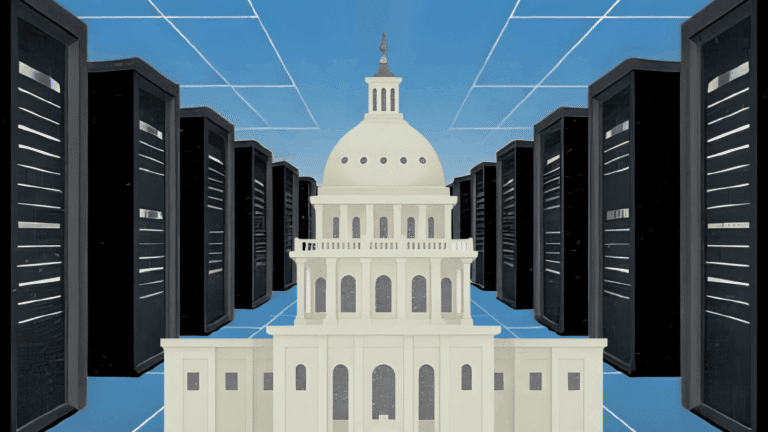
From the east to west and north to south, in red states and blue states, attention to data centers is skyrocketing in state capitals across the United States.
Economic, political, and fiscal realities have shifted energy policy priorities across the globe toward the goals of affordability and competitiveness.