This Energy Explained post represents the research and views of the author(s). It does not necessarily represent the views of the Center on Global Energy Policy. The piece may be subject to further revision.
Contributions to SIPA for the benefit of CGEP are general use gifts, which gives the Center discretion in how it allocates these funds. More information is available here. Rare cases of sponsored projects are clearly indicated.
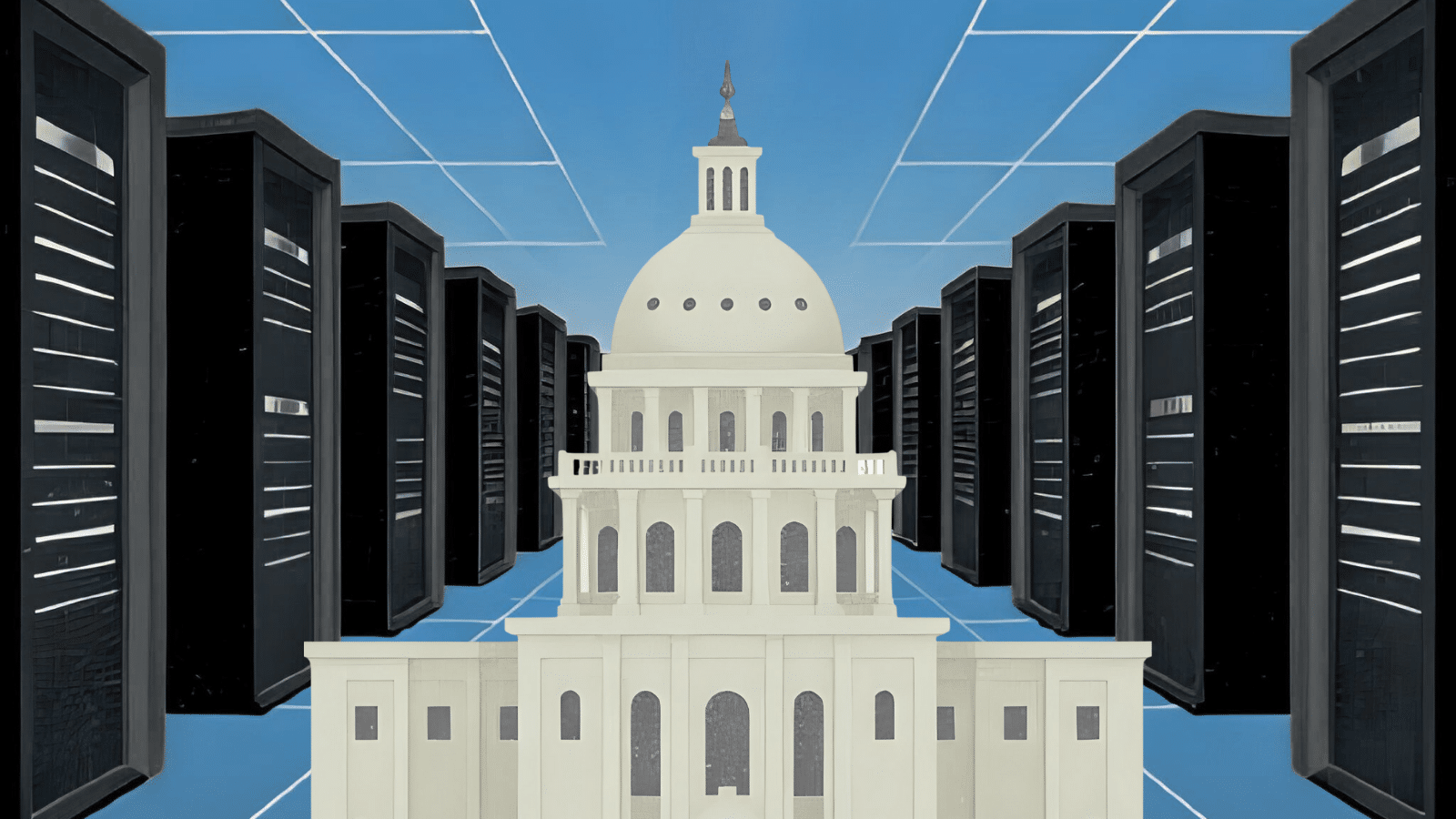
- Attention to data centers is skyrocketing in state capitals across the United States.
- In data center bills passed by state legislatures in 2025, two topics dominated: locational incentives (such as reduced sales taxes) and ratepayer protection. Many bills addressing data centers’ water use and environmental risks were proposed, but few were enacted.
- Almost all the enacted bills encouraging data centers to locate in a state were passed by Republican legislatures, and more bills addressing data centers’ environmental risks were proposed in Democratic legislatures than Republican legislatures. Concern about the impacts of data centers on power prices was bipartisan.
From east to west and north to south, in red states and blue states, attention to data centers is skyrocketing in state capitals across the United States. Our research identified more than 190 bills on data centers introduced in state legislatures in the first 11 months of 2025—roughly nine times the number of such bills introduced in 2024. The bills address a wide range of topics, including economic development, ratepayer protection, grid reliability, and disclosure of data centers’ energy use and environmental impacts. More than two dozen of these bills were enacted into law.
This newfound interest in data centers in state capitals is unlikely to abate anytime soon. The data center industry is growing at a staggering pace. A recent McKinsey report projected roughly $2.8 trillion in spending on data center infrastructure in the US by 2030. In 2024, data centers used roughly 4–5% of the electricity produced in the United States—a percentage projected to grow sharply in the years ahead. A rapid buildout of data centers and electricity infrastructure to support them offers economic and strategic benefits but also creates risks for ratepayers, water resources and the environment.
State policymakers are on the front lines of these issues. State governments promote economic development, regulate electricity rates and have jurisdiction over many local resource and environmental issues. Different stakeholders have strongly conflicting views on data centers, setting up high-profile debates in state capitals as well as in Washington, DC.
This blog post—the first entry in a project that will explore state data center policies, power prices and related topics—presents these findings.
Key Findings
We (the authors of this article) queried StateNet’s database of state legislation to identify bills proposed between January 1 and November 30, 2025 that used several terms including “data center” and “large load.” After removing bills that used those terms but addressed different issues, we categorized the remaining bills into topic areas (including tax incentives, ratepayer protection, zoning and siting, disclosure requirements, environmental protections, labor, water resources, clean energy, and research studies) as well as status (enacted, pending, rejected, and passed but vetoed). We supplemented this research with queries to ChatGPT and Gemini to help identify possible gaps in the StateNet review, double-checking links provided by those large language models to ensure the information provided was accurate.
Almost all state legislatures have now adjourned for the year. (Only six state legislatures remain in session in December.) Trends with respect to state legislative activity on data centers in the first 11 months of 2025 included the following.
1. One of the most common objectives of state bills related to data centers was to encourage those facilities to locate in a state.
- Roughly 50 bills were introduced in state legislatures offering data centers tax incentives or other benefits.
- Of the more than two dozen bills on data centers enacted by state legislatures, at least nine provided tax incentives or other inducements for siting decisions. Arkansas, Kansas, Kentucky and Minnesota, among other states, all extended or increased sales or use tax exemptions for data centers. Indiana and West Virginia, among others, established favorable zoning and fast-track permitting procedures to facilitate data center construction.
2. State legislatures are paying growing attention to the impact of data centers on power prices. Ratepayer protection and tariff rate issues were among the most popular topics for state legislation on data centers. More than 40 such bills were proposed and at least six such bills passed. Those included:
- Minnesota HF 16, which requires new large grid customers (including data centers), as a group, to cover all their grid costs;
- Texas SB 6, which requires the Texas Public Utility Commission “to support business development in this state while minimizing the potential for stranded infrastructure costs;” and
- New Jersey A5466 and California SB 57, both of which require the state PUC to study within one year the effect of data centers on electricity costs.
3. Many bills related to the environmental impacts of data centers were introduced in state legislatures, including approximately 30 bills related to water consumption. Only a few of these bills were enacted. Minnesota HF 16, for example, requires close attention to water use in permitting new data centers. Kansas SB 98 makes tax credits for data centers contingent on practices that will “conserve, reuse and replace water.”
4. Approximately 40 bills were introduced requiring data centers to disclose their energy use and/or environmental impacts to state authorities, with roughly a dozen bills requiring disclosure to the public. Details regarding metrics and anonymization of reports varied widely. At least three of these disclosure-related bills were enacted, including the following.
- Texas SB 6 requires interconnection applicants to disclose whether they are pursuing other interconnection applications in the state as well as information on onsite back-up generating facilities.
- Minnesota HF 16 requires data centers to disclose information on water consumption volumes.
- Iowa HB 976 requires data centers to submit an annual report to the Department of Revenue detailing the amount of backup power generation fuel and electricity purchased.
5. Several states passed bills limiting tax benefits for data centers. Iowa limited sales tax exemptions for new data centers to 10 or 15 years (depending on their size), and Florida raised the minimum size for data centers receiving sales tax exemptions from 15 megawatts (MW) to 100 MW.
6. Texas became the first state in the nation to pass a bill requiring data center operators to enable remote disconnections for use during grid emergencies (referred to as a “kill switch provision”).
7. There is little consistency in the legislative text of state bills on data centers.
- Definitions of data centers, thresholds for incentives, and regulations related to disclosure, zoning, siting, environmental impact mitigation and ratepayer protection vary significantly.
- This may be the expected product of variance among state-level policy regimes, and suggests the absence of close coordination among state legislatures or stakeholder groups.
8. The pattern of proposed and enacted bills displayed some partisan patterns. Almost all the enacted bills encouraging data centers to locate in a state were passed by Republican legislatures. More bills addressing environmental risks from data centers were proposed in Democratic legislatures than Republican legislatures. However bills concerning the impacts of data centers on other ratepayers were enacted in states with Democratic legislatures and governors (including California, New Jersey and Oregon), Republican legislatures and governors (including Texas and Utah) and in which the legislature is controlled by one party and the governor another (including Kansas).
Data centers will be a hot topic as many state legislatures reconvene in January. The Executive Order on state AI laws released by the White House December 11 does not seek to preempt state laws related to data centers (see in particular Section 8b), however questions related to the optimal role of state governments and the federal government on AI and data centers will likely be prominent as well.