Congress Looks to Charge Data Centers Billions in Sweeping Energy Plan
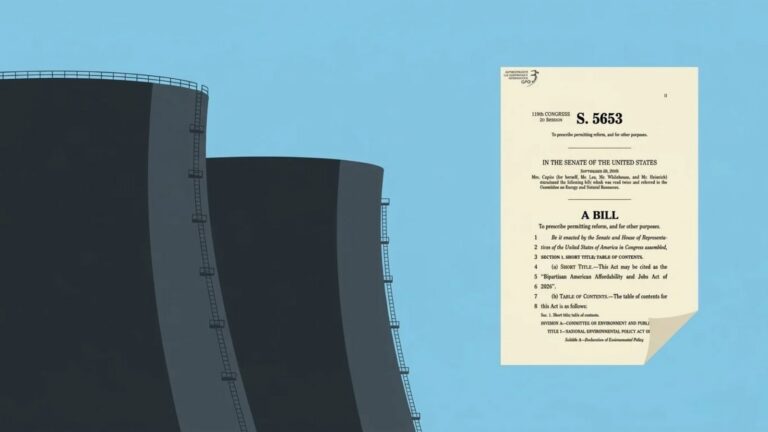
The permitting bill could make it easier to build data centers for A.I. but a novel provision would also force data centers to pay much more for power.
Get the latest as our experts share their insights on global energy policy.
The shift in the balance of political power will help determine which US policies can be funded and sustained over the next two years.
Hear in-depth conversations with the world’s top energy and climate leaders from government, business, academia, and civil society.
Affordability was one of the key issues that drove US voters to the polls last week, and the resulting message for the newly elected Congress is clear: driving...

Find out more about our upcoming and past events.
Putting data centers in space once seemed fanciful. Today, a growing number of companies have started doing so.
The Center on Global Energy Policy (CGEP) at Columbia University SIPA today released a new interactive platform that examines the potential impact of the Bipartisan American Affordability and Jobs Act of 2026 (BAAJA), and how much time could be saved in the permitting and construction of energy projects under the proposed bill. The tool can help policymakers and stakeholders better understand how much faster energy projects could be built in the US with the help of more streamlined and efficient federal permitting processes.
The platform is available here.
“Policymakers on both sides of the aisle have long sought to make it easier to build energy projects–from natural gas pipelines to wind farms–across the country, and the Senate’s new proposed permitting reform bill has captured their attention,” said Jack Andreasen Cavanaugh, Senior Research Associate at CGEP. “However, the extent to which the bill could help or hamper the transition from fossil fuels to clean energy is the source of heated debate. With permitting reform high on Congress’ energy agenda, it is our hope that this platform can be a useful resource for understanding the potential impact of the proposed legislation.”
The interactive tool uses historic data on how energy projects have advanced through the permitting process to create specific energy infrastructure archetypes. It then assesses those archetypes, as well as individual past projects, on how quickly they could move through the permitting process under BAAJA compared to the status quo. It also highlights which specific provisions in BAAJA could speed deployments and the total time saved across an archetype or past project. The tool focuses on a specific data set of federal reviews and does not capture every factor that shapes project timelines. The underlying data set will be updated in real time.
BAAJA was introduced by Senators Shelley Moore Capito, Martin Heinrich, Mike Lee, and Sheldon Whitehouse on September 30. The bill aims to meet growing calls from policymakers, industry, and government leaders across the US to streamline the permitting process for energy projects, bring projects online to provide power to the nation’s grid faster, and make the building of energy infrastructure easier nationwide.
If you have any questions about the data, methodology, or use of the tool, please email [email protected].
The permitting bill could make it easier to build data centers for A.I. but a novel provision would also force data centers to pay much more for power.
Energy Secretary Chris Wright has blamed high electricity prices in Democrat-led states on climate policies. Prices do tend to be higher in blue states than red states, but climate policies at most explain a modest portion of the price difference.
The shift in the balance of political power will help determine which US policies can be funded and sustained over the next two years.
The BAAJA bill could facilitate nuclear development by streamlining federal environmental reviews and providing greater certainty for permitted projects.