LIVE: Daily Energy Markets Podcast 2026
Enjoy the videos and music you love, upload original content, and share it all with friends, family, and the world on YouTube.
Get the latest as our experts share their insights on global energy policy.
A House committee voted to allow the Advisory Committee on Reactor Safeguards (ACRS) to decline certain application reviews.
Hear in-depth conversations with the world’s top energy and climate leaders from government, business, academia, and civil society.
Permitting reform—to allow for faster approvals on new projects—is one thing that both climate advocates and energy developers have wanted for a long time. With demand for power...

Find out more about our upcoming and past events.
Putting data centers in space once seemed fanciful. Today, a growing number of companies have started doing so.

External Publication by Akos Losz • October 15, 2018
Note: This article was initially publihsed in the 2018 World Petroleum Council Strategic Review publication. It is hosted here with full permission.
***
The rapid emergence of the United States – alongside Australia – as one of the world’s largest exporters of liquefied natural gas (LNG) between 2015 and 2020 was widely expected to create a decade-long glut in the global LNG market. However, to the surprise of most analysts, global LNG demand has proved more than a match for fast-growing LNG supplies, initially led by a collection of new and emerging LNG importers, and later by the policy-driven demand boom in China. Over the past 12 months or so, talk of a looming LNG market oversupply has given way to tightening markets and fears of a supply shortage by the early 2020s, or potentially even sooner. Given the LNG demand outlook and the three to five-year lead time of new liquefaction projects, new LNG investments are required in the near-term to avoid demand outstripping supply in the years ahead, resulting in tighter markets and higher prices.
Despite a robust demand outlook, investment in new LNG supply capacity has come to a standstill in the last couple of years, as buyers have been less willing to sign long-term off take agreements, and suppliers have thus struggled to secure project nance debt, which is still needed for the majority of new LNG projects. How this impasse will get resolved – and what role the United States will play in the next wave of LNG supply – is a key question for the future global energy system.
CHRONIQUE. Plus de gaz naturel liquéfié russe dès le 1er janvier, plus de gaz via gazoduc au 1er octobre 2027, mais l’UE est-elle prête? se demande la spécialiste de l’énergie Anne-Sophie Corbeau, qui rappelle que le gaz naturel liquéfié ne va pas disparaître des marchés mondiaux – il ira juste ailleurs…
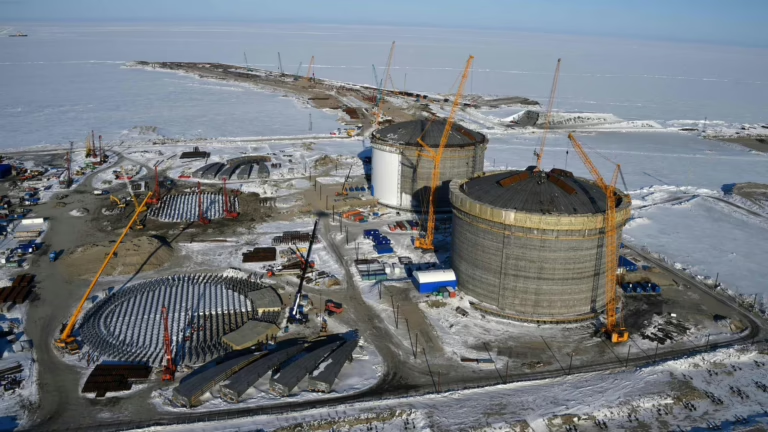
For almost seven months, energy markets have looked at LNG flows through the Strait of Hormuz in binary terms: either LNG cargoes go through, or they do not.

CHRONIQUE. Les réserves de gaz européennes affichent des taux de remplissage dangereusement faibles en ce début d’automne; que se passera-t-il si l’hiver est très froid, se demande la spécialiste de l’énergie de l’Université Columbia Anne-Sophie Corbeau

Full report
External Publication by Akos Losz • October 15, 2018