Tim Gould: As governments focus on their responses to these pressing energy security issues, they really need to take seriously the synergies and trade-offs with other policy goals, with affordability, with competitiveness, but also with climate change. Our job is not to tell people what the future is going to be, but it’s to make sure that we can have a well-structured conversation about what needs to happen and what might happen if we take certain choices.
Jason Bordoff: Rising geopolitical tensions, oil demand rising through 2050 or plateauing by the end of the decade, a wave of liquified natural gas supply coming to the global market, concentrated critical mineral supply chains, growing demand for electricity and shifting energy policies. Around the globe. And here in the United States, energy markets face huge uncertainties and those uncertainties are reflected in this year’s world energy outlook by the International Energy Agency, which explores a range of possible energy futures, particularly around oil and gas demand, as well as many other forms of energy.
So how have energy policies at the country level, growing economic warfare and rising prices impacted the IEA’s outlook? How should we understand the role of energy security and geopolitical risk. Here in the US, how have policy shifts around energy and climate impacted the energy outlook and how central to the outlook is the transition to electric mobility or the pace of energy innovation?
This is Columbia Energy Exchange, a weekly podcast from the Center on Global Energy Policy at Columbia University. I’m Jason Bordoff. Today on the show, Tim Gould.
Tim is the chief economist at the International Energy Agency. As part of this role, he co-leads the work on the world energy outlook. Tim joined the IEA in 2008 as a specialist on Russian and Caspian energy and before joining the IEA, he worked on European and Eurasian energy issues in Brussels. As he did last year, Tim joined me to talk about the IEA’s flagship annual report just days after its release. We discussed the range of risks and vulnerabilities related to global energy trends, the chances of long-term demand growth for oil and gas, and challenges related to meeting the growing demand for electricity. We also talked about energy access trends in the developing world, and we considered how new generation sources may play out in the different scenarios. I hope you enjoy our conversation.
Tim Gould, welcome to Columbia Energy Exchange again. Great to have you here and what I know is a very busy week for you and all your colleagues at the International Energy Agency after releasing the WEO. Grateful to you for making time to be with us.
Tim Gould (02:49): Well, thanks very much, Jason. It’s always a pleasure.
Jason Bordoff (02:51): So this was, as always, every year the world energy outlook is much anticipated, maybe especially so this year given things you and your colleagues had said about new scenarios that would be included. And just want to make sure everybody understands what this world energy outlook says. There’s been a lot of coverage about different parts of it, but from your standpoint, just for everyone listening, how would you characterize the main takeaways, the main insights that you think people should understand from this year’s world energy outlook?
Tim Gould (03:22): So thanks, Jason. I think the thing that strikes us about the starting point for today’s world energy outlook is just the sheer range of energy security issues that we face across different parts of the energy sector. That’s true for oil with sanctions. It’s true for gas with the continued uncertainty and reverberations of Russia’s cut to pipeline gas supply to Europe, electricity. We’ve had blackouts in Chile, we’ve had blackouts in the Iberian Peninsula, but there’s also other elements. I mean in the race for AI, it seems that now elements like transmission lines are becoming highly politicized and a matter of also economic security and of course looming in the background. There’s all these questions that you’ve discussed so well as well on supply chains, concentration, critical minerals. And so that’s one of the features of the starting point for this discussion. And into that, we put our suite of scenarios.
(04:21): I’m sure we’ll end up discussing a lot of the differences between them, but there are some common elements that are perhaps worth highlighting to start off. And one of them is just that rising role of electricity in the energy system. So a lot of times you’ll get people focusing on the fact that it’s only slightly over 20% of final consumption, but it’s the key input for economic sectors that really account for 40% of global GDP and all the ones that are in the news around tech and advanced manufacturing and digital services and so on. And a second—
Jason Bordoff (05:01): And you see rising electrification, sorry, I didn’t mean to interrupt, but you see rising electrification in all scenarios, not just ones that assume deep decarbonization.
Tim Gould (05:09): That’s really common across the board. So electricity use is rising much faster than overall energy use. Another common element is this feeling that the baton is passed from China to a larger group of emerging and developing economies when it comes to having that determining influence on global energy trends, because China’s changing, it doesn’t have the same influence on the growth in energy demand as perhaps it did over the last 10, 15 years. And instead it’s really India, Southeast Asia, perhaps the Middle East, Latin America that are driving some of those global trends forward. Third, a common element in all our scenarios is that renewables do well. And one of the reasons for that is that by and large, the countries that are the focus for energy demand growth are also ones where the solar resource is very good. So there’s a good fit between the energy demand trends and also the availability of a high quality solar resource. And indeed the availability of the technology—solar panels are cheap and widely available. So that’s one of the reasons why renewables in general, but solar in particular does quite well in our outlook.
Jason Bordoff (06:27): And so I’m really glad you started with energy security and geopolitical risks both to traditional oil and gas and to emerging technologies, critical minerals, the power grid. Obviously, as you know, that’s something I’ve thought about, written about for quite a while, so I want to talk about that and what the other trends are. Given that it made headlines in places like the Financial Times and Bloomberg and elsewhere, I just wanted to make sure our listeners understood as a starting point, the return of the so-called current policy scenario. So you have these different scenarios. The way I’ve always thought about them, but maybe I misunderstood, is there’s scenarios. What would it look like in a world where we achieve net zero by 2050? I don’t think anyone thinks that’s the path we are currently on track for, but it’s helpful to understand what that would look like. And then there was a reference case, a baseline that said, here’s the closest approximation to where the world may be headed today. That may be the wrong way to think about something like the stated policy scenario, but now you have two, current policy and stated policy. Just help people understand the difference between the two and how should we think about the best outlook today for where the world is currently headed on current trends?
Tim Gould (07:39): So thanks for that, Jason. And indeed, you need to distinguish clearly between scenarios that are designed to hit specific outcomes like the net zero emissions by 2050 scenario and ones that set up a series of starting conditions and then see where they lead. And indeed the current policy scenario and the stated policy scenario are two of those exploratory scenarios. The key difference between them is that in the current policy scenario, it’s much more of a static view, a snapshot of legislation that’s in place today already affecting the energy sector. And we also feel that in that kind of setup, there are more barriers to bringing new technologies into the system. So it is one where the pace of change by design is less rapid than in the stated policy scenario where we take a slightly broader and more dynamic, shall we say, view about the policy settings we take into account—not just what’s in place already, but the things that governments say they intend to achieve. And when we talk about things like that, we don’t mean long-term aspirational goals.
Jason Bordoff (08:52): You don’t mean we promise to be net zero by 2050 and it’s just a target or a goal.
Tim Gould (08:57): Exactly. There has to be a detailed sectoral policy that’s in the process of going through the legislative or regulatory process. We would also take into account things like power sector development plans, which are common in emerging and developing economies, which give a sense of where the governments or where the authorities feel that they see their power sector developing. And that gives us orientation for the future in a way that we wouldn’t take into account in the CPS.
Jason Bordoff (09:28): Is there one or two concrete examples you can give listeners just so they can form their own judgment? I mean people will maybe disagree about what kind of assumptions are reasonable or not in a dynamic policy environment, but as you said, it’s not just people promising to be net zero by 2050. What’s an example of a concrete thing that is in current policy and how it’s different in STEPS when people think about policy differences?
Tim Gould (09:54): Well, I mean I saw your article in Foreign Policy and you cited one there, which I’m just going to repeat now. It’s an example of a fuel efficiency standard which has a certain rate of improvement to a defined date. I think you mentioned Japan to 2030. In the CPS that is achieved and then it kind of flatlines after 2030. In the stated policy scenario, we would assume that it’s replaced by an initiative of similar intensity. So you’d see continued progress along that line beyond the stated end date of the policy. That’s the sort of difference that you’d have between those two approaches.
Jason Bordoff (10:36): And when you made the comment about you assume that there are more barriers or slower uptake of new technology, are there differences in when people think SMRs might have a breakthrough or is it smaller more piecemeal things about permitting reform and the ability to build infrastructure and things like that?
Tim Gould (10:56): So I think it’s more the latter. An issue that we mentioned quite a lot in the outlook is how successfully do governments grapple with, say, grid integration challenges for renewables? So what’s the assumed level of curtailment of new solar coming into the system? How cost effectively do we use some of those new resources that come in? And by and large in the CPS, we would take a slightly more downbeat view of how successfully governments grapple with that and we take a slightly more upbeat view in the STEPS. So that’s another way to differentiate the sorts of outcomes that we get.
Jason Bordoff (11:32): And so just so I think people at this point probably will have seen some of those articles. So in that more static view, current policy, because in your previous outlooks the last couple of years, or at least last year, you had demand for all fossil fuels peaking by the end of this decade. I think that is still the case, at least for oil and coal by 2030 in the stated policy scenario. And in current policy, oil demand keeps rising to 113 million barrels a day from around a hundred today by 2050. And as you know, there have been people who’ve been critical that the IEA has been over optimistic about the outlook for transitioning away from fossil fuels. How should people see those two scenarios and how should they understand where the world is headed today?
Tim Gould (12:16): Well, I think it’s useful to dig in to understand the reason why we get those different outcomes. So if you take the oil demand outlook that you’ve just mentioned, we have that flattening in the stated policy scenario around 102 million barrels a day at the end of this decade, but continued growth in the CPS all the way through to 2050. Now there’s a number of reasons for that. I mean, we just talked about fuel efficiency policies. There’s also differing views on how successful we are at collecting and recycling plastics, which affects then the demand for oil products as a petrochemical feedstock. But the really key differentiating factor is in road transport and about how widely you start to see electric mobility picking up. There are important countries that go ahead down that electrified route no matter which scenario we’re talking about. And China’s clearly the one that everyone is focused on.
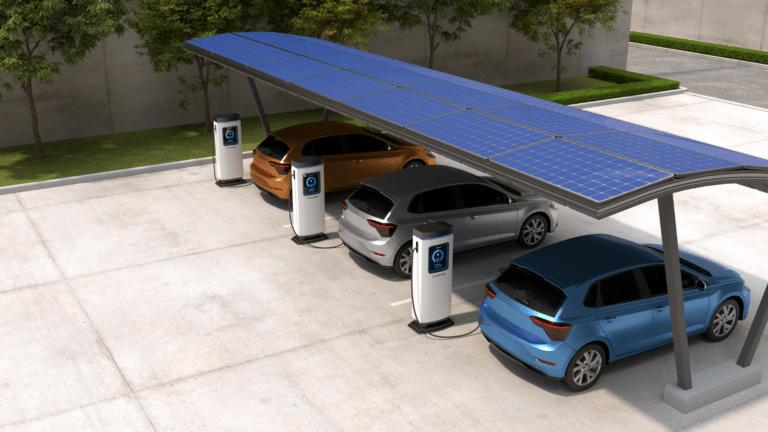
(13:15): So 50% of new car sales in China today are electric. That’s over 90% by 2035 in all of our scenarios. And it’s important to have in mind in relation to China, that it’s not just about cars, it’s all modes of road transport. And there’s some really remarkable numbers coming out of China now on the road freight side where sales in the first half of this year were 25% of heavy freight sales were electric and another 20% were LNG fueled trucks. So that’s a really big change from where we were. So there’s important things happening in China and in the CPS, they’re followed down that electrified route by Europe, but elsewhere there are some barriers that prevent electricity being the fuel of choice for mobility. And they could be barriers like the absence of recharging infrastructure, which means then that sales in the CPS are confined only to that relatively well off segment of populations where they have the option to charge at home, but they don’t become a mass adoption technology. Whereas in the stated policy scenario, we take a slightly more expansive view about how rapidly those technologies are introduced to the system, not just in the established markets, but also in many of the emerging and developing economies where you are already starting to see some pickup in sales in places like Vietnam, Ethiopia, and some other countries.
Jason Bordoff (14:55): But in the current policy scenario where oil demand keeps rising outside of China and the European Union, the uptake of electric vehicles you’re saying is pretty flat. And so people will make different judgments about what they believe the outlook to be. But if you think penetration of EVs into the transport sector is going to grow outside of those regions, the US, Southeast Asia, that would take you to a place that looks more like stated policies and a gradual plateau and maybe gradual decline after that as reflected in stated policies. Is that what I’m hearing you say?
Tim Gould (15:31): Yeah, exactly. And in a sense we’re delegating that choice to the reader, but it’s very important to understand not just the headline numbers, but really what are the things that differentiate the scenarios and then people can take a view as to which one they think better coincides with the world that they see, the world that they anticipate.
Jason Bordoff (15:51): Can I ask what you see? I don’t know if that’s a fair question, but when you look at the US rolling back some clean energy policies, pushback with concerns of energy security and affordability, when one looks at what’s happening in the world today, does it seem closer to one of those two scenarios to you?
Tim Gould (16:10): Jason, I’m going to give a very safe answer here because I mean in the end, from where I’m sitting right now, I can see the benefits of having multiple scenarios because I think it allows for—I was very impressed with the conversation you had recently with John Arnold, the importance of a data-driven conversation about energy. And I think the scenarios that we produce allow for that. And I think that’s the service that we’re trying to provide to the energy debate.
Jason Bordoff (16:40): And as you said, one of the key drivers there will be geopolitics, energy security and how countries respond to that. Can you talk a little bit more about how that plays out in ways that would affect the outlook for energy? The executive summary of the world energy outlook talks quite a bit about how geopolitics is front and center and help people understand in a granular way what that means. Does the BP outlook, for example, talk a lot about how if countries try to reduce dependence on China and have much more domestic manufacturing, it’s very cost inflationary and that could slow down the pace of adoption of clean energy? Is that one example? And what are other examples of how this rise of geopolitics affects the scenarios?
Tim Gould (17:27): So I think when you’re looking at choices through that energy security lens, you tend to prize sources that you attach a high reliability to. And in many cases those would be domestically produced sources. But of course there are trade-offs there because one of the other things that’s very visible when you look at the energy system today is that there is ample manufacturing capacity for a lot of technologies that is available, that could be available on the basis of imports. That’s true for batteries, it’s true for solar panels. There’s plenty of oil in the market today as well. And within a few years there’s going to be this extraordinary influx of supplies of LNG onto international markets. So there’s a tension there between that energy security mindset, shall we say, and the fact that we don’t see, at least for the next few years, the prospect of much tighter supplies for some key parts of the energy system.
(18:32): I was very interested to listen to your discussion with Meghan O’Sullivan on this podcast a few weeks ago. And I think Meghan made the point that where you see what you’ve talked about as the weaponization of energy, you need to see market concentration and you need to see tight supplies. Well, at least for the next few years though, that tightness on the supply side is not particularly visible for some of the key parts of the system. It is though becoming visible for critical minerals. I think copper is a good example of that where you have seen inflationary pressures on copper prices and of course you’ve had the geopolitical concerns over resilience of those supplies as well with the export controls that are being applied not just to the critical minerals themselves, but also to batteries and battery related technologies from China.
Jason Bordoff (19:32): I appreciate very much the comments on previous conversations with Meghan and John Arnold. So I’m honored to know you’re a listener to the podcast and great to have you on. So can I just ask, given what you just said, concentration in supply people perceive as a risk. It runs the risk as Meghan and I wrote recently in Foreign Affairs of that weaponization. And then after Russia invaded Ukraine and cut off most gas supply to Europe, there were several messages from the IEA about how less dependence on imported oil and gas would not just be good for the energy transition but would help with energy security as well. And people tried to in many ways pick up on that message that moving away from hydrocarbons is good in many respects. But what I hear you saying now is if you leave climate aside for the moment, and of course we shouldn’t, but if you’re focused on energy security and geopolitics, I think I hear you saying we have a loose oil market for many countries in the world.
(20:32): Like the United States, large oil and gas producers, they want to reduce imports. Well, we’re not import dependent on a net basis anymore. A lot of countries in the world like Indonesia have abundant coal resources. And you’re saying that inputs to clean energy like minerals are where the tightness is. So if you were thinking through a lens of energy security, that seems like the opposite message that I heard after Russia and Ukraine for many quarters. It sounds like that’s a headwind, not a tailwind, to the idea of moving faster to clean energy. I’m wondering if you agree with that characterization.
Tim Gould (21:07): I think it maps out very differently depending on where you are in the world, and I think you really need to dig into domestic level perceptions of security in order to understand how that translates into preferences for different fuels and technologies. Certainly when it comes to the European Union, there was a visible and measurable impact of the security crisis after Russia’s invasion of Ukraine on deployment trends in the European Union. Prior to Russia’s invasion of Ukraine, there was roughly 20 gigawatts of new renewable deployment each year in the European Union. Since then, it’s been closer to 60 gigawatts. There was clearly a huge impetus given to deployment in part because of what I said at the start that energy security had been elevated to a higher level of national economic security and that enabled governments to really prioritize and push through some changes that allowed for that pickup in deployment levels.
(22:10): Now that might not look the same in other parts of the world. And indeed perceptions of the risk associated with reliance on Chinese produced technology imports, they vary widely across different jurisdictions. The example of Pakistan comes up a lot, but clearly there’s a massive influx, not government driven. It’s really business to business driven of solar panels, increasingly batteries as well. That’s having a really strong impact on the nature of that energy system. So I think it really is context specific as to how some of these energy security priorities work their way through into energy strategies.
Jason Bordoff (22:55): I made the comment earlier about the BP outlook that our mutual friend Spencer Dale and his team put together, and the observation in there that energy costs go up quite a bit in a scenario with greater geopolitical risk because people want to use domestic resources, manufacture clean energy products at home, maybe produce their own oil and gas if they can. I’m wondering if you agree with that and does that focus on energy security become a headwind for a faster transition or does this sort of play out equally across the board? The oil and gas is more expensive because you want to produce it at home rather than import it and the solar panels and the batteries also become more expensive.
Tim Gould (23:35): I’ll repeat something that Fatih, our executive director said at the end of our launch press conference the other day where he said, as governments focus on their responses to these pressing energy security issues, they really need to take seriously the synergies and trade-offs with other policy goals, with affordability, with competitiveness, but also with climate change. That is obviously an important consideration because if you get that balance wrong, you are going to be facing higher costs and you may be overinvesting in security to some degree. And that’s always the discussion that I know you have with policymakers and we certainly have with policymakers about what is the right balance to strike between those different legitimate policy goals. That’s essential to that energy policy discussion.
Jason Bordoff (24:29): Yeah, so I mean that’s a good reminder that I had said earlier for the moment, let’s focus on energy security but not lose sight of climate. And of course negotiators have gathered in Brazil to discuss where we are in the energy transition and emissions are still rising and emissions from fossil fuels will reach a record level this year. So not where we need to be to deal with the threat of climate change. So a lot of focus on the two scenarios, the new scenario you added and the stated policy scenario, but talk about the net zero scenario. Was there anything different this year in what was found and how should people understand how to look at that scenario in the context of where the world is today relative to these climate goals?
Tim Gould (25:11): So it’s a normative scenario, so it maps out a way to achieve something specific, but every year we come back to that modeling exercise and we start from a more difficult position. We start from higher emissions. We start from the fact that while some deployment trends for solar, for batteries, for EVs are looking promising from the perspective of that net zero future, I mean there are others that are lagging far behind. So low emissions hydrogen hasn’t picked up anything nearly as quickly as it would do in that scenario. You’d say the same for some other technologies like carbon capture utilization and storage. And the other thing that we are very aware of is that 2030 is around the corner, especially for large industrial scale projects. If you’re going to have it available in 2030, you’d already be able to see it now. So we always have to reassess the pathway that gets us to that normative goal.
(26:09): And one of the conclusions that we reached this year is that a pathway to net zero emissions by 2050 that achieves what they call low or no overshoot of the 1.5 degree goal, that is no longer possible, that has slipped out of reach. So essentially by the 2030s, early 2030s, all of our scenarios are exceeding 1.5 degrees of warming on a regular basis. They only start to diverge a bit later on and you only then get back to 1.5 in the long term through a very rapid transformation of the energy system. But you also need CO2 removal technologies at scale in the second half of the century to get us back down below that 1.5 degree mark. So there’s a different feel to the scenario this year because of those changes, it’s no longer that low overshoot scenario.
Jason Bordoff (27:11): And can you clarify something that I believe has not been well understood, but maybe I don’t get it right. So tell me the way to understand the finding from the original net zero report and these net zero scenarios is that in a world that was on track for net zero by 2050 and 1.5 degrees of warming, which is not maybe achievable now, new investment in oil and gas would not be needed. That’s not the same causality as saying if we stop investing in oil and gas, we achieve these goals. Is that correct?
Tim Gould (27:43): That’s absolutely correct, yes. So a necessary condition for achieving the goals of the net zero emissions by 2050 scenario, you have to have a massive scaling up of investment in a range of low emissions technologies and infrastructure in countries around the world. And that of course has implications for demand for the fossil fuels such that in that scenario, the demand for those fuels can be met by continued investment in existing fields. But in aggregate, you wouldn’t need new conventional long lead time fields.
Jason Bordoff (28:22): And just before the world energy outlook came out, the IEA also put out a report on decline rates and how much investment is needed in the oil and gas sector. I think in both of the, I would call them reference case scenarios, I’m not sure that’s the right word, that current policy and stated policy, it’s $600 billion, almost $700 billion, just enormous amounts of annual investment. And even in the net zero scenario, which we’re not on track for, still hundreds of billions, I forget the exact number. Is that correct?
Tim Gould (28:50): That’s right. And I’m glad you brought up that decline rate study. I think it’s very important for people to understand that the reason why companies invest in oil and gas production is not to meet that additional, I don’t know, 500,000 barrels a day of oil demand or a hundred BCM of gas. It’s to replace the stuff that’s gone missing from their existing fields. So if we look back over the last 10 years, on average something like $550 billion worth of upstream investment each year, 90% of that has just been to keep production flat. Only 10% was dedicated to meet those increases in demand. And we sometimes get lost in relatively small differences between different demand outlooks when we discuss investment, when the bulk of that is aimed at doing something quite different.
Jason Bordoff (29:49): So even in a scenario where oil demand flatlines, and again, that’s not consistent with our climate goals, but in that scenario oil demand flatlines, you’re still talking about around a half a trillion dollars of annual investment a year in the sector just to stay where we are.
Tim Gould (30:01): That’s right.
Jason Bordoff (30:02): Talk a little bit about what is happening in clean energy investment now and in costs. As you said, renewables in all scenarios, renewables are the fastest growing form of energy, maybe not growing fast enough to displace growth in hydrocarbons in some scenarios, but what do you see happening to the costs for solar, for wind, and maybe we’ll get to some other forms of zero carbon energy as well. Where do you see the growth, how policy dependent is that?
Tim Gould (30:30): When it comes to solar costs, we’re actually at a very interesting moment because there is this ample capacity in the solar manufacturing sector. A lot of the solar manufacturers, even the ones in China are losing money. So there is a sense that maybe at today’s levels, the cost of the panels themselves is really below where it should be in a balanced market. So you could even imagine that at least for the panels and some components, you might see some uptick in solar costs over the coming years as that kind of balances itself out. But the dominant trajectory is still one of cost reduction for that technology and for others. It’s not going to be as steep as we’ve seen in the past. But that is very much the trend that we identify in our scenarios. And let’s have in mind also that when you think about the influence of the panels themselves on the overall cost of a solar project, I mean that’s typically well under a third of the total cost. So even if you have, I don’t know, a 10, 20% increase in the cost of those panels, it still doesn’t affect hugely the overall competitiveness of that product.
Jason Bordoff (31:50): And this is all supportive of the, come back to the policy point, how big a difference is there in, I don’t know, say the two scenarios or if you have, when you see something like the Trump administration pull back significant parts of the Inflation Reduction Act, how big an impact do those kinds of policy shifts have on the outlook for renewables?
Tim Gould (32:07): So it certainly has an impact and we have, if you look at the 2035 numbers for the US, so we only have year on year comparisons for the stated policy scenario, but there’s something like 30% less renewables deployed in the US in 2035 in this year’s stated policy scenario than there was in last year’s. And that’s a really strong indication of the influence of that change of policy. And you see a similar picture for EV penetration with the withdrawal of the incentives behind EV purchases.
Jason Bordoff (32:41): Can I ask you, this is not just for the US but in general because I think people hear two different things sometimes and want to make sure they know how to reconcile them. One is renewables are the cheapest form of energy, and then the second is there’s a big difference in how quickly they’re deployed, whether government subsidizes them or not. And you hear the question sometimes, well, why should that be the case if it’s the cheapest form of energy, why do the subsidies matter so much? How would you answer that?
Tim Gould (33:05): So I think the US is a particular case because natural gas in particular is extremely competitive since the US is the world’s largest natural gas producer. And it has been the case that the investment tax credit and the production tax credit have also been a big part of the way that wind and solar projects in particular have entered the system, somewhat counterbalancing that are the renewable portfolio standards and other measures that are taken at state level. So it remains a bit of an open question about how those two state and federal level policy elements play out over the longer term, but it remains the case—policies matter, they matter for how new sources, new technologies enter the system. But I think increasingly we are seeing that they matter in how cost-effectively they’re integrated, how holistic is the approach from countries to getting these new technologies into a system that functions well, that uses them well and that doesn’t create new issues due to their variability.
Jason Bordoff (34:18): You mentioned natural gas in the US and the outlook also talks quite a bit about the extraordinary amount of liquified natural gas export capacity coming into the global market, notably from the United States. Explain for listeners how big the difference is in the outlook for gas demand between the two main scenarios and is there enough demand to absorb all of that LNG that’s coming?
Tim Gould (34:44): So I’ll just focus on the stated policies for a second because there again, you have year on year comparison. So we have an extra 350 billion cubic meters worth of annual gas demand in 2035 in that stated policy scenario this year compared with last. Some of that has to do with policy changes in the United States and to a degree in other countries. A lot of it has to do with the fact that the amount of new LNG that’s coming to market, it does exert some downward pressure on prices and it makes that gas a more attractive proposition, not just for established importers like the European Union and China, but also for some growing markets like India, Southeast Asia and elsewhere. Now the amount of new gas coming to market is simply extraordinary. I mean just this year we’ve had additional final investment decisions that are almost equivalent to a hundred billion cubic meters worth of new annual exports.
(35:45): Now that’s a huge amount. That’s Japan’s annual imports just right there for projects that have taken final investment decision this year. We don’t in the STEPS find a home for all of that. So there’s about 65 BCM of the 300 BCM of new capacity that in 2030 remains surplus. And that could play out in different ways. The way it plays out in the current policy scenario is that transitions are slower and that gas is needed to back up the gaps that emerge because renewables are not being deployed as fast and efficiency improvements are not making as much ground as they are in the STEPS. But another possibility is that you could see more coal to gas switching in the big markets in Asia. There’s an awful lot of coal being used, but by and large, you need to be bringing a very competitive product to those markets in order to displace coal. So the sorts of prices that would really result in additional coal to gas switching are in the $5/$6 per MBTU range for gas delivered to those markets. That’s a really tough price for LNG exporters to match.
Jason Bordoff (37:10): Yeah, so it sounds like you see particularly in that more dynamic scenario, potentially a risk for US LNG to run at lower capacity factors. And I guess the question is how the market deals with that and also do you see a risk of the combined growth in US power demand for gas with the rise of data centers and the rise of LNG, Is that going to have an impact on natural gas prices in the US? And as you know, energy affordability is a growing concern in the US as well as elsewhere.
Tim Gould (37:40): So yes, in the CPS, that combination of increased domestic use and significant share of demand from the LNG export industry, that does mean that domestic prices edge higher. You’re around four and a half dollars per MBTU by the early 2030s. I mean today prices are reasonably elevated, but I mean that’s above where they’ve been for the last few years. So yeah, there is a sense that in a world where the US is using more gas, but the world is using more US gas as well, that could exert some upward pressure on the domestic price.
Jason Bordoff (38:24): On the electrification. And as you said, in all scenarios, electricity use is rising faster than energy use. Can you just talk a little bit more about the geopolitics and the energy security risks that people should understand? We talked about critical minerals, that’s an input to clean energy and batteries of course, but I recall, I don’t know if it was in this outlook or a previous one, a phrase that caught my attention from the IEA, that flexibility is the new watchword of energy security. And I was wondering if you could talk a little bit about what you meant by that and what it means for a world that has both increasing geopolitical risk and increasing electrification.
Tim Gould (39:00): You’ve got electricity demand rising and rising quite fast and even rising in some markets that are not used to having electricity demand increases. And I would count among them most of the advanced economies and you’ve got increased variability both on the supply side with the influx of solar and wind, but also on the demand side with big increase in cooling demand for example, which tends to come at certain times in the day. And if there’s a heat wave, then you’d have a big increase in that peak demand. Managing the contours of that changing electricity system, especially with new decentralized sources of power as well, is a complex task. And it worries us that while we’ve seen investment in all sorts of new sources of generation move ahead at speed over the last 10 years, the increases in grid related spending have been much more modest.
(40:00): So we’ve had a 60% increase in generation spending over the last 10 years, but less than half of that for grids. And that imbalance is something that gives us cause for concern, both because of the implications for affordability. You may not be using your new sources cost effectively, but ultimately it does create some electricity security risks. So one of our messages is there is a real imperative to speed up the investment in the kit—in grids, in smart grids, in storage, in demand side response. But we also emphasize in this outlook the importance of dispatchable power because that is a hugely important flexibility resource, especially for countries and regions that have large seasonal variability in their electricity demands. And Europe is a case in point there.
Jason Bordoff (40:57): So we need 24/7 power to help manage a grid reliably. We don’t need, I think you would agree, we don’t need all of the power to be 24/7. There is a role for even intermittent sources of energy like solar and wind. I’m asking because you’ve obviously heard some political leaders talk about the need for secure and reliable energy and exclude renewables from that. And I don’t think that’s what you mean. I think you’re saying this is a problem that we have the capability, the technology to manage a grid with higher penetration of renewables. You just have to make sure you do it and get it right and you’re going to need 24/7 power as well to help with that. Is that right?
Tim Gould (41:34): Yeah, that’s exactly right. If you look back to, I don’t know, the early two thousands and you look back at what TSOs and electricity experts were saying about their perceived limits to the amount of variable generation you could have in the mix, they were in the 10 to 20% range often, but now in many markets we are at least double that and some well beyond that up to more than half wind and solar. So we’ve clearly learned a lot over the last 10, 15 years about how to manage the electricity system with those different kinds of inputs and how to manage it well. But that remains a big task for the future.
Jason Bordoff (42:24): We mentioned earlier issues of affordability and how much higher those issues are on the energy agenda. In advanced economies certainly, the affordability and access to energy has been pretty high on the agenda for lower income countries for a long time. I thought it was interesting, tell me if I got this right. In the scenario where oil demand keeps growing through 2050, household energy bills and total energy system costs are higher than in the one where that’s not the case.
Tim Gould (42:53): I think that’s simply a matter of economics. I mean you have higher demand, it means you’re producing resources higher up the cost curve that tends to result in higher costs, higher prices. It isn’t an automatic thing because you can have cost reductions in different parts of the system, but that’s the essential reason why that turns out to be the case in our scenarios. The other really important differentiating factor between the scenarios in terms of affordability is the shift from what you might call an OPEX system—one where you’re reliant on recurring fuel costs—to one that’s much more dominated by upfront CapEx. So in the net zero emissions by 2050 scenario, you have to mobilize a much larger volume of investment, annual investment. So from today’s something like 3.3 trillion in annual spending on the energy sector in the NZE scenario that goes up to close to five trillion over the next 10 years. But if you can mobilize that, then you get a system that’s much less reliant on recurring fuel expenditure because you have got a lot of resources in there that are quite cheap and cost effective to run.
Jason Bordoff (44:10): And as I said, leaders are gathered this week in Brazil to talk about how to make faster progress on climate change. So I just want to make sure people listening understand the consequences of these scenarios. We’re talking about, as you said, the possibility of achieving 1.5 degrees seems vanishingly remote if at all. The current policy scenario and the stated policy scenario, where do each of those take us for emissions and temperature rise?
Tim Gould (44:35): So the current policy scenario essentially sees annual emissions remaining around today’s levels. So last year around 38 gigatons of energy related CO2 emissions, and that pretty much flatlines out to mid-century in the current policy scenario. Now interestingly, those 38 gigatons in 2050, that’s 10 gigatons less than when we last modeled the CPS in 2019. So that speaks to some of the changes in the meantime, but let’s not pretend that’s a good outcome from a global climate perspective because it’s associated with a temperature increase of very close to three degrees Celsius by 2100. We’ve talked about the differences between CPS and STEPS. They’re also reflected in the CO2 trajectory which peaks and then comes down gradually to below 30 gigatons by 2050 and that shaves half a degree off the anticipated temperature outcome. So from three to 2.5. And then of course you have the net zero emissions by 2050 scenario, which does what it says on the tin and gets you back after an overshoot to that 1.5 mark.
Jason Bordoff (45:59): So the world is headed to something like two and a half to three degrees Celsius of warming today absent significant policy technology, or other shifts.
Tim Gould (46:08): That’s right. Yeah.
Jason Bordoff (46:09): There’s another scenario I don’t want to ignore, which is universal energy access and if you could talk a little bit about how we should understand the importance of that, what it means for a continent like Africa, where are we today in trying to deliver clean cooking and electricity to people and not just electricity access for basic needs like charging a cell phone, but how to understand how much energy it takes to really deliver meaningful prosperity, industrialization and mechanizing agriculture and other things to emerging and lower income countries.
Tim Gould (46:46): Right now you have around 750 million people around the world with no access to electricity and something above 2 billion continue to rely on traditional biomass as a cooking fuel with all that that implies for the time lost collecting firewood or the health impacts of having all that smoky indoor environment. And this is a longstanding priority for the IEA. And what we’ve done with this new scenario is looked at what are the best examples of country level progress towards solving that problem, towards providing that energy access and then trying to map across those experiences to the countries where access remains a huge challenge. And so it’s a new pathway which achieves universal electricity access in 2035 and access to clean cooking fuels in 2040. So that’s beyond the horizon of the SDG target for 2030, which is important to have in mind, but it provides something that we can also use to give hope and give guidance to countries that are seeking to move down that road by saying, look, this has been achieved elsewhere.
(48:07): So this can be orientation then for your own policies. And there’s a lot of new policies, there’s a lot of new impetus in place in different countries around the world. The access challenge is increasingly concentrated in Sub-Saharan Africa. And so that’s a big focus also for our engagement on this issue. A couple of years ago we had a big clean cooking summit together with the president of Tanzania, the head of the African Development Bank and the Prime Minister of Norway hosting that in Paris. And so we are very committed to trying to get these policies, these messages, this financing through for some of the changes.
Jason Bordoff (48:46): Looking not scenario by scenario, but kind of year on year across scenarios. I’m curious, when you look at other emerging technologies, geothermal, nuclear, hydrogen, what trends do you see? Where are the biggest differences in cost or reasons to be optimistic? Is there much greater growth in some of these technologies than would’ve been the case just a couple of years ago? And how do you see some of those emerging technologies playing out?
Tim Gould (49:13): So we are fairly upbeat about the prospects for some of these new important technologies. Advanced geothermal is a good case in point. There’s a lot of momentum behind those technologies because of the way that you can use some of the insights that you’ve gained from the shale revolution to access deeper sources of heat through geothermal. And there’s some really interesting new business models. Likewise for nuclear technologies, a lot of excitement, a lot of new projects coming through not just on the standard reactor size, but also for the small modular reactors. There’s something like 70 gigawatts of new nuclear capacity under construction at the moment, and that’s one of the highest levels we’ve seen for 30 years now. That will take time to come through. But I think when you look at the way that the tech companies and others in the US are looking for that 24/7 power, but also trying to hit their sustainability goals, you can see that there are interesting examples of how that is being harnessed to underpin the more rapid development of some of these new technologies and bring them into the system. There are others where the situation has been, continues to be dynamic, but it’s a long way short of where many people thought we would be a few years ago. And I think low emissions hydrogen is a reasonable example of that.
Jason Bordoff (50:45): This must be the rare discussion with the IEA where we’ve spoken for almost an hour and really barely talked about artificial intelligence and data centers. And I was wondering if you could talk about how that has impacted the outlook. We talked about rising electrification, although I think that electrification is driven by many factors and data centers may not even be the most important one, but how do you see the impact of this AI revolution on the energy outlook and how is that changing the outlook versus prior years?
Tim Gould (51:12): It’s an important additional source of electricity demand and it’s particularly important in the United States where in our view the electricity demand from data centers could be around half of the new electricity demand between now and the end of the decade. So really important there. It’s important in parts of Europe, it’s important in parts of China, but those three markets, at least based on what we can see at the moment, that’s more than 80% of the new data center facilities are located in those three. So big in certain countries for important reasons. And we well understand the political importance of that race for AI or the economic importance as well. But the implications for energy consumption are likely to be largely felt in those markets. There’s some big open questions also about what happens on the reverse channel. So how big an influence is AI going to be on the operation of the energy sector? And there are already some interesting examples of how it helps bring together all the different elements of a more electrified system, how it’s helping bring new technologies into the market more quickly as well. So those are all elements that we’re looking out for.
Jason Bordoff (52:30): You mentioned earlier the other outlook from our friends at BP and one of the findings there was recent lackluster gains in energy efficiency relative to years in the past. And I was wondering what the world energy outlook shows about energy efficiency and what your thoughts are on recent poor performance in that regard.
Tim Gould (52:49): It’s a really interesting puzzle that was raised by the BP outlook on why we have seen this slowdown in efficiency improvements in recent years. And you are measuring efficiency improvements by the amount of energy you need for an incremental unit of GDP. So one of the reasons that we found was that about two thirds of global final energy demand growth over the last few years has been concentrated in industry. So that’s a sector where intensity progress has slowed sharply. There’s a policy element to this, some policies have been lagging behind. We haven’t really implemented some of those best in class technology requirements in important areas. There’s also a question of air conditioners, so the increased access to air conditioners pushed up cooling demand, pushed up electricity demand, but people are not always enabled or encouraged to buy the more efficient units. And then when you have that additional electricity demand, that’s often meant that you are relying more on some of your older plants, some of your least efficient plants, and often some of your more polluting plants. And that’s meant that those are some of the things that have dragged efficiency down. How it looks in the future, we do see a bit of a pickup, but I think some of us recall that in COP 28 there was this target to double the rate of efficiency improvement to 4% improvement per year. In the STEPS we’re still stuck at around two.
Jason Bordoff (54:26): And as I mentioned before, AI is an important driver of electricity demand growth, but as you said, maybe in some places like the United States, but globally, you still have things like air conditioning and industrial activity that are larger, much larger in some cases than growth in data centers, right?
Tim Gould (54:42): So data centers, AI, if you look at it from a global perspective, that’s less than 10% of near term electricity demand growth. Longer term it’s really a lot less certain, but we can keep it in perspective at least for the next few years.
Jason Bordoff (55:00): We’ve covered a lot of ground and I’m grateful for how generous you’ve been with your time given how busy a week you have had. Are there important findings or insights you wanted to bring up that I’ve failed to ask you about?
Tim Gould (55:10): You’ve been as ever, very comprehensive, Jason. I feel like I’ve been through the ringer talking to you for the last hour, but it’s always a pleasure to have the chance to explain a little bit what we’ve done. There’s plenty more in the book if people want to dig in, but I feel like we’ve given it a good airing.
Jason Bordoff (55:29): We’ve covered a lot of ground. Can I just quickly ask you finally, people are so used to saying the IEA projects, the IEA projects oil demand will be this by this year or will peak by the end of the decade and plateau. How would you recommend folks like myself characterize the IEA’s projection for oil demand? In a way that is, what I’m hearing you say is the best we can do now is to say the IEA projects in a world where technology is a little slower and policy is a little more static, it’ll be this, or in another world it’ll be this. Is that the best we can do or is there a simpler way to understand how to characterize what the IEA thinks is going to happen given these two scenarios now? I hope that’s not an unfair question.
Tim Gould (56:16): No, but I think I’m going to come back to—you characterized it quite well. I think in your Foreign Policy piece, it depends on how you view the process of global change. Is there going to be that push to bring new technologies into the system? How strong are they going to be? If you believe that to be the case, then you are oriented more on this outcome. If you believe that we’re in a different world now where we prize different attributes of our energy system, then we could end up significantly higher. Our job is not to tell people what the future is going to be, but it’s to make sure that we can have a well-structured conversation about what needs to happen and what might happen if we take certain choices.
Jason Bordoff (57:00): Yeah. Well I guess as I said in my Foreign Policy column, my view is that history would suggest a very static view of the energy system may not prove quite correct. And yeah, that could cut in both directions. Policies being weakened in some places now, but the possibility for things to unfold more quickly with technological progress or policy or social mobilization around issues like the energy transition, we probably shouldn’t underestimate on a multi-decade period, even if the next few years look a certain way.
Tim Gould, thank you so much for making time to be with us. Thanks to you and Laura and the whole team for the extraordinary amount of work you put into these scenarios and the analysis, which is so helpful to all of us to use to do our work and to understand where the world is headed. Really appreciate your explaining it to us.
Tim Gould (57:42): Well, Jason, we get an awful lot out of listening to and talking to you and your colleagues at the Center, so I very much appreciate the chance to come on and talk through the World Energy Outlook today.
Jason Bordoff (57:57): Thank you again, Tim Gould, and thanks to all of you for listening to this week’s episode of Columbia Energy Exchange. The show is brought to you by the Center on Global Energy Policy at Columbia University. The show is hosted by me, Jason Bordoff and by Bill Loveless.
Mary Catherine O’Connor, Caroline Pitman and Kyu Lee produced the show. Gregory Vilfranc engineered the show. For more information about the podcast or the Center on Global Energy Policy, please visit us online at energypolicy.columbia.edu or follow us on social media @ColumbiaUEnergy. And please, if you feel inclined, give us a rating on Apple, Spotify, or wherever you get your podcasts. It really helps us out.
Thanks again for listening. We’ll see you next week.