Israel-Iran Energy War Disrupts Global LNG Supply for Years
Qatars LNG Facility Damage Forces 3-5 Year Repair, Contract Cancellations Attacks on Ras Laffan disrupt global supply, triggering force majeure on con
Current Access Level “I” – ID Only: CUID holders, alumni, and approved guests only
Get the latest as our experts share their insights on global energy policy.
On February 28, the US and Israel launched new attacks on Iran targeting primarily the country's leadership, security forces, and missile program.
Hear in-depth conversations with the world’s top energy and climate leaders from government, business, academia, and civil society.
As the conflict in the Middle East enters its 20th day, events on the ground have shifted into a critical new phase marked by direct strikes on core...
Find out more about our upcoming and past events.
This roundtable is open only to currently enrolled Columbia University students. To register, you must sign in with your UNI. The Center on Global Energy Policy (CGEP) at...

Richard Nephew:
The longer this goes on, the much higher likelihood it is that a car gets attacked by the United States or by Israel, and that Iran in turn attacks far more oil and gas infrastructure in Gulf Arab states.
Karen Young:
I think the Trump administration has not decided what it means to finish the job and what would be acceptable as an exit strategy.
Jason Bordoff:
This past Saturday, on February 28th, the United States and Israel launched a campaign against Iran targeting military infrastructure and the regime’s core leadership, supreme leader Ayatollah Ali Khomeini, and several senior officials died in the attacks which triggered a leadership crisis and inflamed tensions across the Middle East. In the immediate aftermath, Iran launched extensive barrages of drone and ballistic missiles aimed at Israel, US military bases, and other targets in neighboring Gulf states. This regional shift carries immediate and enduring consequences for global geopolitics, and of course for the stability of international energy flows. The outcome of the conflict and the ultimate fate of the Iranian regime remains deeply uncertain. Even with these open questions, the trajectory of this escalation will likely redefine the future of Middle East security, global power dynamics, and have long lasting impacts potentially on the world’s energy markets. So how is this conflict evolving and how might it end?
We’ve seen energy prices soar already, both oil and gas. What lies in store for the outlook for energy prices? What are the impacts on Gulf states and what are some of the possible paths forward? And how is all of this impacting oil and gas markets across the globe? This is Columbia Energy Exchange, a podcast from the Center on Global Energy Policy at Columbia University. I’m Jason Bordoff today on the show, and in response to the conflict in the Middle East and the escalating energy crisis, I’m really pleased to be able to talk with four of the Center on Global Energy policies, leading experts in this area, and SoFi Corbeau, Richard Nephew, Daniel Sternoff, and Karen Young. Anne-Sophie is one of the leading experts on global gas markets. Richard is an Iran and sanctions expert Daniel’s, the leading expert on global oil markets and geopolitics of OPEC and the Gulf Oil producing states. Karen is a longtime scholar on the Middle East focusing on geopolitics and the political economy of Gulf States.
We talked about the early impacts of the attacks and the reverberations on energy markets and infrastructure, and we discussed how this might play out politically and economically in the coming weeks. I hope you enjoy our conversation.
Daniel Sternoff, Karen Young and Sophie Corbet, Richard Nephew, the whole cast of characters, the whole gang. We have half the Center on Global Energy Policy with us today, given the scale and magnitude and importance of the last few days, events for the world, for geopolitics, and certainly for energy, which is probably what we’re going to focus on in this podcast. So thanks to all of you for making time to join us. I know you’ve been spending a lot of time over the weekend and today trying to track what’s happening, trying to explain it to the world.
So let’s jump into that right now. People, of course, will have at this point read no end of stories, listened to no end of podcasts explaining the broad situation, the attack on Iran from the United States and Israel, and how uncertain things are as they play out. But since we have already seen energy impacts, which at least in the first 24 or 48 hours we’re uncertain until markets opened, maybe we can start there and then we’ll come to the broader conflict and what might lie ahead. Also, of course, relevant to energy. Daniel, lemme start with you. I guess we saw oil prices jump around $10 to around 80, maybe come off slightly since then. So talk about what has happened to the price of oil, what actual physical disruption we have seen and what risk factors are driving that oil price higher.
Daniel Sternoff (03:58):
Thanks, Jason. Yeah, so we jumped about $10 a barrel on the open today and cumulatively Brent is up about $20 a barrel since Iranian protests began to intensify in January. And President Trump first threatened intervention, we traded about 82 at the peak and now we’ve pulled back to about 78, 77. You could argue that facing the big one of kinetic war across all major producers and disruptions in the Strait of Hormuz to be trading at only $80 a barrel is quite amazing. But nonetheless, here we are.
Jason Bordoff (04:38):
Just say another word about that. I have been really struck by that. If you were to have gone back a couple of years and said, what’s the mother of all disastrous scenarios for the global oil market? It would be the Strait of Hormuz. It would be bombs falling on Iran and in the Persian Gulf and oil is in the seventies. This is historically not a super high oil price.
Daniel Sternoff (04:57):
A hundred percent. Don’t forget, we had a five handle on WTI at the start of this year, and we came into a year with projections for historic oversupply in the oil market. I think many of the projections from the IEA or the EIA and others about how big that surplus is are off the mark. But nonetheless, you’ve had a market with people expecting it to be two to three and a half million barrels per day worth of oversupplied and building significant inventories and coming in at probably the most comfortable time of the year if you had to have a big contingency given where we are as far as crude demand from refineries starting to wind down going into the spring maintenance period. So there has been a buffer in an oversupplied market. So obviously that helps explain some of the absence of a forecast, and most people have been trading crude oil, have been looking for opportunities to get short on this fundamental oversupply situation. So that has created… arguably it’s created room for President Trump to be as assertive as he has been geopolitically in Venezuela and in Iran because the oil price has been moderate and supplies have been adequate. And so that gives us a little bit of cushion going into this crisis.
Jason Bordoff (06:21):
And can you say a little more about other sources of cushion? You talked about how the market was already projecting oversupply this year, supply exceeding demand by a not insubstantial amount of spare capacity in OPEC. They announced a production increase, a small production increase yesterday, the strategic petroleum reserve and strategic stocks elsewhere. How do you think about how much of a buffer the system has right now?
Daniel Sternoff (06:46):
So there’s definite buffers from a number of different sources. I wouldn’t put too much weight on OPEC kind of their spare capacity is irrelevant if they can’t get it to market. So if we have disruptions in Hormuz, raising production in the Middle East isn’t going to help. I mean, OPEC spare capacity is located in the Middle East, not in Middleland, Texas. So it’s hard to deploy at this point in time. But there are buffers. I mean, one of the reasons why oil markets have had some cushion, there’s been a big buildup of oil on water in recent months. A lot of that has been Russian crude. Some of it has been Iran. That is, as we’ve seen, tightening sanctions that are affecting the shadow fleet or the sanctions on Rosneft and Lukoil. So we actually have significant volumes of those barrels that are currently on tankers floating around, and those could be absorbed.
(07:47):
So Indian refiners, for example, who’ve been staying away from taking Russian crude could easily go back to taking that. So there are some buffers and there’s maybe 30 million barrels of Iranian crude that’s floating offshore Asia that Chinese private refiners could absorb. So we have kind of significant amounts of oil on water. And then China built up strategic inventories last year by a huge amount. Obviously the estimates are all over the map, but something like 400 million barrels worth of increase in Chinese strategic inventories last year are some estimates, and which is an amount last year that rivals kind of what exists in the US SPR. So obviously there are those inventories that are there and heading into this, the Saudis, the Emiratis, everyone could see the buildup that is coming and the potential for kinetic action. And so you actually had some preemptive filling of inventories by Saudi Arabia. They keep inventories close to the market in Okinawa and in Egypt, it looks like there may have been more production that was pushed out by both the UE and Saudi, maybe half a million or a little more barrels per day over the last month. So all of which gives a little bit of cushion, at least as prompt availability if we are looking at extended disruptions.
Jason Bordoff (09:14):
So let me stay with oil for another minute or two and appreciate your colleagues patience and we’ll come to various other topics as we keep moving forward. But what actual physical disruptions have we’ve seen in oil markets, damage to facilities? And then talk a little bit about the Strait of Hormuz, which most listeners will know is critically important to roughly 20% of world supply as a precaution, lots of tankers and ships not moving through and perhaps not being insured to do so. How long can that persist before you really start to see outsized impacts on the market and potentially, does that even trigger shut-ins in the region if they can’t access the water?
Daniel Sternoff (09:56):
Yeah, all excellent questions. Obviously the Strait of Hormuz is irreplaceable and indispensable to the flow of crude oil and oil products to the world market. It’s about roughly 20 million barrels per day, 15 million barrels per day worth of crude and about 5 million barrels per day worth of oil products. A significant amount of LNG, which and Sophia will talk to shortly and call it a fifth of world oil supplies. And there aren’t enough buffers and inventories to deal with a really lasting disruption. So obviously what matters here is the duration of disruption and whether there’s damage to production and export facilities. And right now what we’ve mostly been seeing are disruption in flows as opposed to significant infrastructure damage. So not very much is transiting Hormuz right now. I mean, insurers have canceled insurance and there have been at least confirmed four or five tankers have been shot at or hit, and captains are staying away and tankers that are transiting have turned off their transponder.
(11:13):
So it’s hard to see what’s actually flowing right now, but there clearly have been significant disruptions. If that’s a few days a week, 10 days, but there’s no damage to infrastructure, then we’ll draw down some inventories and then we’d have production catching up to replenish those inventories and it would be manageable. But something that goes for a significant amount of time, we’ll start to deplete global inventories really, really quickly. So a couple weeks fine, but beyond there, it will be really problematic to the question of infrastructure damage. I mean, today we obviously started to see what appears to be Iranian targeting of energy infrastructure. This is both in Qatar, which has caused this shutdown of all LNG production. We have seen the Ras Tanura refinery in Saudi took some kind of a hit, whether this was a deliberate drone strike or a missile fragment isn’t entirely clear.
(12:19):
Some reports of a power plant in Kuwait, there’s enough pieces of energy infrastructure that seem to be taking things falling from the sky that suggest that this is deliberate and that might be part of an Iranian attempt to quickly escalate in the hopes that that can deescalate by leveraging fear of Gulf countries or energy prices to try to bring a more rapid conclusion. But obviously that’s crossing a big red line. And if this were to escalate and you’d hit really important pieces of infrastructure, like the Abqaiq oil processing facility in Saudi that is 5% of global oil supplies get processed and exported there, or Iran has a lot to lose too. It’s [unclear] a platform could lose it. Its lifeline to be able to sell about a million and a half barrels per day. And so if we start to see it escalate to those major platforms, then we’d be looking at much longer duration of fundamental impacts as far as what it would mean for oil flows.
Jason Bordoff (13:28):
So far. Not physical infrastructure disruption, but disruption in transit mostly as a precaution. And so that’s the way to think about it. And maybe that’s why we haven’t seen an outsized price impact yet. People are hoping we’re able to move past this and those oil flows continue to.
Daniel Sternoff (13:47):
Yep, that is right. And just if this goes on for too long, I think Iraq doesn’t really have the storage capacity and might be forced into production shut ins if they don’t have an outlet there among the more vulnerable Saudi and the UAE have some capacity to reroute volumes around Horus. It is maybe a quarter of the volumes in total that transit Hormuz can get rerouted between Saudi capacity to export from the Red Sea and the UAE capacity to move things through Fujairah. But Fujairah is within range of Iranian flying objects, and if the Houthis were to get involved in the Red Sea, then that also puts some limitations on Saudi using exports into the Red Sea. So those are not perfect.
Jason Bordoff (14:38):
So I’m going to come and SoFi to you in a second, but I’m just curious, Karen and Richard, why we haven’t seen that yet. Iran was exporting 1.3, 1.4 million barrels a day. That production capability is still there and the US and Israel have not targeted it. And in its defense, Iran has not targeted oil infrastructure elsewhere, maybe beyond perhaps the refinery in Saudi Arabia that was hit directly or indirectly. Do you have a sense of, what’s your guess on the calculation there? Maybe Karen and then Richard?
Karen Young (15:13):
Yeah, thanks Jason. I do think we are now entering into the energy infrastructure part of the war. So I think it is the attack on [unclear] whether that was just to debris falling on the utility there, the power and water of utility, but also at the refinery at Ras Tanura, we are escalating quickly and particularly in the immediacy of the attacks that happened on Saturday. Going to civilian infrastructure across the G CC to every GCC state makes me quite worried that it’s next. So yes, I mean you would think their logic would be, and they have said if we can’t export, nobody else can. So they would want to preserve, but they’re also threatening traffic. And traffic has basically slowed to a halt out of Hormuz. And so I think it’s very likely.
Jason Bordoff (16:25):
Richard do you have the same sense?
Richard Nephew (16:27):
Yeah, basically. So there’s a couple of things. I mean, one, I completely agree with Karen. We’ve crossed the threshold here right now that we have energy infrastructure is being targeted by the Iranians, at least in some way. It’s not surprising to me that the Iranians would try and do that. Part of what they think their leverage is is international pushback on the United States and potentially direct pushback on the president of the United States by trying to increase energy prices, especially going into midterm election year, et cetera, et cetera, et cetera. So there are lots of reasons why the Iranians might want to put at least some amount of pressure on it, but candidly, if they wanted to, they could be doing a lot more. So I still see the Iranians at this point in a signaling sort of phase with respect to energy infrastructure, but not yet going all the way to the kinds of damage they could potentially do now for the United States and for Israel, they know that if they were to open up on Kharg, the response from the Iranians then potentially could be very temperate. And ultimately that’s more pressure on them than it is on the Iranians, especially if the Iranians are convinced that they’re under regime threat that they actually have to respond to. So to my mind,
Jason Bordoff (17:37):
Kharg being the Iranian production facility?
Richard Nephew (17:42):
Yeah, to my mind, it’s not a surprise that the United States is resisted doing that at this point, especially if the objectives for the operation remain focused on Iran’s ability to project power outside of its territory regime changes is in the air, but not necessarily the core US objective. Maybe we’ll come back to that, but I think from that standpoint, the US perspective might be that that’s not a target that they would prioritize at this moment, but that doesn’t mean that the Iranians don’t have incentive to try and put some pressure there. Ultimately though, this comes back to how long this conflict is going to go on, and I think all of us have to assume that the longer this goes on, the much higher likelihood it is that Kharg is attacked by the United States or by Israel, and that Iran in turn attacks far more oil and gas infrastructure in Gulf Arab states and potentially going through,
Karen Young (18:33):
Or maybe first just to interject softer like water desalination that I would see that as the next ramp up. And then oil and gas facilities
Jason Bordoff (18:45):
And that’s quite significant. I mean to hit the water desalination plants in that region would be major, major impact on countries like Saudi Arabia.
Karen Young (18:55):
But if you’re willing to hit airports, civilian targets, ports and power facilities, it’s the obvious next.
Richard Nephew (19:07):
Yeah, I mean just to weigh in on that point, again, coming back to where the Iranian psychology is on this, I mean the supreme leader was killed and killed in very early hours. The Iranians have said they want to retaliate and tend to retaliate, but also they’re experiencing regime-threatening attacks coming from the United States and Israel, if you look at some of the footage of where bombing strikes have landed in Iran, their sense is that the regime is already under attack for its civilian infrastructure as well. From an Iranian perspective, if they see this as a life or death struggle, it makes sense from their perspective to try and scare everyone out of continuing the fight. And from that standpoint, that’s part of the reason why they’re looking at those kinds of infrastructure projects that otherwise would not have been targeted in a purely military to military conflict
Jason Bordoff (19:59):
Unless they’re hoping for a way to deescalate, find a way out. Trump has floated the idea of restarting nuclear negotiations. So I mean, the question is whether you feel like the regime’s about to fall and you’re a cornered cat and you will lash out in any way you can or avoid the things that’ll drive that sort of retaliation and make it harder. I guess that’s part of the calculation.
Richard Nephew (20:21):
Yeah, and look, I think the Iranian perspective at this point is given what the United States and Israel have done, they think that there is still intention to collapse the regime around them. And so from that standpoint, I think they believe that all things are on the table in terms of their responses, in terms of pushback. Now whether or not they would enter into nuclear negotiations and whether or not there’s a ceasefire that’s possible and all that, those things are still potentially on the table. But it’s worth pointing out that when Ali Larijani who is effectively running huge parts of the Iranian government at this point, was asked about nuclear negotiations, he said they’re not on the table. And I don’t think that there is an intention of doing that anytime soon. I will say I think that there may have been an overestimation from us and Israeli authorities that killing the supreme leader would somehow lead the Iranian government to rapidly collapse or to come forward with some sort of deal like happened in the case of Venezuela. If so, that is a massive misunderstanding of Iran Iran’s governance structures and the way in which Iran has been operating for decades now. And so it may be that what we’re also seeing is a regime trained strategy that has encountered reality and upon counter reality, they are now changing what their objectives are to prioritize instead of military targets inside of Iran.
Jason Bordoff (21:43):
So an SoFi, when we talk about the strait of Horus and conflict in the Gulf, the kind of immediate inclination is for people to discuss oil prices and US consumers will probably see gasoline prices go up. The US is sort of blessed with a lot of cheap natural gas that are somewhat insulated from these global events, but the rest of the world is not. And we saw what a 10% jump in the oil price, but roughly twice that in the European spot gas price. So talk a little bit about what the region, Iran, the Strait of Hormuz means for natural gas and what kind of impacts we could see and where those will play out regionally.
Anne-Sophie Corbeau (22:27):
So first of all, I mean the most important source of description is interruption of the LNG flows through the straight of four moves. I mean, this is about 20% of global LNG trade, global LNG trade last year was about 590 billion cubic meters and 110 BCM are flowing through the Strait of Hormuz. So this is the first one. So a little bit more minor interruption has been the fact that two guests and —
Jason Bordoff (22:53):
Most of that, sorry, sorry to interrupt. Most of that LNG is Qatar. That’s correct?
Anne-Sophie Corbeau (22:56):
Most of the LNG is coming from Qatar, the rest is coming from the United Arabia, but this is a relatively small facility. The second source of disruption is the fact that Israel has also shut down two gas fields which were exporting to Egypt and Jordan. So this represents about a 10th of the disruption in terms of LNG flows for the straight or four. So this is adding to the volumes and this is impacting. So these two countries, Egypt and Jordan, and the third potential impact is not taking place yet. This is the potential interruption of pipeline exports from Iran to Turkey, which is about eight BCM on an annual basis. So roughly we could be looking at an impact of 130 billion cubic meters per year to the global gas market. This is very, very significant. This is all the more significant that the gas market is still very tight.
(23:53):
Last week, gas prices in Europe, were at about 30 euro and this is still 50% higher than the pre-crisis level like 2015, 2019. So we are still in a crisis mode. Why? Because we have not completely replaced the missing gas pipeline volumes from Russia, which were reduced and therefore we are still in a very tight market despite the LNG additions and despite the fact that we have seen growing volumes of Russian pipeline gas to China. So this is a starting point. The second unfortunate starting point is that well, we are at the beginning of March and that means that the storage is almost empty. And in particular in Europe it’s actually even more empty than usual. I mean we are just below 30% filling rates. That’s about 10, 15% lower than usual. And even before the crisis started, people were already wondering about, okay, how low are we going to go?
(24:54):
How are we going to refill the storage? So we are in a very complicated situation. Now, where is this LNG going? Well, most of it is actually going to Asia. Biggest importer of LNG from the Gulf is China followed by India. But markets such as Pakistan, Bangladesh, Japan, Korea, Taiwan, they’re all impacted. And then Europe is impacted as well because even though Europe is importing a relatively small share of roughly about 10% and 15% of these flows going for the straight of our moves, well we have spot prices. So spot prices are reflecting the global supply on demand balance and spot prices have increased. I have to say that the increase that we have seen so far, so when the market opened this morning, we moved from about 30 euros per megawatt hour to 38 euro per megawatt hour. And then when there was the announcement of the attack on the cater real NG facilities, when prices surge to about 48, now we have came down, we are at about 33 44 Europe and megawatt hour.
(26:03):
But when you compare oil and gas, this looks like, oh, this is very substantial. When I look back at what happened in 2022, this is not such a big deal. And especially, I mean we don’t have any alternative source of gas because LNG facilities, they are used at capacity and they have been used at capacity because what I mean we have been in the crisis mode since 2022. So there is no interest to run them at a slightly lower rate. So the only alternative source of gas in the coming weeks and months is the fact that we are still increasing capacity from the facilities which have started last year. So Canada, LNG, [unclear] LNG, Corpus Christi LNG, Senegal and [unclear]. So this is increasing a little bit the LNG supply, but that’s it. We don’t have any alternative sources of supply. So all the answer is going to have to come from the demand side, either switching or demand reduction or demand destruction. And the bad thing is that in 2022, we could switch to oil, but this time there is no oil to switch to or there are no refined products to switch to. So you are not going to be able to increase oil fire generation in Asia or replace gas by refined products in the industry sector. You can’t. So in terms of switching, most of the answer is likely to be coal and then demand reduction or demand destruction,
Jason Bordoff (27:35):
That’s a story in Europe and Asia or you’re kind of painting a Europe story in what you just described.
Anne-Sophie Corbeau (27:41):
No, this is a demand everywhere for all the importing regions. So I am talking about Asia, I am talking about Europe as well. I mean countries in Asia, countries like Japan, Korea, et cetera. I mean their only source of gas is LNG. And suddenly a country like Taiwan, well 30% of their LNG supply is gone. So what are they going to do? I mean certainly they are going to be scrambling to get access to maybe the missing LNG cargo, but otherwise they will be looking at whether they can actually increase coal fire generation. So I do expect that if – and this is a big if – if this crisis, this disruption is lasting more than a few days, we are going to see a ramp up in terms of coal fire generation, but also massive measures in terms of demand. This is what you should see
Jason Bordoff (28:37):
And your point that there’s no slack in the LNG market because all the production capacity is being sold, is being utilized. But I mean that was the story in 2022. Also, the question was, would supply get pulled into Europe at a price pull supply away from Asia? So is that same dynamic going to play out this time or you’re saying there’s no
Anne-Sophie Corbeau (29:04):
In 2022, we were replacing pipeline gas by LNG this time. You have to imagine that your pool of LNG has been shrinking from 590 BCM to 480 BBC M. So there is more competition between everybody around Asian countries, European countries for that remaining pot of LNG. So this is what is going to drive prices to very high levels. And again, I insist, I mean 40 something euro per megawatt hour is unfortunately peanuts. If this crisis is lasting more than a couple of weeks, I mean this is really very small compared to what we saw in 2022. I mean in 2022, we were above 100 euro per megawatt hour during almost the entire year. And we even went to 400, no, sorry, 340 euro per megawatt hour, which is equivalent to roughly roughly $580 per barrel. So we are not going to see such a price on the old side where it is I hope. But on the gas side, prices can go very high, very rapidly.
Jason Bordoff (30:17):
And there’ll be, you mentioned a couple of countries that might be affected for more local disruptions like Turkey, Egypt, Jordan. But for the global market, this is really a story of one country Qatar and whether there’s physical damage to their ability to produce and obviously to the Strait of Hormuz and whether the tankers can transit, that’s the risk, right?
Anne-Sophie Corbeau (30:38):
Yeah. Well the first one is the fact that there is no more LNG especially coming from Qatar going through the Strait of Hormuz. The second thing, and this is what we saw today, is a potential risk to the LNG infrastructure in Qatar. What you have to understand is that when you are looking at Google map and you are looking at Affan, everything is on the same site. Everything, all the Equifact trains. So I mean honestly, this is kind of the ideal target. This has always been my nightmare that somebody would target. I remember when I was working for the I a back more than 10 years ago, I presented that as a case study to the IEA governing board. Well, I can tell you that some Asian buyers were a little bit paid when they realized how dependent they were on Qatar. But this is the same story.
(31:25):
I mean if the facilities are damaged and are going to be closed for an extended period of time, this is going to have a huge impact on the global LNG market. I mean, we are going to, it’s potentially even bigger than what we saw with Russia years ago. And it would depend on how fast these facilities can come back because with Russia one thing was clear, we knew that there was no coming back to the previous levels. With the current situation, we do hope that we can go back to the previous situation as fast as possible. This is a key difference. Well, one of the key differences
Jason Bordoff (32:02):
And very little unlike oil, which Daniel described so well, very little slack in the system, no major alternative sources of supply. The alternative source is a different fuel I guess, and fuel switching to coal as you said, and not an ability, maybe Daniel you could speak to this too. If the Strait of Hormuz were disrupted, there is an ability to reroute at least some of that oil not by water, but by pipeline and get around the strait. That doesn’t exist I don’t think, for natural gas, but maybe Daniel, you could describe what’s possible with oil, how much can be rerouted and then, Anne-Sophie, I don’t think that exists for gas.
Anne-Sophie Corbeau (32:40):
That doesn’t exist for gas, I can confirm that.
Daniel Sternoff (32:44):
And with oil, it’s limited. You can reroute about 5 million barrels per day between Saudi and the UAE, between the Saudi East to west pipeline. And they have been converting an NGL pipeline for crude. And the Emirates have a pipeline that bypasses Hormuz that goes out to Fuji. So on the crude side, if call it 15 million barrels per day transit Hormuz, you could maybe have about a third of that rerouted. That still leaves you quite a lot that would be disrupted. And of the remaining, let’s put oil products aside for a moment. Of the remaining 10 million barrels per day of crude oil, that would still be dependent on Hormuz. About half of that is going to China specifically. China may have diversified its suppliers between Saudi, Iraq, Iran, UAE, and Kuwait. But at the end of the day, it all goes through that same choke point. So having distributed its supplies among various producers doesn’t help if the main outlet is blocked.
Jason Bordoff (33:59):
All the scenarios you’re all talking about, which are quite concerning to say the least. It depends on the duration of this conflict and then the steps in escalation. So maybe Richard, you and then I’ll come to you, Karen, and sort of talk a little bit about obviously a huge amount of uncertainty, but what we know at this point with the supreme leader being killed with changes in the government, Trump has said four weeks, five weeks, maybe we should start talking again. Is there any way to think about what comes next?
Richard Nephew (34:33):
Yeah, this is part of the reason why this crisis is just different from the other ones that we’ve had thus far. And it’s worth just pointing out that the contingency plan that Daniel was just speaking to is actually dependent on that pipeline continuing to be functional. And if the Iranians are unaccepting of that, because it is their desire to actually put pressure on China, to put pressure on countries outside of the region, put pressure on the region, they have the tools potentially still to try and interrupt those sorts of contingency backup plan flows as well. And so this really does come down to two things. One, what’s the intent of the Iranians at this point, and two, what the capability is. The intent thus far is to retaliate against all those that they think has contributed to the US operation against Iran in particular to the death of the supreme leader and to effectively render any gains that the United States might have taken from this moot.
(35:35):
That’s their goal. And so all of that adds up to still a pretty full throated, retaliatory offensive. They are not at this point signaling at all a disinterest from continuing to retaliate. In fact, if you look at what’s been going on with the IRGC and Hezbollah and Lebanon, they’re instead looking to try and expand the conflict into other zones as well and to create more threats for countries like Israel. So that’s on the intent side. On the capability side, this is where we might have more positive news because obviously the US Air Force, US Navy, the IDF all are aware of these factors as well. And they know that pressure being put on the United States and to a lesser extent Israel from China and other places could be meaningful and could lead the president to try and suspend operations before the job is done depending on what your view is of those objectives.
(36:23):
And so I think from that standpoint, the airstrikes that have been targeting Iranian missile sites as well as drone production sites and drone launching sites may have an impact on Iran’s ability to engage in those retaliatory activities against energy infrastructure on the western side of the Gulf. But this is the problem. We are now literally in a race between whether or not the United States and the Israelis can identify and eliminate those threats before the Iranians decide to use them and whether or not there’s enough missile defense, interceptors and other defensive capabilities to try and deal with those missiles and drones as they’re incoming. To some extent that’s a math problem. To some extent it’s an intelligence problem, but it absolutely is also a resolve problem and whether or not the US is willing to stay in this fight as long as the Iranians are.
Jason Bordoff (37:11):
Karen, can you build on what Richard said and then in particular bring the perspective of how you think the other Gulf countries in the region are going to respond, engage? It seems like maybe the part of the Iranian thinking was putting pressure on them to get the US to back off. Is that likely to be effective? Are they going to be looking to deescalate right now and how does that affect the energy dynamics in the region?
Karen Young (37:36):
Well, I think Richard is exactly right in this sort of time problem in terms of the defensive capabilities of the Gulf States, much of this equipment that they buy from the United States, the interceptors and the supply of missiles, and more importantly the drones that are coming from Iran, these are really cheap, these [unclear] drones, and they are the things that are hitting the Fairmont Hotel on the Palm. They’re the things that are hitting the airports. So really causing significant damage really more to the psyche of Gulf populations in Gulf governments and to the image of these states as multicultural and really dynamic non-oil economies. So that is a sensitive vulnerability that really we have to turn the corner on. So yes, Iran calculated that by putting pressure on these civilian soft targets that the Gulf states would put pressure on the US and say wrap it up.
(38:42):
That might now be happening a little bit, but I think the bigger concern is please continue and finish the job and do it correctly so that the threat is no longer present and that will take some time. What it exposes is this severe vulnerability of the Gulf economies and how dynamic but also diverse they are. We’re seeing reports of certainly expatriates trying to leave airports are just now going to start some commercial flights evening time in Dubai tonight. There have been flights out of Riyadh. There are going to be potentially flights out of Doha, but it’s going to be few and that will be very, very risky. And frankly, foreigners have been the casualties of the war within the GCC states so far because of the disproportionate presence of foreigners within the population. We’re also going to see pressure points on food security. The government of Kuwait has just announced that it is illegal to export food from Kuwait. They are going to be very, very concerned as traffic through the Persian Gulf slows and halts. These are economies that are very, very dependent on food imports and with air traffic slowed as well. This becomes a problem very, very quickly. These are not agricultural societies and we’ve seen a little bit of a kind of mixed reaction, I would say in stock markets. But the equity markets in the UAE are closed Monday and Tuesday. So this is going to, again, in the coming days sort of weigh on the sense of confidence in these economies.
Jason Bordoff (40:28):
And these are economies, as you said, for whom diversifying non-oil sources of revenue, including tourism, has been really important. Abu Dhabi, Dubai, Saudi Arabia, increasingly and being places that are perceived by Westerners as places they want to live. I suspect there is a meaningful amount of concern right now about some of the longer term economic effects just from perception and concern and safety risks in the region.
Karen Young (40:56):
Yeah, it’s certainly going to be a public relations problem, but I would say the Gulf governments are working quite hard to change that perception, or at least in the UAE to emphasize the government’s commitment to everyone’s safety there. Tourists that are stranded in Abu Dhabi and Dubai right now, the UAE government has made hotels agree to keep them and to make it cost free. The government is covering the expenses for those who are trapped in transit, so they’re going to try to make people happy even as they can’t leave. But I think certainly for diversification agenda for even the Giga project and just the logistics of continuing the pace of construction now is impossible. If you can’t get steel imported, you’re not going to be able to continue on the construction pace and delivery schedules. It’s only been a few days, but that already starts to show an impact and certainly on human capital as well will be very damaging.
Jason Bordoff (42:03):
And you talked about the strategy potentially of pushing the Gulf States to put pressure on the US to finish the job as you put it. Do we know what it means to finish the job.
Karen Young (42:16):
Fair point. And I think the Trump administration has not decided what it means to finish the job and what would be acceptable as an exit strategy for the Gulf States. It is not the same comfort level with the IRGC in power. And so that is where we’re going to see a difference of opinion.
Richard Nephew (42:39):
Yeah, I completely agree. Yeah, and I’ll just say two additional words about that. I think the idea of trying to replicate Venezuela, which the president has talked about multiple times, I think we all kind of sense that might be where his head is, but certainly he’s now confirmed that a couple of times. That does mean effectively you are leaving the IRGC in charge to run an IRGC that has substantial political power, but until now has had to be managed in other pillars of the Iranian system that won’t exist anymore. And so those kinds of folks being in charge are not very likely to say, okay, well now just concentrate internal, development and abandon all of our previous projects. I think they’re going to be much more indicating a desire to have regional proxies. Again, they’re going to rebuild the missile force, which oh by the way is under their control.
(43:31):
And that also takes me to the big issue of the nuclear program, right? The IRGC in charge of the nuclear program is already a fact and IRGC that at this point is not bound by any sense that a religious decree that was issued by the now late supreme leader has meaning on top of which now there’s no political problem with them. Proceeding might very well decide that nuclear weapons will protect them in the future, and this is where I come back to finish the job. This is not personally what I would have suggested the president do, but we have now embarked in a very significant set of military operations that far exceed what happened in June and make it incredibly likely that the Iranian response if they get the opportunity, is going to be to try and improve their deterrence posture. And ultimately that comes down to nuclear weapons, but they still have multiple weapons worth of highly enriched uranium in the country.
(44:23):
We do not know where it is or if we do, we do not have the capacity to reach out and touch it with military forces the same way we have at this point. It would almost certainly involve boots on the ground, which the president has not explicitly denied to try and deal with. So we’re now seeing the impact of this kind of military operation is actually increasing uncertainties unless we are prepared to commit actually finishing the job, which means completing regime change, ensuring that there is a new government in place that you can do a deal with. And that is a lot easier said than done via air power without development assistance and all the other sorts of levers that we tried and to some extent failed to utilize despite trillions of dollars being spent in Afghanistan and Iraq. So the scale of the challenge in front of us is quite considerable. Just finishing the military operations and walking away I think is going to quite upset not just Gulf Arab states and Israel, but I think more generally the strategic balance looking forward.
Jason Bordoff (45:23):
So for both oil and spent maybe even more so for gas, the outlook, the potential impacts on prices moving forward. From what I heard from all of you, it depends on the Strait of Hormuz far more than anything else and whether tanker traffic can return to something close to normal quite soon. So I’m just curious, Richard or anyone else, Daniel or Karen, what would it take for that to happen? Is this about insurance? Is this about the US military? What would it take for if this conflict goes on for several weeks, what would be required to allow the Strait of Hormuz to operate while that conflict is going on? If that is possible?
Daniel Sternoff (46:08):
I mean, I think we probably would have to go back to US Navy escorts of convoys of tankers, which is what we had seen in the 1980s during the Iran-Iraq War. Obviously the difference between then and now is the US was not formally a combatant, but was just arranging escort for others and this would be something different. But I think we are pretty likely to see something like that along with I think a key set of military objectives for the US in these early phases is to go straight after IRGC naval forces. We’re not hearing a ton of detail about in a military sense what CENTCOM is actually doing, but there have been reports of a lot of Iranian ships that have been targeted and I think that we are going after Iranian retaliatory capacity, at least in the early phases to maybe minimize some of that. That’s hard to do. I mean, I think you saw we tried to do convoys in the [unclear] when the Houthis were shooting stuff and a land to anti-ship missiles are kind of cheap and you only have to shoot a couple to have an impact and keep people away. But nonetheless, I think that clearly is a big focus of the military campaign in the early phases.
Jason Bordoff (47:34):
So I have a feeling I’m going to be asking for your time every other day for some time to come. So I’m going to bring it to a close for now. But maybe just in wrapping up, I could ask each of you to just identify briefly what you will be watching for the most in the coming days in particular for the outlook for oil, the outlook for gas, and for this conflict more broadly. Maybe Daniel, I’ll start with you and then go around. Well,
Daniel Sternoff (48:01):
Well, something important for the outlook for oil, a big winner here is Texas, I think looking for significant opportunities for US producers to come in and hedge future production given the spike in prices, we’re seeing the back end of the crude curve that is likely to lock in somewhat higher supplies towards the end of the year and next year. That is one factor that might reduce at least some of the pressure on the oil price if we see a big wave of hedging coming in. But then obviously from what does this mean for flows? Is this going to escalate to attacks on key pieces of infrastructure that are more than temporary blockage of shipments, but something more lasting.
Jason Bordoff (48:41):
So the broad outlook of roughly flat US production in 2026, you expect that to change if people are hedging at these prices?
Daniel Sternoff (48:50):
It could. So December, 2026 WTI is now about $65 a barrel. That’s $10 higher compared to in January. That’s meaningful. If we’re getting closer to 70, you’ll see outright growth from the US shale patch as opposed to just kind of producing to stay flat. So these start to become really good prices and it would be a dereliction of duty on the part of US producers to not try to lock in some of these gains. When you have these spikes
Jason Bordoff (49:27):
And Sophie, what are you paying closest attention to?
Anne-Sophie Corbeau (49:30):
First of all, I will be looking at how the different countries and importing regions are going to manage these descriptions. So Europe, China, Japan, Korea, Taiwan, these are the most important ones. The second thing is that we’ll be looking at what is happening in the United States. I mean, I do not expect to have an impact in terms of prices on the US domestic gas market, but I am sure that a lot of us LNG producers are already thinking how can we use that as our advantage because they are seeing that their main competitor, Qatar is currently in difficulty. So that may present some sort of marketing advantage, like we are a more reliable supplier than Qatar, so do sign contracts with us. However, I will caution that already we are seeing a very high concentration in terms of LNG supply in the 2030s, and I am hearing a lot of buyers who actually are looking for more diversity rather than more concentration.
Jason Bordoff (50:29):
And in that really dire scenario you painted for the global gas outlook and for gas prices and a real energy crisis that could rival in your description of it. What we saw four years ago, and it was just a few weeks ago, that Europe agreed to take Russian gas to zero by the end of 2027. I imagine at some point Brussels might have to talk about that if things go in the quite bad direction.
Anne-Sophie Corbeau (50:57):
There will be definitely in some parts of Europe voices saying, well, what about we go back to Russian pipeline gas? I think the first step would be we actually keep Russian pipeline gas pipeline, which is actually still supplying countries like Hungary, Slovakia, Greece, et cetera. So southeastern European countries, maybe some gas coming back, but that would be, for example, conditional to a piece in Ukraine. So we are still not seeing that despite four years of war. The danger, however, of having a second big huge crisis in four years is that people get really fed up with LNG gas prices, et cetera, with prices going through the roof. And if you look at Pakistan, I mean, this is an interesting country because Pakistan, they didn’t get all their contracted LNG back in 2022. And now what they are doing is that they’re investing massively in solar. So actually that may be really, really, really bad for the outlook of the global LNG market. And I am constantly [unclear] China, and I think China is another region which can say, you know what? I am fed up. I mean, I am no longer importing us LNG. I have difficulties with the Quataris. I love the Quataris, but they’re in a complicated region. So you know what I am ever reducing my guess demand looking forward, or I am turning to Russian pipeline gas and that’s it.
Jason Bordoff (52:31):
Yeah. Well, we saw after the original crisis in 2022, the IA and others talking about this is a reminder of why Europe should move even faster on renewables and efficiency. So I’m sure we’ll hear those sorts of voices again. Karen, what are you looking for paying closest attention to?
Karen Young (52:46):
Yeah, Iran fired in just the first three days of this war, over a thousand drones, just three of the Gulf Arab states and about 300 ballistic missiles. So I’ll be looking for what are the defensive capabilities and reactions of the Gulf states against Iran. And just Monday we saw that Qatar did shoot down two Iranian aircraft that were coming towards them. So this is going to ramp up. I do not expect really great performances in terms of cooperative defensive coalitions among the GCC states. This has been problematic for a long time, but I think individually are going to start having to show that they’re defending their populations.
Jason Bordoff (53:35):
And Richard, close this out.
Richard Nephew (53:38):
Really at this point, it’s the security services and their ability to control things in Iran, right? The reality is that if the regime is going to fall in Iran, it’s going to come from security services abandoning the system. And thus far, we’ve not seen that. We may. Either because a lot of people have been killed or because they’ve now seen that the system has broken or because they’re trying to bring a conflict to a close or frankly, because they’re trying to set up their own fiefdoms because there is just as much a risk of not only regime change, Iran, but also fragmentation of the country as we’ve seen in other places too. So to my mind, the crucial indicator for what Iran’s future is going to look like is happening in the hands and the minds of a number of security officers wandering around Iran right now, if they’re going to continue to control the population use violence against the population, then that augers well, if you’re an Iranian, Islamic Republic of Iran official, if on the other hand they do finally defect and break with the system, then that has the exact polar opposite.
(54:41):
And that’s the crucial, in my view, that is the crucial parameter for the future of the Islamic Republic at this point is what is going to go on the minds of the security people in the Iranian system.
Jason Bordoff (54:53):
Well, it’s been quite a weekend, enormously uncertain, complex, consequential set of events for geopolitics, for the Middle East, for oil, for gas, and much more. And really, what a privilege to call you all colleagues and to have a conversation like this, to learn from you about so many of those different dynamics at play. And I hope everyone listening feels the same way, and we’ll be looking for all of your expert insights in the days and weeks to come. So thanks so much for joining us.
Anne-Sophie Corbeau (55:20):
Thanks, Jason.
Jason Bordoff (55:21):
Thank you. Thanks again. Anne-Sophie, Richard, Daniel, and Karen, and thanks to all of you for listening to this episode of Columbia Energy Exchange, the show’s brought to you by the Center on Global Energy Policy at Columbia University. The show’s hosted by me, Jason Bordoff and by Bill Loveless. Mary Catherine O’Connor, Caroline Pitman, and Kyu Lee produce the show. Gregory Vilfranc engineers the show.
For more information about the podcast or the Center on Global Energy policy, please visit us at energypolicy.columbia.edu or follow us on social media at @ColumbiaUEnergy. And please, if you feel inclined, give us a rating on Apple, Spotify, or wherever you get your podcasts. It really helps us out. Thanks again for listening. We’ll see you next week.
On February 28, the United States and Israel launched a campaign against Iran targeting military infrastructure and the regime’s core leadership. Supreme Leader Ayatollah Ali Khamenei and several senior officials died in the attacks, which triggered a leadership crisis and inflamed tensions throughout the Middle East.
In the immediate aftermath, Iran launched extensive barrages of drones and ballistic missiles aimed at Israel, US military bases, and other targets in neighboring Gulf states. Energy prices rose sharply.
This regional shift carries immediate and enduring consequences for global geopolitics and the stability of international energy flows. The outcome of the conflict—and the ultimate fate of the Iranian regime—remains deeply uncertain. Even with these open questions, the trajectory of this escalation will likely redefine the future of Middle Eastern security, global power dynamics, and the world’s energy markets.
How is the conflict evolving, and how might it end? What are the impacts on Gulf states and what are some of the possible paths forward? And how is this all impacting oil and gas markets across the globe?
Today on the show, Jason Bordoff speaks with four experts from the Center on Global Energy Policy (CGEP)—Anne-Sophie Corbeau, Richard Nephew, Daniel Sternoff, and Karen Young—to discuss the escalating conflict and its impact on energy and geopolitics.
Anne-Sophie is a global research scholar at CGEP, where she focuses on hydrogen and natural gas. She previously worked as a senior analyst at BP and the International Energy Agency.
Richard is a senior research scholar at CGEP and formerly served as the US deputy special envoy for Iran under the Biden administration, where he played a key role in negotiations over the Iran nuclear deal.
Daniel is a senior fellow at CGEP and heads its corporate partnership strategy.
Karen is a senior research scholar at CGEP with expertise in the Middle East focusing on geopolitics, the political economy of Gulf states, and energy policy.
As the conflict in the Middle East enters its 20th day, events on the ground have shifted into a critical new phase marked by direct strikes on core...
The climate policy landscape in the US is in flux. Last month, the Environmental Protection Agency repealed its own power to regulate greenhouse gases. Two weeks later, the...
As the US-Israeli military campaign against Iran enters its third week, the complexities of the global energy landscape are deepening by the hour. Shut-ins of Middle Eastern upstream...
In energy markets, all eyes are on the Strait of Hormuz. As of March 11, 2026, this vital passage is effectively closed to tanker traffic, stranding almost a...
On February 28, the US and Israel launched new attacks on Iran targeting primarily the country's leadership, security forces, and missile program.
The war in Iran is not just another energy shock. It is arriving at a moment when Europe is already under cumulative strain: a war on its eastern border, the lingering aftershocks of the 2022 energy crisis, industrial decline, political fragmentation, fiscal limits, and a widening debate over how much of its own security it must now provide.
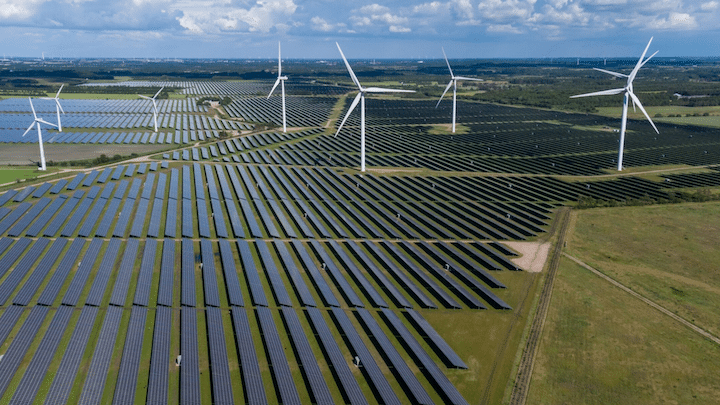
Media reports suggest the Trump Administration is considering restrictions on US oil exports. Officials have said such measures are not under discussion, according to media reports, but the...
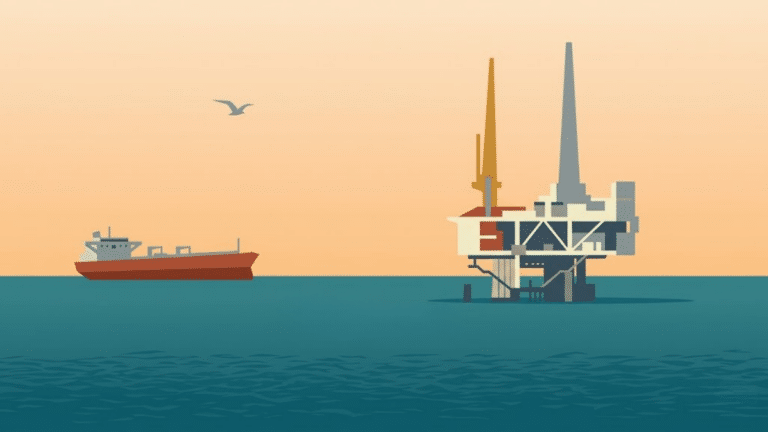
The oil shock triggered by the crisis in the Persian Gulf has pushed crude above $100 per barrel, reviving familiar fears of economic turmoil in the United States driven by surging gasoline and diesel prices.