War With Iran Isn’t Just an Oil Story
The U.S.-Israeli campaign will have, if anything, bigger implications for liquified natural gas.
Current Access Level “I” – ID Only: CUID holders, alumni, and approved guests only
Get the latest as our experts share their insights on global energy policy.
On February 28, the US and Israel launched new attacks on Iran targeting primarily the country's leadership, security forces, and missile program.

Hear in-depth conversations with the world’s top energy and climate leaders from government, business, academia, and civil society.
On February 28, the United States and Israel launched a campaign against Iran targeting military infrastructure and the regime's core leadership. Supreme Leader Ayatollah Ali Khamenei and several...

Find out more about our upcoming and past events.
On February 28, the United States and Israel launched an attack on Iran, resulting in the deaths of Iranian Supreme Leader Ali Hosseini Khamenei and senior Iranian leaders...

The debate in Congress over climate change has heightened now that Democrats control the House of Representatives and make the issue one of their top priorities in 2019. But how much can they accomplish in the face of resistance from the Trump Administration and a Republican-led Senate? And what specifically will they work on?
In this edition of the Columbia Energy Exchange podcast, host Bill Loveless sits down with Sen. Sheldon Whitehouse, one of the most outspoken advocates of policies to address climate change in Congress. He often addresses the topic on the Senate floor with speeches he calls “Time to Wake Up!” And he’s been a sponsor of legislation to put a price on carbon emissions, too.
But the Rhode Island Democrat is also known for reaching across the political aisle to work with Republicans on bills to promote nuclear energy and carbon-capture technologies.
Bill met with Senator Whitehouse in his office to talk about what Democratic control of the House might mean for the climate debate in Congress this year, including what he makes of the movement for a Green New Deal. Their talk took place a couple of days before one of his colleagues, Sen. Edward Markey, D-Mass., and Rep. Alexandria Ocasio-Cortez, D-N.Y., unveiled a resolution outlining goals of a Green New Deal. It also came as Senator Whitehouse and seven other Democrats and Republicans re-introduced legislation to help find profitable uses for captured carbon dioxide.
The conversation touched as well on his views on corporate spending on election campaigns and lobbying, and their impact on efforts to advance or block new climate policies in Congress.
Sen. Whitehouse is a graduate of Yale University and the University of Virginia School of Law. He was Rhode Island’s director of business regulation before being nominated by President Bill Clinton to be Rhode Island’s U.S. attorney in 1994. He was elected attorney general of Rhode Island in 1998, a position he held until 2003. In 2006, he was elected to the U.S. Senate, where he is a member of the Budget Committee, the Environment and Public Works Committee, the Judiciary Committee and the Finance Committee.
He and his wife Sandra, a marine biologist and environmental advocate, live in Newport, R.I.
On February 28, the United States and Israel launched a campaign against Iran targeting military infrastructure and the regime's core leadership. Supreme Leader Ayatollah Ali Khamenei and several...
President Trump has aggressively used tariffs as an economic tool, but a US Supreme Court decision on Friday struck down his sweeping tariffs, bringing new uncertainty. The court,...

Under the second Trump administration, the US Department of Energy significantly shifted its priorities to align with its “energy dominance" agenda. But one significant point of continuity with...

The Trump administration has prioritized nuclear energy expansion, aiming to increase US nuclear capacity fourfold by 2050. This nuclear energy resurgence in the US is a rare issue...

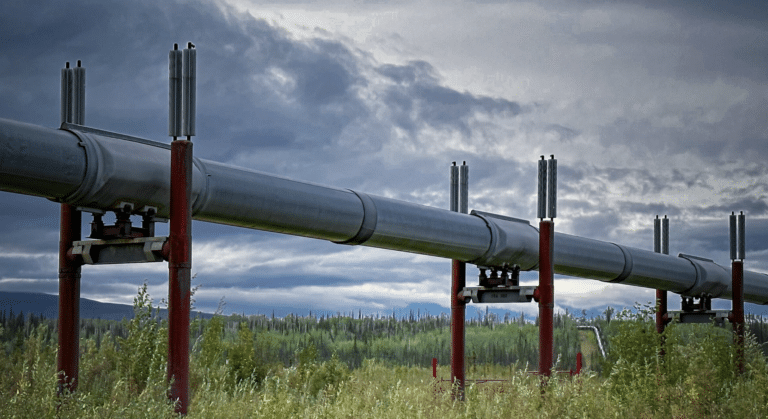
On February 28, the US and Israel launched new attacks on Iran targeting primarily the country's leadership, security forces, and missile program.
Concerns about greenhouse gas emissions, air pollution, and energy security are driving increased interest in nuclear power.

In January 2026, the UK government publicly released an intelligence report analyzing the security implications of global environmental destruction.