Current Access Level “I” – ID Only: CUID holders, alumni, and approved guests only
Campus open to active affiliate Columbia University ID (CUID) holders and approved guests only.
Columbia students, faculty, and staff can use the guest registration portal to register up to two same-day guests. Alumni can use the portal to register for campus same-day access as well. Learn more below.
This website uses cookies as well as similar tools and technologies to understand visitors’ experiences. By continuing to use this website, you consent to Columbia University’s usage of cookies and similar technologies, in accordance with the Columbia University Website Cookie Notice.
Early on January 3, 2026, the United States apprehended Venezuelan President Nicolás Maduro and his wife and removed Maduro from power. Maduro was transported to New York, where he now faces federal charges of narco-terrorism and drug trafficking.
The recent military operation to remove Venezuelan President Nicolás Maduro and First Lady Cilia Flores raises several implications for the future of Venezuela and Latin America, geopolitics, and...
Webinar
About Us
We are the premier hub and policy institution for global energy thought leadership. Energy impacts every element of our lives, and our trusted fact-based research informs the decisions that affect all of us.
This Energy Explained post represents the research and views of the author(s). It does not necessarily represent the views of the Center on Global Energy Policy. The piece may be subject to further revision.
Contributions to SIPA for the benefit of CGEP are general use gifts, which gives the Center discretion in how it allocates these funds. More information is available here. Rare cases of sponsored projects are clearly indicated.
Geopolitical uncertainty associated with Russian gas exports could swing the range of those exports by an estimated 150 bcm per year.
The trajectory of future Russian gas exports will be determined primarily by choices made in China and the US, as well as Turkey and EU countries.
As a result, expected global LNG oversupply in the coming years could either increase or be eliminated.
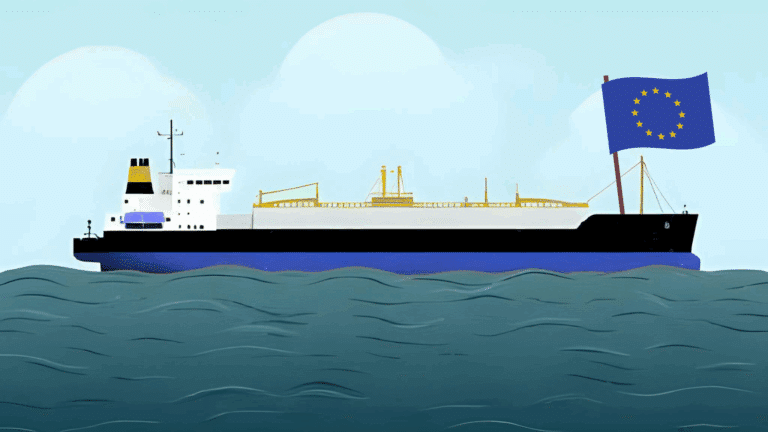
European Union countries are finalizing plans to end all Russian gas imports by autumn 2027, but geopolitical uncertainty around the future of Russian gas export volumes will continue to influence global liquefied natural gas (LNG) markets.
This blog post discusses the varied possible paths ahead for Russian gas exports, and the author estimates that (based on the bolded figures presented in this piece) the potential upside for Russian gas exports amounts to over 90 bcm and the potential downside to over 60 bcm, resulting in a 150 bcm uncertainty. This span is significant: global LNG trade is expected to reach 800 bcm by 2030.
Potential Upside for Russian Gas Exports
EU member states continued to import around 33 bcm of Russian gas in 2025, including around 13 bcm of pipeline gas.[1] On December 3, 2025, the European Council and the European Parliament reached an agreement on rules to phase out Russian gas imports by September 30, 2027.[2] Under this framework, Russian LNG exports would cease on January 1, 2027, and pipeline exports nine months later. However, Hungary has announced plans to challenge the measure through legal actions, a path that Slovakia is considering as well. Additionally, if a peace agreement on Ukraine were concluded before the phase-out dates, these two countries could be emboldened to maintain Russian pipeline gas imports at current levels beyond 2027.
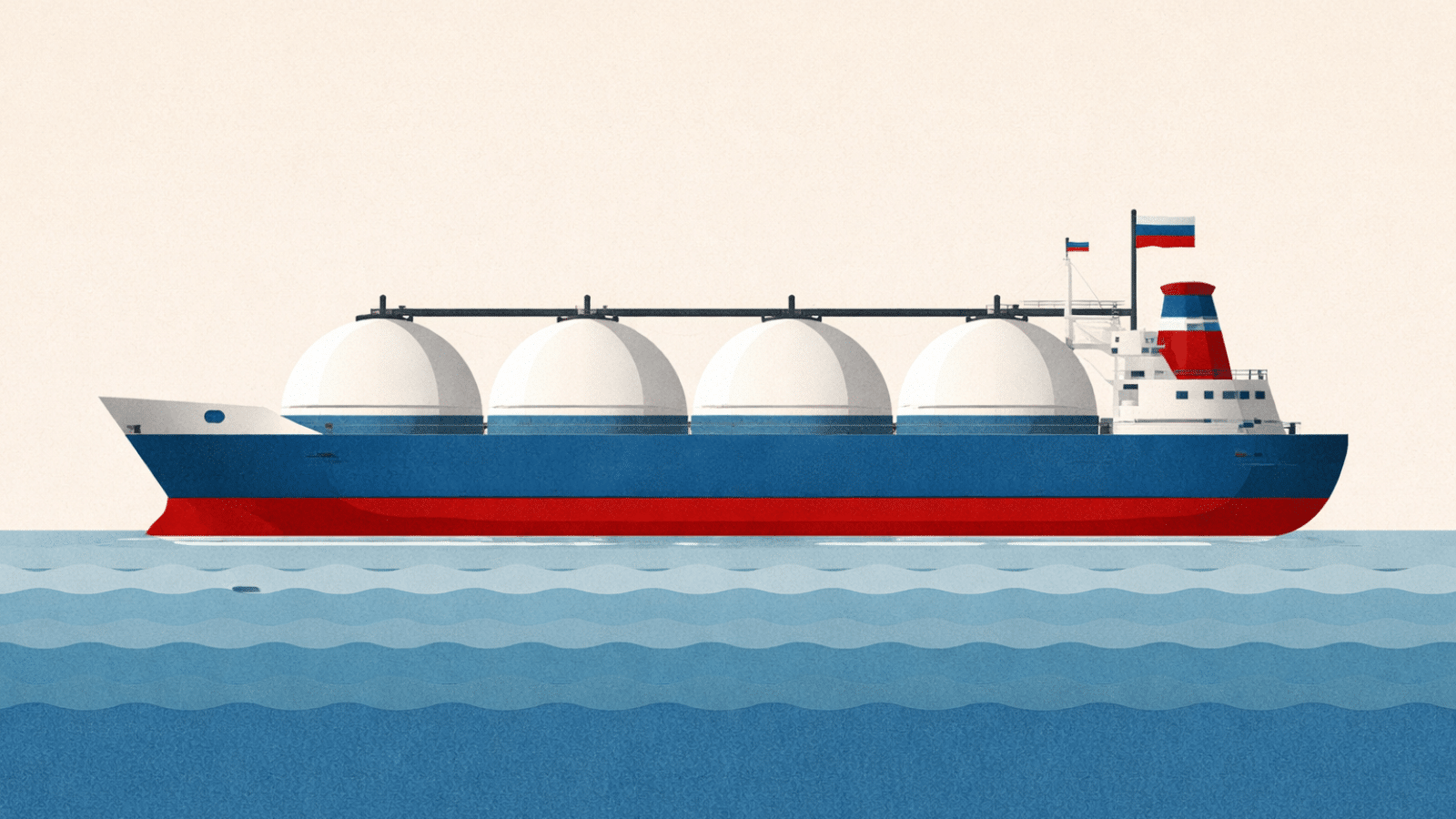
Three Russian LNG export plants were sanctioned by the Biden administration: Arctic LNG 2, Portovaya, and Vysotsk, together representing 30 bcm/year of LNG export capacity. Arctic LNG 2, which remains under construction, is partially operational and exporting cargoes exclusively to China’s Beihai LNG terminal. The plant is also constrained by a limited number of Arc-7 ice-capable LNG carriers, required for year-round operation. Portovaya continues to ship small volumes to Russia’s Kaliningrad terminal, while one cargo loaded in October reached Beihai on December 8. Vysotsk is the only plant that has fully stopped operations, having shut down in February 2025.
Since August 2025, Russia and China have been testing US sanctions by importing sanctioned cargoes (1.5 bcm as of mid-December). If the US does not enforce its sanctions more actively, other countries may conclude that purchasing cargoes at a discounted price is worth the risk). Similarly, a peace agreement on Ukraine could enable sanctions to be lifted and the Russian gas producer Novatek to get access to much needed Arc-7 LNG carriers, and Russian LNG exports could eventually increase by 28.5 bcm.[3]
These first two uncertainties revolve mostly around the prospect of a peace agreement on Ukraine, where Russia secures concessions on gas and LNG from the US, despite the inherent competition between Russian gas and US LNG exports. Russian President Vladimir Putin could plausibly convince US President Donald Trump and his senior negotiators that such concessions are a small price to pay in exchange for access to—what is presented as—significant business opportunities: joint oil and gas projects in the Arctic or deals on critical minerals. This would represent a tangible short-term gain for Russia but may prove to be a disappointing long-term investment for the US.
The largest risk to an upside scenario concerns the proposed 50 bcm/y Power of Siberia 2 (PoS2) pipeline, even though this is a longer-term risk. On September 2, 2025, Russia and China signed a political agreement to build PoS2, as well as two smaller expansions: 6 bcm on PoS1 and 2 bcm on the 10 bcm Far Eastern route. Although no binding commitments were agreed to regarding contract duration, volumes, timeframe, and pricing, this agreement sent a very strong geopolitical signal to LNG exporters, particularly the United States, that China could eventually pivot away from LNG in favor of pipeline gas. Such a pivot, even at a lower volume, would have a tremendous impact on global gas markets, given China’s longstanding position as the first LNG market with the potential to reach 100 million tons per annum (mtpa).
Still, halting Russian pipeline gas imports would constitute a major strategic shift for Turkey, running counter to its longstanding ambition to position itself as a regional gas hub serving European markets. It would take a very significant deterioration of Turkey-Russia relations to trigger such a move—far beyond the crisis levels seen, for example, when Turkey shot down a Russian plane in 2015. Turkey may nevertheless face US pressure to increase US LNG imports, as other countries have, especially given that US LNG volumes are viewed as key to the $100 billion bilateral trade target announced by Turkey and the United States in September 2025. Contracted volumes mentioned above would be insufficient to replace Russian pipeline gas imports, meaning Turkey would have to resort to spot LNG purchases or more long-term contracts.
Coordinated US and EU sanctions to stop exports from all Russian LNG plants would be another blow for Russia. The Yamal and Sakhalin 2 plants represent together about 40 bcm of LNG exports. Such sanctions could happen if Trump loses patience with Putin over his refusal to finalize a peace agreement on Ukraine. They could target LNG exports as a general class rather than a specific plant, as has been done to date. Any company importing Russian LNG after a certain date would likely be denied access to US goods, and any associated bank would be denied correspondent banking service. A potential G7 ban on maritime services for Russian LNG exports—in line with what’s being discussed for oil and has been decided by the UK—would also negatively impact the logistics of Russian LNG exports. Whether such sanctions or bans would happen, and whether they would occur in 2026, 2027, 2028, or be progressive, would have huge implications for the global LNG market and the global LNG supply buildup. But the key to any sanctions’ effectiveness is whether they are effectively enforced.