Current Access Level “I” – ID Only: CUID holders, alumni, and approved guests only
Campus open to active affiliate Columbia University ID (CUID) holders and approved guests only.
Columbia students, faculty, and staff can use the guest registration portal to register up to two same-day guests. Alumni can use the portal to register for campus same-day access as well. Learn more below.
This website uses cookies as well as similar tools and technologies to understand visitors’ experiences. By continuing to use this website, you consent to Columbia University’s usage of cookies and similar technologies, in accordance with the Columbia University Website Cookie Notice.
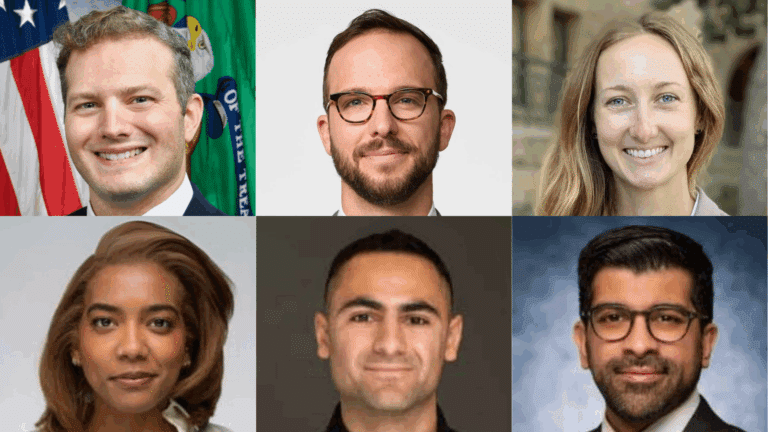
The Center on Global Energy Policy (CGEP) at Columbia University SIPA today announced new personnel additions who bring extensive experience from government and the private sector to the...
Announcement• July 3, 2025
Energy Explained
Get the latest as our experts share their insights on global energy policy.
The US Department of Defense has announced a multibillion-dollar public-private partnership with MP Materials, representing one of the most consequential federal efforts to build a secure, end-to-end domestic...
Artificial intelligence is transforming our world—and the energy sector. Earlier this year, the International Energy Agency (IEA) released a comprehensive report examining both AI’s projected energy demands and...
We are the premier hub and policy institution for global energy thought leadership. Energy impacts every element of our lives, and our trusted fact-based research informs the decisions that affect all of us.
Carbon Capture and Energy: Everything’s Bigger in Texas
Past Event
March 22, 2021
12:00 pm - 1:30 pm utc
Share
Carbon capture, use, and storage (CCUS) technologies and approaches are critical to reducing greenhouse gas emissions from the transportation, industrial, and power sectors, and a key ingredient to creating a more sustainable and equitable energy system. Implementing CCUS more broadly will require navigating technology, policy, and science issues at the state and national level and attention to a broad set of equity and environmental justice concerns.
“Carbon Capture & Energy: Everything’s Bigger in Texas” is the third set of panels being convened as part of the Women In Energy CCUS Roadshow. These conversations highlight leading experts in the field of CCUS with a special focus on local policy and deployment. The Center on Global Energy Policy’s Carbon Management Research Initiative and Women in Energy program hosted a webinar addressing the vital role of carbon capture in greenhouse gas emissions reductions and carbon dioxide removal.
The conversation focused on the status of carbon capture policy and technology in Texas, including how carbon removal technology fits into strategies to address climate change and bring global greenhouse gas emission to the equivalent of zero. We also explored how it can contribute to a more just energy transition and how to assure safe and effective deployment of the technology. A panel of exceptional leaders then discussed a recent analysis by Susan Hovorka at the Bureau of Economic Geology and recent announcements by Occidental Petroleum on carbon storage resources, state and federal regulations, technological advances, and commercial opportunities in carbon dioxide use and removal, and efforts to reduce carbon dioxide emissions in the industrial sector.
Moderator:
Dr. Julio Friedmann, Senior Research Scholar, Center on Global Energy Policy at Columbia SIPA
Keynote:
Vicki Hollub, President and Chief Executive Officer, Occidental Petroleum Corporation
Panelists:
Ellen S. Friedman, Partner, Co-Head Energy & Infrastructure Projects Team, Nixon Peabody LLP
Susan Hovorka, Bureau of Economic Geology, University of Texas at Austin
Deepika Nagabhushan, Program Director, Carbon Capture and Storage, Clean Air Task Force (CATF)
Women In Energy CCUS Roadshow. These conversations highlight leading experts in the field of CCUS with a special focus on local policy and deployment. The Center on Global Energy Policy’s Carbon Management Research Initiative and Women in Energy program will host a webinar addressing the vital role of carbon capture in greenhouse gas emissions reductions and carbon dioxide removal. The conversation will focus on the status of carbon capture policy and technology in Texas, including how carbon removal technology fits into strategies to address climate change and bring global greenhouse gas emission to the equivalent of zero. We will also explore how it can contribute to a more just energy transition and how to assure safe and effective deployment of the technology. A panel of exceptional leaders will then discuss a recent analysis by Susan Hovorka at the Bureau of Economic Geology and recent announcements by Occidental Petroleum on carbon storage resources, state and federal regulations, technological advances, and commercial opportunities in carbon dioxide use and removal, and efforts to reduce carbon dioxide emissions in the industrial sector.
Moderator:
Dr. Julio Friedmann, Senior Research Scholar, Center on Global Energy Policy at Columbia SIPA
Vicki Hollub, President and Chief Executive Officer, Occidental Petroleum Corporation
Keynote:
Panelists:
Ellen S. Friedman, Partner, Co-Head Energy & Infrastructure Projects Team, Nixon Peabody LLP
Susan Hovorka, Bureau of Economic Geology, University of Texas at Austin
Deepika Nagabhushan, Program Director, Carbon Capture and Storage, Clean Air Task Force (CATF)
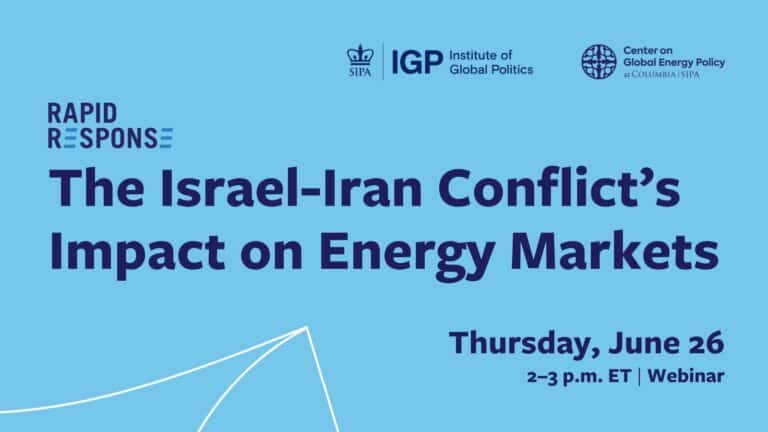
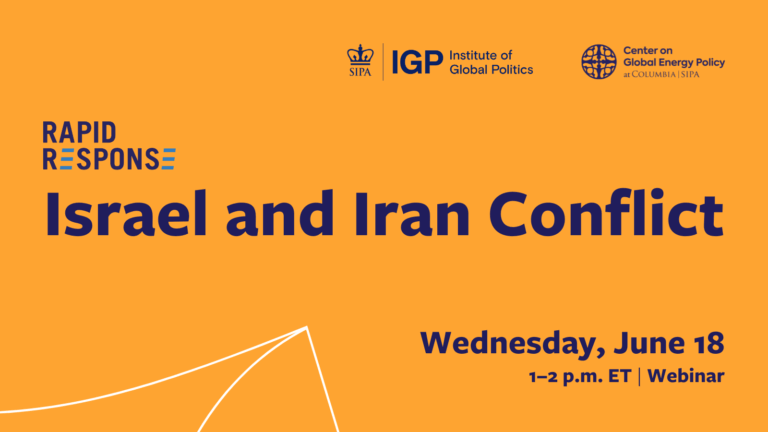
As the Israel-Iran conflict continues to unfold, it remains unclear whether a ceasefire will hold or fighting will resume. This uncertainty carries significant implications for energy markets in the Middle East and around the world.
On the night of June 12, the Israeli military conducted widespread strikes on sites in Iran that targeted the country’s nuclear program and its senior military leadership.
This year, the Third Annual Energy Opportunity Lab (EOL) Forum will take place July 7th and 8th in Washington, DC, offering a chance for the Washington policymaking community...
On May 23, President Donald Trump signed four executive orders that aim to reform the United States Nuclear Regulatory Commission, streamline National Laboratory processes for reactor testing, advance...
The US Department of Defense has announced a multibillion-dollar public-private partnership with MP Materials, representing one of the most consequential federal efforts to build a secure, end-to-end domestic...
This report explores how residents of North Lawndale, a predominantly Black and historically under-resourced neighborhood on Chicago’s West Side, experience the compounded effects of heat waves and power outages.
Reports
by Qëndresa Krasniqi, Helen Yibrah, Rachel Scheu + 2 more • July 10, 2025