Face à la flambée du pétrole liée au conflit au Moyen-Orient, l’exécutif temporise
L'essentiel de l'actualité du gaz naturel, des gaz renouvelables et de l'hydrogène
Current Access Level “I” – ID Only: CUID holders, alumni, and approved guests only
Get the latest as our experts share their insights on global energy policy.
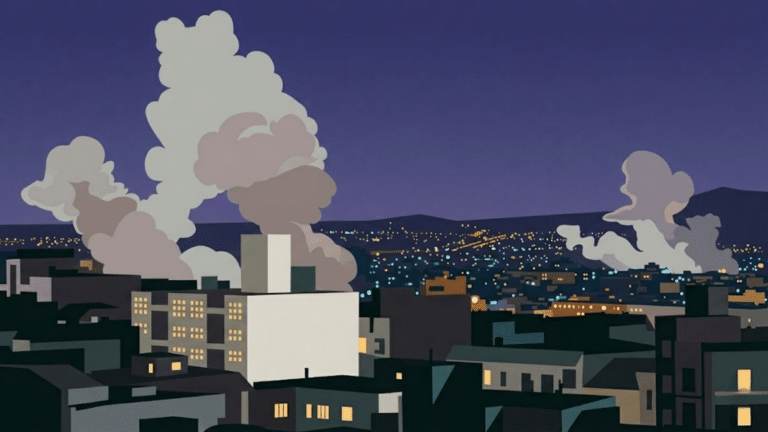
On February 28, the US and Israel launched new attacks on Iran targeting primarily the country's leadership, security forces, and missile program.
Hear in-depth conversations with the world’s top energy and climate leaders from government, business, academia, and civil society.
Since the US-Israeli bombing campaign began in Iran, energy markets around the world have been on edge as the conflict threatens immediate and long-term energy supplies. We’ve seen...

Find out more about our upcoming and past events.
The Columbia Global Energy Summit 2026 is an annual event dedicated to thought-provoking discussions around the critical energy and climate challenges facing the global community.
Past Event
April 30, 2019
6:00 pm - 7:30 pm
We all now live in a paranoid and polarized world of Putin’s making, and the Russian leader, through guile and disruption, has resurrected Russia’s status as a force to be reckoned with. How did Russia manage to emerge resurgent on the world stage and play a weak hand so effectively? Is it because Putin is a brilliant strategist? Is it because of Russia’s abundant energy endowment? Is it because Putin has inappropriately politicized energy trade with Europe and neighboring post-Soviet countries? Or has Russia stepped into a vacuum created by the West’s distraction with its own domestic problems and US ambivalence about whether it still wants to act as a superpower? Angela Stent, director of the Center for Eurasian, Russian, and East European Studies and a professor of government and foreign service at Georgetown University, joins Jonathan Elkind, Senior Research Scholar at the Center on Global Energy Policy, and Alexander Cooley, Director of the Harriman Institute, for a discussion of her book, Putin’s World: Russia Against the West and with the Rest. The book examines the country’s turbulent past, how it has influenced Putin, the Russians’ understanding of their position on the global stage and their future ambitions — and their conviction that the West has tried to deny them a seat at the table of great powers since the USSR collapsed. This event is co-sponsored by the Center on Global Energy Policy and the Harriman Institute. — This event is open to press. Media attending the event should register using the registration link below. Media inquiries or requests for interviews should be directed to Artealia Gilliard ([email protected]). Guests unable to attend in person can view a livestream of the event at energypolicy.columbia.edu/livestream. For more information contact: [email protected].
On February 28, the United States and Israel launched an attack on Iran, resulting in the deaths of Iranian Supreme Leader Ali Hosseini Khamenei and senior Iranian leaders...


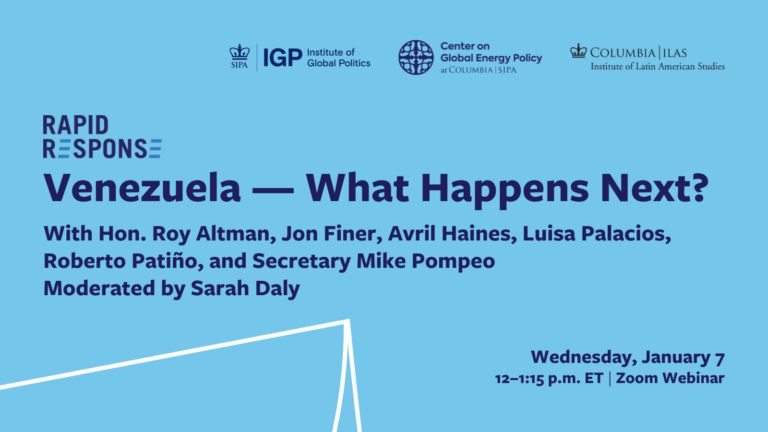
The recent military operation to remove Venezuelan President Nicolás Maduro and First Lady Cilia Flores raises several implications for the future of Venezuela and Latin America, geopolitics, and energy markets. Cosponsored by SIPA’s Institute of Global Politics (IGP) and Center for Global Energy Policy (CGEP), along with Columbia’s Institute of Latin American Studies (ILAS), this webinar will analyze the circumstances and impact of their capture and extradition to New York to face narcoterrorism and drug trafficking charges.
The Columbia Global Energy Summit 2026 is an annual event dedicated to thought-provoking discussions around the critical energy and climate challenges facing the global community.
On October 22, the United States Department of the Treasury announced the imposition of sanctions on Russia’s two largest oil companies, Rosneft and Lukoil, as a penalty for what it characterized as a lack of Russian commitment to ending the war in Ukraine.
On February 28, the US and Israel launched new attacks on Iran targeting primarily the country's leadership, security forces, and missile program.
America needs a plan for Tehran's nuclear program.

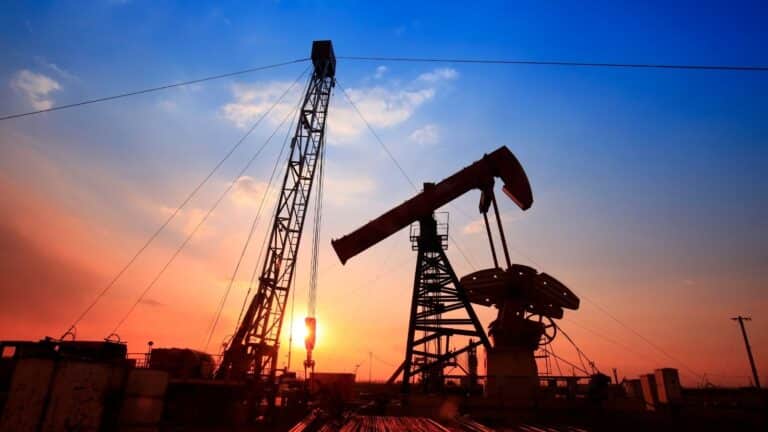
The US-Israeli attack on Iran and Iran's retaliatory strikes against energy infrastructure directly impact China.
