Current Access Level “I” – ID Only: CUID holders, alumni, and approved guests only
Campus open to active affiliate Columbia University ID (CUID) holders and approved guests only.
Columbia students, faculty, and staff can use the guest registration portal to register up to two same-day guests. Alumni can use the portal to register for campus same-day access as well. Learn more below.
This website uses cookies as well as similar tools and technologies to understand visitors’ experiences. By continuing to use this website, you consent to Columbia University’s usage of cookies and similar technologies, in accordance with the Columbia University Website Cookie Notice.
The United States is at a rare inflection point for nuclear energy, with unprecedented momentum behind deployment and regulatory reform as nuclear becomes central to energy security, AI competitiveness, and state and corporate climate goals.
As political support for clean energy has waxed and waned over the past twenty years, so has the government’s financial backing. In the 2010s, critics pointed to the...
This workshop will be conducted in two parts: Part one on February 16 from 1:00 PM to 2:00 PM EST, and Part two on February 18 from 1:00 PM to...
Event
• Center on Global Energy Policy
1255 Amsterdam Ave, New York, NY 10027
About Us
We are the premier hub and policy institution for global energy thought leadership. Energy impacts every element of our lives, and our trusted fact-based research informs the decisions that affect all of us.
This Energy Explained post represents the research and views of the author(s). It does not necessarily represent the views of the Center on Global Energy Policy. The piece may be subject to further revision.
Contributions to SIPA for the benefit of CGEP are general use gifts, which gives the Center discretion in how it allocates these funds. More information is available here. Rare cases of sponsored projects are clearly indicated.
Two trade agreements recently negotiated by the Trump administration contain novel and coercive provisions with little precedent in US trade policy or the global trade system.
The agreements, concluded with Cambodia and Malaysia in October, demonstrate that bilateral dealmaking has emerged alongside tariffs as a key tool in US efforts to rewrite the rules of global trade and deter economic integration with China.
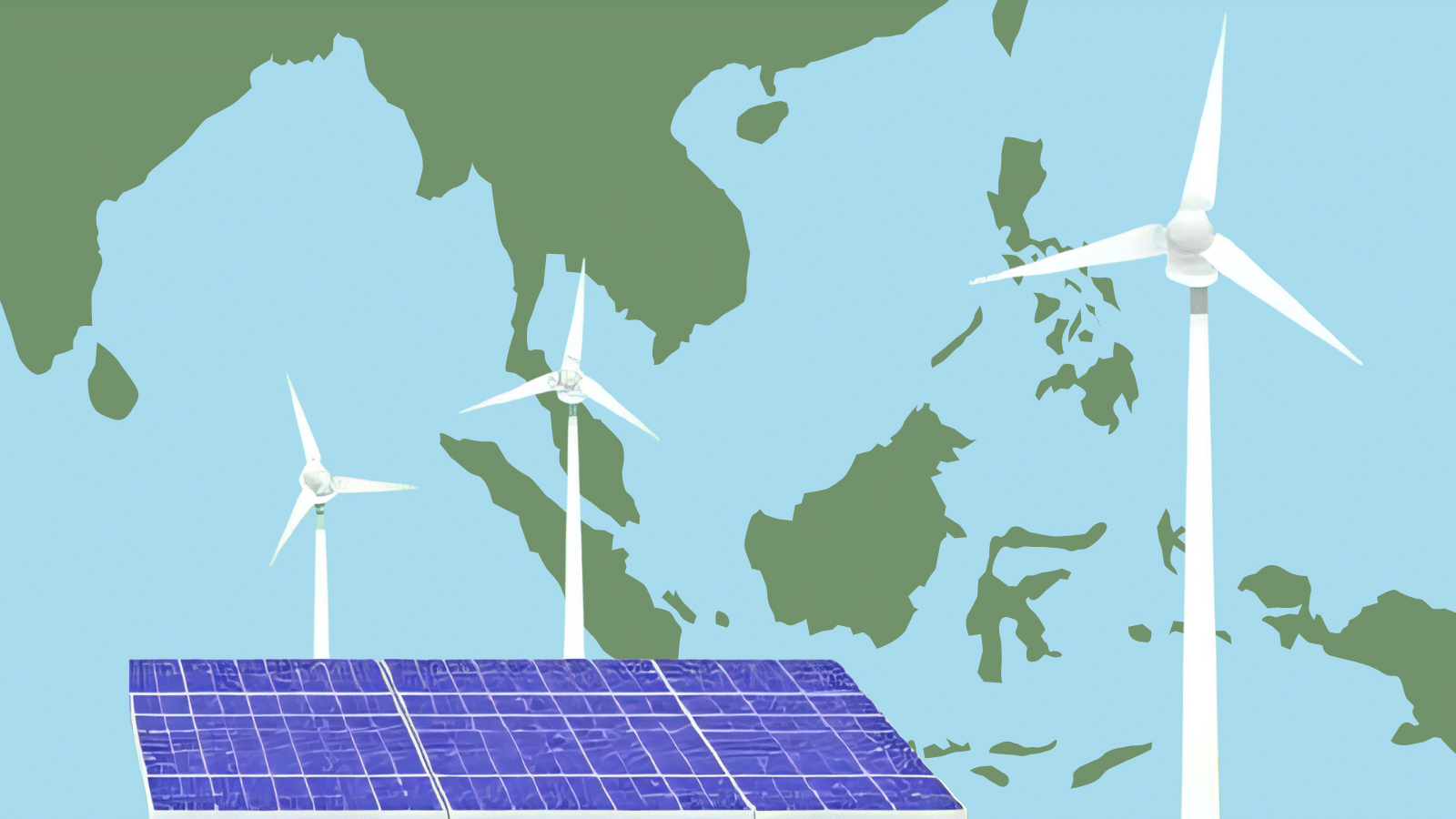
To date, Southeast Asian countries with ties to both US and Chinese clean energy markets have sought to avoid choosing between Washington and Beijing, but this hedging strategy may have an expiration date as US officials seek greater control over regional trade policy.
In a recent commentary, the authors observed that volatility in US-China trade relations has been a major factor in the structure of cross-border clean energy supply chains, drawing particular attention to the Trump administration’s assertive use of tariffs. Alongside these tariffs, the United States has pursued ad hoc “deals” with a range of trade partners over the past six months that in both form and substance bear little resemblance to conventional free trade agreements (FTAs).
This post analyzes two recent examples involving Cambodia and Malaysia. Titled “Agreements on Reciprocal Trade” (ARTs), the deals include unorthodox and coercive provisions that force difficult tradeoffs on countries with links to both US and Chinese clean energy markets. How these provisions will work in practice remains to be seen, but their goals are clear: to constrain China’s economic footprint in Southeast Asia and delineate mutually exclusive US and Chinese spheres of influence in global trade.
By inserting these terms in the ARTs, the Trump administration is acknowledging the limits of steep US tariffs on Southeast Asian clean energy goods, which have reduced US exposure to Chinese-linked supply chains but not hindered Southeast Asian countries’ economic integration with China. But while the ARTs may contribute to US national security goals, their more immediate impact will be to cause economic fragmentation that risks slowing the clean energy transition in both the United States and Southeast Asia.
Caught in the Middle
Cambodia and Malaysia, like most Southeast Asian countries, have strong ties to both the Chinese and US economies. China and the United States have been, respectively, Malaysia’s first- and third-largest trading partner for over a decade. China is also Cambodia’s largest trading partner, followed closely by the United States; together, the two countries presently account for around half of Cambodia’s foreign trade. Last year, the United States was the second-largest recipient of Malaysian exports (after Singapore), and the largest destination for Cambodian goods by a wide margin.
Cambodia and Malaysia have received billions in Chinese foreign direct investment (FDI), particularly in the clean energy sector, and are part of two regional trade initiatives that include China: the Regional Comprehensive Economic Partnership (RCEP), and the ASEAN-China Free Trade Area. Cambodia also has a bilateral FTA with China. These economic linkages have enabled both Cambodia and Malaysia to build competitivesolar manufacturing industries and decrease reliance on fossil fuels.
As recently as 2023, both Cambodia and Malaysia sold billions in solar products to the United States, but export volumes have contracted sharply after both the Biden and Trump administrations imposed extremely high tariffs. In the last year alone, Cambodian solar exports dropped an astonishing 99.9 percent, from $2.4 billion in 2023 to $6 million in the first nine months of 2025.
Unusual Conditions
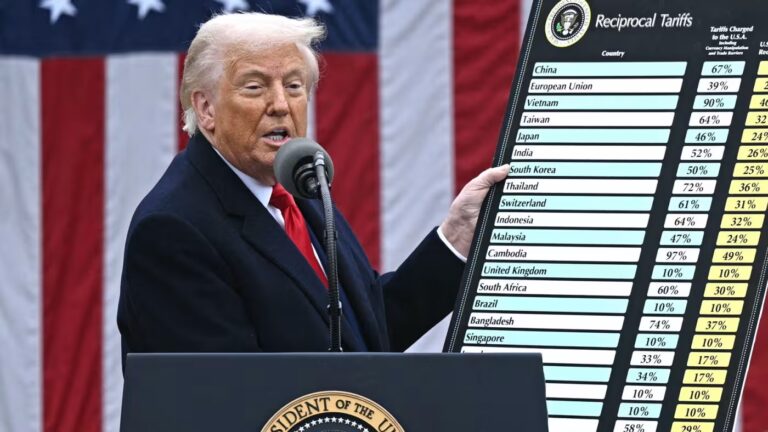
Like other governments that have struck trade deals with the Trump administration, Cambodia and Malaysia were brought to the negotiating table by US tariffs. On April 2, the administration announced economy-wide “liberation day” tariffs of 49 percent and 24 percent on Cambodian and Malaysian goods, respectively, under the International Emergency Economic Powers Act (IEEPA). In July, the White House reduced the “liberation day” tariffs on both countries to 19 percent.
The Cambodia and Malaysia ARTs were concluded in late October during President Trump’s trip to Asia. The ARTs do not alter the economy-wide 19 percent tariff, but rather exempt thousands of individual goods. These exemptions span multiple sectors, but do not include clean energy technologies.
Alongside this tariff relief, the two ARTs contain provisions designed to give Washington extraordinary leverage over Cambodia’s and Malaysia’s trade policies. The Malaysia ART authorizes the United States to terminate the agreement—and by extension rescind the tariff exemptions it provides—if Malaysia “enters into a new bilateral free trade agreement . . . with a country that jeopardizes essential U.S. interests.” The Cambodia ART contains a similar provision for FTAs that pose “a material threat to [US] economic or national security.”
Such “poison pill” clauses are unprecedented in the modern trade system, with one exception: a mechanism in the US-Canada-Mexico Agreement (USMCA) negotiated during the first Trump administration that allows a party to terminate the agreement if another party signs an FTA with a “non-market country.” But the ART poison pills differ from this mechanism in two key respects. First, the USMCA provision applies to all parties, whereas the ARTs restrain Cambodia and Malaysia but not the United States. Second, the USMCA provides a clear and objective definition of “non-market economy,” whereas the ARTs apply vague and subjective standards relating to US “interests” and “security” as criteria for termination.
The poison pills are not the only novel feature of the ARTs. The Malaysia ART stipulates that if the United States imposes a “trade restriction . . . that it considers relevant to protecting the national or economic security of the United States,” Malaysia must adopt a comparable trade restriction upon Washington’s request. In other words, the ART requires Malaysia to delegate aspects of its trade policy to the United States under circumstances defined unilaterally by US officials. The Cambodia ART contains a similar requirement but with a caveat: Cambodia cannot be asked to comply in a way that “infringes” on its “sovereign interests.”
Dueling Visions of Trade Architecture
The practical impacts of the ARTs’ coercive elements remain to be seen. It would be premature to conclude that Cambodia and Malaysia have made a definitive pivot towards economic alignment with the United States. In agreeing to the ARTs, both countries have secured immediate tariff relief in exchange for vague political commitments. Given the reasonable probability that the US Supreme Court will void the “liberation day” tariffs in the coming months, the ARTs may ultimately amount to little more than a gesture of goodwill on the part of Cambodian and Malaysian leaders.
But the ARTs should not be dismissed as paper tigers. Even if the “liberation day” tariffs are struck down, the administration may seek to negotiate comparable arrangements using other tariff authorities. In the meantime, uncertainty surrounding the operation and longevity of the deals means that firms participating in clean energy supply chains in both Cambodia and Malaysia may now face heightened political risk premiums to ensure compliance with US expectations regarding transshipment, supply chain integrity, and investment screenings.
Beyond these practical considerations, the ARTs signal an unraveling of the norm, foundational to the modern global trade system, that bilateral trade deals should be additive rather than exclusionary. Under WTO rules, an arrangement that improves market access between one set of countries cannot require increased market barriers on nonparticipating countries; yet this is precisely what the ARTs require of Cambodia and Malaysia. Furthermore, other than the USMCA, no FTA negotiated since the end of World War II has placed unilateral restraints on parties from pursuing separate market access arrangements.[1] By accepting these provisions, Cambodia and Malaysia have become accomplices in Washington’s campaign to replace the existing rules-based system with a fragmented patchwork of conditional economic alignments—or, in the words of the US National Security Strategy released this month, to “ensure that allied economies do not become subordinate to any competing power.”
The vision of trade embodied in the ARTs stands in sharp contrast to recent statements by Chinese senior officials deploring the proliferation of trade barriers in the global economy and calling for a more open trade system to accelerate the green energy transition by increasing access to Chinese clean energy technologies. This rhetoric has accompanied a renewed push from Beijing to enhance its already broad network of trade and investment partnerships, including a “version 3.0” of the ASEAN-China FTA signed only a few days before President Trump’s visit to Cambodia and Malaysia.
The Cambodia and Malaysia ARTs and the upgraded ASEAN-China FTA present two dueling versions of trade cooperation: one organized around exclusionary reciprocity and the other around open networks that reinforce Chinese export dominance. That Cambodian and Malaysian officials could agree to their respective ARTs and the ASEAN-China FTA in the span of a week is a striking illustration of the reluctance of third countries to choose between the US and Chinese approaches. But the coercive character of the ARTs signal that such hedging may have an expiration date.
Implications for Other Regional Actors
The Trump administration concluded deals with Thailand and Vietnam during the same trip that produced the Cambodia and Malaysia ARTs, and Indonesia announced a provisional trade agreement with the United States back in July. These three deals did not include poison pills like those in the Cambodia and Malaysia ARTs. But this does not necessarily signal that the ARTs are one-offs and other Southeast Asian countries can expect more favorable trade terms with the United States.
The Trump administration has reportedly been strongly pressuring Indonesia to accept a poison pill in the final version of the deal struck this summer, a demand Jakarta has rebuffed on grounds of “economic sovereignty.” There has also been speculation that US officials are seeking to impose coercive terms on Hanoi, which would entail amending the deal agreed to in October.
Given the Trump administration’s longstanding interest to “rebalance” global trade relationships, it is conceivable that this bilateral arm twisting will intensify and expand beyond the Southeast Asian region. Such tactics may result in more deals like the ARTs, but they are just as likely to drive US partners to seek closer economic ties with China, particularly if Beijing succeeds in presenting itself as a reliable and cooperative alternative to US global leadership on economic matters.
[1] FTAs should be distinguished from customs unions, in which countries eliminate substantially all trade barriers between one another and agree on common external tariffs.
This Energy Explained post represents the research and views of the author(s). It does not necessarily represent the views of the Center on Global Energy Policy. The piece...
The European Commission released a proposed regulation on Oct. 7 that would replace the EU's existing "safeguard" duties on imported steel products set to expire in June 2026.
The global clean energy economy today looks starkly different than it did even 10 years ago. Not only have production and deployment of clean energy technologies expanded significantly, the geographic distribution of clean energy manufacturers, resellers, and end-users has shifted dramatically.
In the fall of 2024, the Center on Global Energy Policy (CGEP) at Columbia University SIPA launched the International Dialogue on Climate and Trade to afford governments and stakeholders opportunities to seek common ground on ways of more effectively and equitably managing issues at the intersection of climate and trade.