This website uses cookies as well as similar tools and technologies to understand visitors’ experiences. By continuing to use this website, you consent to Columbia University’s usage of cookies and similar technologies, in accordance with the Columbia University Website Cookie Notice.
Energy Explained
Get the latest as our experts share their insights on global energy policy.
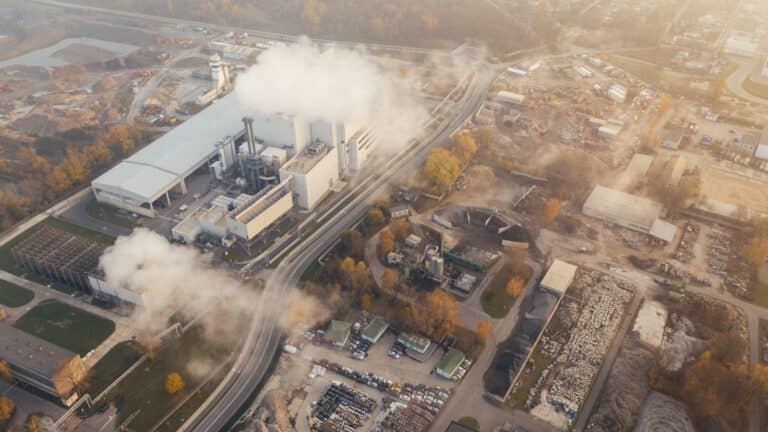
Disruptions in the Middle East Reinforce China’s Aim for Greater Self-Sufficiency in Refining and Petrochemicals
Many analyses of what the conflict in the Middle East means for China's energy security have rightly focused on China's oil and natural gas imports from the region.
Podcasts
Hear in-depth conversations with the world’s top energy and climate leaders from government, business, academia, and civil society.
Speed to Power: Christian Bruch on Siemens Energy’s Turnaround
For years, the energy transition was discussed as a shift that would happen in steady, predictable increments. But the last 24 months have shattered that illusion. Energy providers...

Podcast
Ajay Mathur – India: Striking a Balance Between Energy & Emissions
June 4, 2018
India is one of the most compelling and complex stories in the world when it comes to energy and the environment. With an economy that has doubled in size since 2010 and a population on track to overtake China’s in the next 10 years, India is challenged to meet its growing demand for energy, and to do so in a sustainable way.
On a new episode of Columbia Energy Exchange, host Bill Loveless sits down with Ajay Mathur, the director general of The Energy & Resources Institute, a New Delhi-based think tank, and a member of the Indian Prime Minister’s Council on Climate Change. Ajay served as director general of India’s Bureau of Energy Efficiency, and head of the climate change team at the World Bank in Washington, D.C. He has been a key climate change negotiator for India, and was the nation’s spokesperson at the climate negotiations in Paris in 2015.
Ajay and Bill caught up outside the Center on Global Energy Policy’s recent 2018 summit in New York to talk about the outlook for energy supply and demand in India, including the critical role that a combination of solar energy and storage could play in his country in coming years.
They also touched on some of the striking energy contrasts in India, a country where many go without access to affordable electricity despite the nation’s abundant installed electric capacity. Among other topics, they discussed India’s ongoing heavy dependence on coal for electricity, the outlook for nuclear energy, and India’s goals for reducing emissions under the Paris agreement.
More Episodes
Speed to Power: Christian Bruch on Siemens Energy’s Turnaround
For years, the energy transition was discussed as a shift that would happen in steady, predictable increments. But the last 24 months have shattered that illusion. Energy providers...
Iran Conflict Brief: How the Iran Standoff is Rewriting US-China Relations
The Iran crisis is in its 80th day. Right now, roughly 1,500 vessels laden with oil, natural gas, fertilizers, and oil products sit trapped in the Persian Gulf...

Arctic Expert Iris Ferguson on Greenland’s Resources, Geopolitical Risks
Much of the world’s attention today is understandably focused on conflict in the Middle East, and the immediate implications for energy markets and global security. But other regions...

Bob McNally and Jason Bordoff on Handling an Energy Crisis
In moments of geopolitical crisis, energy is never just a backdrop. It's often at the center of the story. Today, as conflict involving Iran sends shockwaves through global...

Relevant
Publications
Disruptions in the Middle East Reinforce China’s Aim for Greater Self-Sufficiency in Refining and Petrochemicals
Many analyses of what the conflict in the Middle East means for China's energy security have rightly focused on China's oil and natural gas imports from the region.