US-Israeli War on Iran Upends Gulf States’ Safe-Haven Image, Plans for Post-Oil Economies
Tushar Gagerna, an Indian marketing professional based in Dubai, had been waiting for two hours for his plane to take off from
Current Access Level “I” – ID Only: CUID holders, alumni, and approved guests only
Get the latest as our experts share their insights on global energy policy.
On February 28, the US and Israel launched new attacks on Iran targeting primarily the country's leadership, security forces, and missile program.

Hear in-depth conversations with the world’s top energy and climate leaders from government, business, academia, and civil society.
The climate policy landscape in the US is in flux. Last month, the Environmental Protection Agency repealed its own power to regulate greenhouse gases. Two weeks later, the...
Find out more about our upcoming and past events.
This roundtable is open only to currently enrolled Columbia University students. To register, you must sign in with your UNI. The Center on Global Energy Policy (CGEP) at...

Past Event
November 9, 2017
9:30 am - 11:00 am
China and the US are the world’s largest greenhouse gas emitters. In October, President Xi opened China’s 19th Party Congress declaring that China is “taking a driving seat in international cooperation to respond to climate change.” As President Trump arrives in Beijing for bilateral meetings, please join us please join us in exploring questions such as: What are China and the U.S. each doing to address climate change? Can cooperation between China and the US. on clean energy and climate survive a period in which the U.S. President questions the scientific consensus on climate change and rejects the Paris climate accords? What impact would potential energy trade disputes have on both countries? To address these and related questions, we will have keynote remarks on US-China relations by David H. Rank, a career Foreign Service Officer who served until June as Charge d’Affaires at the US Embassy in Beijing. After Rank’s remarks, CGEP Fellow and Senior Adjunct Research Scholar Jonathan Elkind will moderate a discussion on energy and climate collaborations featuring: David Rank, former Charge d’Affaires at the US Embassy in Beijing Kelly Gallagher, Professor of Energy and Environmental Policy, Director of the Center for International Environment & Resource Policy, Tufts University’s Fletcher School David Sandalow, CGEP Inaugural Fellow and Director of the CGEP China Program This event is being co-sponsored by the Weatherhead East Asian Institute and the Sabin Center for Climate Change Law. Registration is required. Guests unable to attend can view a livestream of the event at energypolicy.columbia.edu/watch. A podcast of this event will be available ~7 days after the date of the event through iTunes and our website. This event is open to press. Please direct media inquiries to Jamie Shellenberger-Bessmann ([email protected])
This roundtable is open only to currently enrolled Columbia University students. To register, you must sign in with your UNI. The Center on Global Energy Policy (CGEP) at...
On February 28, the United States and Israel launched an attack on Iran, resulting in the deaths of Iranian Supreme Leader Ali Hosseini Khamenei and senior Iranian leaders...


The Center on Global Energy Policy (CGEP) at Columbia SIPA and the Fashion, Energy, and Climate Network invite you to join the first session of our new talk...

The recent military operation to remove Venezuelan President Nicolás Maduro and First Lady Cilia Flores raises several implications for the future of Venezuela and Latin America, geopolitics, and energy markets. Cosponsored by SIPA’s Institute of Global Politics (IGP) and Center for Global Energy Policy (CGEP), along with Columbia’s Institute of Latin American Studies (ILAS), this webinar will analyze the circumstances and impact of their capture and extradition to New York to face narcoterrorism and drug trafficking charges.
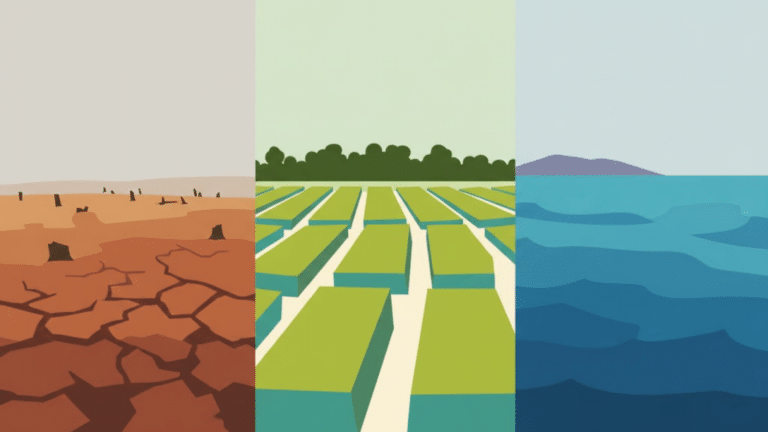
In January 2026, the UK government publicly released an intelligence report analyzing the security implications of global environmental destruction.
Models can predict catastrophic or modest damages from climate change, but not which of these futures is coming.

On November 6, 2025, in the lead-up to the annual UN Conference of the Parties (COP30), the Center on Global Energy Policy (CGEP) at Columbia University SIPA convened a roundtable on project-based carbon credit markets (PCCMs) in São Paulo, Brazil—a country that both hosted this year’s COP and is well-positioned to shape the next phase of global carbon markets by leveraging its experience in nature-based solutions.