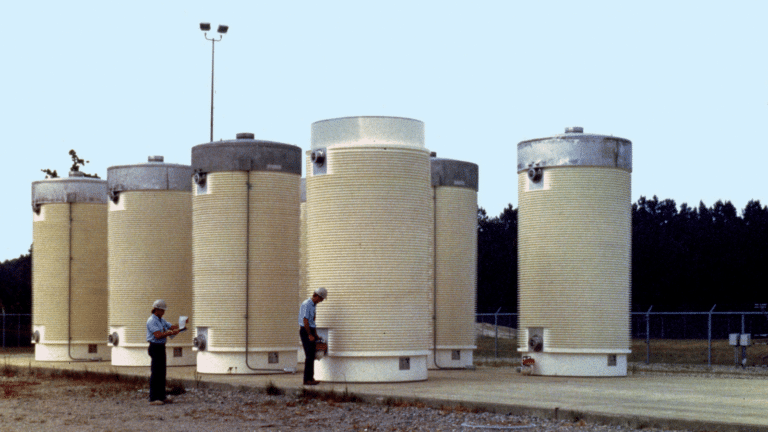
The World’s Mineral Powers Seize Their Moment
Resource-rich countries haven’t always benefited from extraction. Can this time be different?
Get the latest as our experts share their insights on global energy policy.
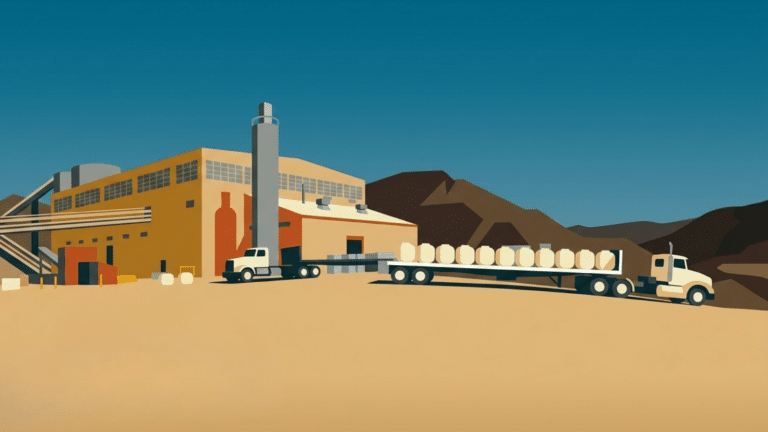
The US Export-Import Bank is preparing to close the first funding tranche of Project Vault, a public-private partnership establishing the US Strategic Critical Minerals Reserve.
Hear in-depth conversations with the world’s top energy and climate leaders from government, business, academia, and civil society.
For years, the energy transition was discussed as a shift that would happen in steady, predictable increments. But a massive surge in electricity demand in recent years—now colliding...


Partner, Orrick; Nonresident Senior Fellow, Atlantic Council Global Energy Center

Ashley Finan:
We’re really seeing policymakers treating nuclear energy as being central to our energy security. As that pertains to nuclear regulation, I think that policymakers see that efficient regulation is key to meeting many of those bigger goals that we have as a country.
Amy Roma:
When you talk about change writ large, all reactor licenses, the entire culture of the agency, it is slow to change. When the NRC actually has a specific license application in front of them, whether it’s novel, whether it’s first of a kind, they actually do a really good job. I think that is lost on people.
Jason Bordoff:
For years, the energy transition has been discussed as a shift that will happen in steady, predictable increments, but a massive surge in electricity demand in recent years now colliding with a fracturing geopolitical landscape has reshaped the global race for clean, reliable power. All of this has pulled nuclear energy back to the center of the national conversation, with many policymakers from both sides of the aisle calling for a nuclear renaissance.
But past multi-billion dollar cost overruns on traditional gigawatt scale projects still hang over the sector, even as a novel pipeline of small modular reactors and other advanced nuclear technologies promised to reshape the grid and the future of nuclear technology. This has put renewed attention on whether the US regulatory system is ready for the scale and the speed of what’s needed.
So what reforms are key to supporting the US nuclear energy sector? What needs to be done to ensure speed, safety, and predictability? And where do policymakers need to be careful to preserve the credibility, the independence, and public trust that make nuclear regulation durable over the long term?
This is Columbia Energy Exchange, a weekly podcast from the Center on Global Energy Policy at Columbia University. I’m Jason Bordoff.
Today on the show, Ashley Finan and Amy Roma.
Ashley is the Jay and Jill Bernstein fellow right here at the Center on Global Energy Policy. She previously served in senior leadership roles at Idaho National Lab, where she worked on nuclear energy and on national security issues. Amy’s a partner at the law firm Orrick, where she advises clients on legal business and policy matters related to the existing nuclear fleet as well as advanced reactors, fusion facilities, and supporting nuclear infrastructure. She is also a non-resident senior fellow at the Atlantic Council’s Global Energy Center. Ashley and Amy joined me to discuss the growing nuclear industry and evolving landscape of nuclear regulation.
We discussed how utilities and infrastructure companies are responding to rising interest in nuclear energy and how emerging reactor designs could reshape the landscape. We talked about reforms at the NRC and how to ensure they are done without sacrificing safety. And we looked at this resurgence in US nuclear energy in relation to international trade and existing nuclear non-proliferation policies. I hope you enjoy our conversation. Amy Roma, Ashley Finan, welcome to Columbia Energy Exchange. Great to have this conversation with both of you.
Amy Roma (00:03:15):
Great to be here.
Ashley Finan (00:03:16):
Great to be here.
Jason Bordoff (00:03:18):
We’re going to talk, not surprisingly, about nuclear energy, which is very top of the energy conversation with rising power demand. Questions about where all our electrons are going to come from, not just tomorrow, but also in the medium and longer term. And a strong focus from the current administration on how to accelerate the timeframe and bring more nuclear power online. Actually, one of the few areas it seems to me, but we’ll get into this where there can be some bipartisan consensus that it would be better for the country to have more nuclear power and be able to build that safely but also quicker. So maybe we’ll just start there. Ashley, I’ll start with you. If you could kind of just lay the landscape of where we are today with nuclear energy in the United States with the shift in the conversation if you think there has been one and with the evolving landscape of US nuclear regulation.
Ashley Finan (00:04:15):
Sure. Thank you, Jason. I think there has been evolution in the conversation about nuclear energy. I think that we’re really seeing policymakers treating nuclear energy as being central to our energy security, industrial competitiveness and the AI driven electricity demand in addition to climate goals, which has been part of the conversation for many years now. And as that pertains to nuclear regulation, I think that policymakers see that efficient regulation is key to meeting many of those bigger goals that we have as a country. Now, the reforms recently have picked up pace quite a bit under the Trump administration, but I would also comment that the efforts to modernize the NRC and make the regulations more risk informed and suitable for advanced technologies and innovation has been underway for more than a decade at this point. So it’s been an ongoing effort, but things have really picked up pace recently.
Jason Bordoff (00:05:23):
I’ll come back to one or two things you said, but Amy, your broad high level reaction to what Ashley said and what you agree and disagree with and how she just described it.
Amy Roma (00:05:31):
I mean, unsurprisingly, Ashley’s spot on and so completely agree with her. I will say three things have happened for nuclear that have changed the storyline, fundamentally changed the storyline. I’ve been doing this for about 20 years and over the last 20 years, where we are now was driven by a lot of evolving things. It didn’t just happen overnight, but one, the world got serious about climate change. So globally, everybody got serious about climate change and in the United States, we got serious about climate change. And people realized particularly countries that had already started their decarbonization journey is that you can only go so far. Renewables may be the low hanging fruit of the decarbonization journey, but when it comes to energy security, energy reliability, affordability, when you layer those things in, nuclear takes on a different light than it did before. And we see that happen in Germany.
(00:06:19):
Germany had economic policies in place. They shut down nuclear power plants. But then the second point is Russia invaded Ukraine. So geopolitical risk underlines the importance of energy security. I use Germany as an example again because what they did was they had an overt market penetration of renewables. They shut down, they blew up their nuclear reactors, so you can’t even come back from that. And then when you had geopolitical conflict layered in where they had to go cold turkey off Russian natural gas, they drove up their energy prices. So they’ve had negative economic growth for three years in a row because they didn’t have a holistic well-intentioned de- risk energy policy put in place. They’re importing energy from France, which is largely nuclear power, has a 95% decarbonized grid, but 70% nuclear power and driving up the rest of the energy costs around Europe. So that’s the second thing.
(00:07:08):
The third thing is now the load that data centers need and we’re building more data centers and we need more power for data centers and we’re not bringing nearly enough energy online to meet the data center needs. So we need to bring that energy online faster and we need to make sure we have more capacity. And so that’s a fundamental shift in how our energy markets have worked over decades, like where all of a sudden supply and demand are flipped where demand was only this very slow load increase over years. So utilities had all the time in the world to do their energy planning and now they don’t. Now we have huge gigawatts at a time coming online and we need the power in order to support that. And so we’re seeing a fundamental shift and then add into all of those things happening right now with an administration that’s pro- nuclear underscored by the bills and the legislation, the efforts have been put in place for the last decade as Ashley said.
(00:08:00):
And we’re at a really sweet point on delivering on projects. There’s a lot of things that need to come together in order to do that, but things like regulatory delay aren’t in the cards anymore.
Jason Bordoff (00:08:12):
No doubt, Germany. I think there’s a broader consensus now, not universal for sure, but broader that it was an error to shut down existing nuclear and maybe we can distinguish that from building new nuclear and talk about the implications of both. I mean, some of the economic destruction and economic growth harm we’ve seen in Germany came outside the power sector, came from deindustrialization and high natural gas prices destroying industrial activity. So I think it’s fair to say, tell me if you agree, nuclear is a piece of this, but it’s sort of a broader story about their very heavy dependence on one source of pipeline gas and then their struggle to cope when they lost it, right?
Amy Roma (00:08:52):
Yeah. And I was definitely not trying to say nuclear was the reason. I’m saying it’s part of the broader energy policy decisions that they were making as illustrative of the fact that the decarbonization discussion gets pretty darn real when you look at policy decisions, how that flows to what type of energy sources you end up having and then you add in unexpected things like large load growth or geopolitical risk. And then all of a sudden you realize that the policies you put in place maybe weren’t so well informed.
Jason Bordoff (00:09:23):
Ashley, Amy mentioned we have a need for electrons really, really fast in advanced economies in particular like the US and to some extent Europe because of rising power demand driven by AI and data centers. And the issue there is speed. People need these things tomorrow and renewables are pretty cheap and that’s why the fastest growth in new power generation added to the grid in capacity will be solar in the US, notwithstanding changes in federal policy. So I’m just curious when I could imagine someone hearing this conversation and saying, “Okay, this sounds great, but nuclear is really expensive and like we’ll be lucky if we see it in 10 years.” So are we talking too much about it? How do you respond to that?
Ashley Finan (00:10:09):
Jason, we’re going to need all of the energy sources that we have including solar, including nuclear and some nuclear will take longer, but we see really quick turn projects moving to restart existing nuclear power plants that were decommissioned as well as projects to uprate currently operating power plants. So those are ways to get in faster. There are also a lot of folks looking and indeed companies starting around the concept of using a bridge fuel like natural gas to get to a nuclear powered data center in several years time. So making sure that you can get to the clean firm power down the road and in the meantime, you have something to fill that gap. So I think that we’re going to need nuclear, whether it will be here in 2029 or 2034, 2035, I’m not sure we’re certain when it’s going to scale, but between now and then there are ways to bridge the gap and we’re going to need all the sources we can get.
Jason Bordoff (00:11:09):
Amy, you were going to say something.
Amy Roma (00:11:11):
Low hanging fruit is power upgrades for existing nuclear power plants. Then it’s restarting plants that we’re in decommissioning or finishing plants like the VC summer, which is a partially constructed nuclear power plant. But it’s funny, I always stumble when people are like, “Well, we need the power now and nuclear takes too long.” And I’m like, “The problems we’re facing now don’t disappear.” They don’t go away. So you’re going to need, to Ashley’s point, all of the above. There are some projects that you’re going to do solar powered projects with battery storage because that’s what makes sense and that’s what you can get here now. Even the gas bridge is difficult because the waiting list for gas turbines can be six years. So there’s very few things that can be here tomorrow that solve all our problems. So we need to take a long-term horizon. And at the end of the day, when people are like, “How do I assess nuclear and what role does it play?” I’m like, “We’re already building it.
(00:12:04):
The Tower Power project’s already been licensed. It’s already under construction.” The X Energy Dow project to provide carbon-free power and process heat for a Dow chemical plant is midway through its licensing process and it will be under construction soon. And once they build their first of a kind, they’ve already got the order books lined up after that. And so assuming no problems, they kind of go ahead relatively within the anticipated timelines and budgets factoring in first of a kind critical infrastructure issues, then they plan on scaling fleets. And we’re seeing a lot of shots on goal for different types of technologies. So there’s a lot of utilities right now trying to figure out, can we build AP 1000s? But we also have a lot of microreactors, SMRs, a lot of different types of technologies and a lot of different companies all trying to do this.
(00:12:52):
And to Ashley’s point, there are companies that their entire business model is gas to nuclear. So they’re like, “We plan on building gas. And then after we build gas, we’re going to at the same time simultaneously develop our nuclear projects and then construct our nuclear projects and ultimately transition the facility from one to the other.
Jason Bordoff (00:13:12):
I want to come to the regulatory reform and nuclear regulatory commission. What can be done to speed that timeline and maybe that’s the answer to the question I was about to ask, which is just before we get there, stepping back and saying, again, for people listening to this saying, this all sounds great, but we’ve talked about nuclear energy for a long time and then Vogtle takes years longer and has massive cost overruns and is this optimism too excessive given what the experience of the last 10 or 20 years? Ashley, how do you respond to that?
Ashley Finan (00:13:45):
Yeah. Well, I mean, you mentioned Vogtle as a recent experience and I think it’s an important one to look at.
Jason Bordoff (00:13:51):
Remind people that’s the most recent major nuclear project.
Ashley Finan (00:13:56):
Yes. In the US it’s a AP 1000 two unit plant in Georgia, both around a gigawatt of electricity. It was supposed to take eight years. It went to, I think, 15 or 16. It was way over budget and way over schedule. The experience there has been really well documented and well understood. The lessons have been taken in by the industry and it will be important to implement those lessons, but there were a lot of known issues that caused those delays on the project that we can avoid repeating, including beginning with in that case, a very incomplete design, really important to start with a complete design. Everybody now knows this. Vogtle had 188 or 189 license amendments in part because of the challenges they had there. They had supply chain challenges that were really important lessons learned. There were major changes to some regulations during their construction process.
(00:15:05):
Their management team changed four or five times over the course of that project. Westinghouse went bankrupt, COVID happened. It was almost a comedy of errors. So it should not be repeated. I have confidence that it will not be repeated and if that’s the bounding case, then we can only do better. And I think that the industry has really taken on those lessons and is prepared to move forward with new tools, including using AI and digital engineering. The regulator has also taken a lot of lessons from that project and is prepared to move forward more efficiently with different processes. So I’m really confident we won’t see that repeated.
Amy Roma (00:15:48):
Just to add to that, I mean, Ashley’s correct and DOE documented this in the DOE liftoff report for advanced nuclear that they put out under the Biden administration. It very much documented that the unique situation that was the AP 1000 experience, Vogtle, but also that this was not unique to nuclear, that this was unique, this was a systemic issue across all large critical infrastructure projects, particularly first of a kind projects that you have not done in a while. And one of the things that I like to highlight is the fundamental difference between kind of the east and the west when it comes to nuclear construction and deployment. In the west, we tend to deploy a bespoke first of a kind reactor once and then we say, “Ew, that was too hard.” So we did that with Vogtle, then we did that with a slew of European plants where we’re like, wow, way over budget, cost overruns, like construction delays, we’re not doing that again.
(00:16:47):
The problem’s nuclear. Problems not nuclear. The problem is stopping after one, right? So if you look at China, if you look at Japan, if you look at Korea, they have built fleets of similar types of technologies over and over and everyone sees massive cost reductions between one and the other with China already being at the rinse and repeat stage where it knows exactly how long it’s going to take to deploy, exactly how long it’s going to cost, has a full workforce, entire domestic supply chain, the regulators seeing the same technology over and over and it’s not going through these because it’s done it again and again and again.
Jason Bordoff (00:17:22):
So if there’s a lot of interest in building these things and making more of them, presumably an industry develops and the next second one’s cheaper in the first and the third’s cheaper in the second and raises kind of the question of what the role for government is to make all of that happen. And I was wondering if maybe Amy, you and then Ashley, you talk a little bit about, as I said at the outset, the Trump administration has set an ambitious goal for expanding nuclear energy in this country. Talk a little bit about what the administration is doing to try to bring that about and where you think they’re moving in the right direction and maybe not.
Amy Roma (00:18:01):
So the president issued a series of executive orders targeting the nuclear industry. They kind of went into three different bins. One was the Department of Defense, one was the Department of War, the other was the Department of Energy and the other was the NRC and each one of them kind of addressed upon a different issue with the largest impact on the commercial nuclear industry being on the NRC one and then to some extent the DOE one. So the NRC one basically directed massive reform at the NRC to overhaul the agency to make it more timely and efficient in its reviews and how it operates. The agency, like a lot of bureaucracies, you just keep adding things, you don’t take away, you don’t step back and look at, and are we doing this the right way? And so they basically are doing major rulemakings across several areas that the NRC covers.
(00:18:54):
They’re doing what, 28 rulemakings. They’ve had a bunch come out already that are like very substantial and holistic changes or implementations. Some of them were in directions the NRC was already moving towards like the Part 57 rulemaking, which is meant to enable the mass deployment of microreactors and that started a few years ago, but it’s 500 pages, it’s 600 pages of guidance. It’s very substantive, very rolling up your sleeves and it is constant. They’re overhauling the structure of the NRC and the president directed that licensing reviews for new reactors take 18 months per application and that is it was well within the ability of the NRC to do. It is a very aggressive timeline and several years less than it historically takes the NRC to review an application. And so the NRC charges basically on a time and materials basis. So when you are doing something several years less time than you would normally take, that’s way less money for everybody involved and you can deploy projects faster.
(00:20:03):
On the DOE side of things, they’re using DOE authorization and the Atomic Energy Act to authorize a number of reactor projects and then they’re expanding that out into other fuel cycle facility projects to help demonstrate the technology. So like R&D demonstration of pilot scale programs for the most part with the point being that you can show that these things work before you commercialize and go get an NRC license. And so both those things are important for jump starting like nuclear, new nuclear and allowing it to move further faster than it has before. So they’ve been pretty important.
Jason Bordoff (00:20:43):
Ashley, what would you add particularly to the point about kind of reforming the NRC licensing process?
Ashley Finan (00:20:48):
Sure. I will add to that and I also just want to highlight one other specific Trump administration initiative, which is to try to build around 10 gigawatts of new nuclear, which gets to the point that Amy was making about the need to repeat and not just build one, but really it’ll work towards an order book. And the administration is working closely with the DOE’s energy dominance financing office to help make that happen. So I think that’s a key leverage point that the administration is trying to exercise relative to the regulatory reforms, I would agree with what Amy said and I think there are some key reforms that are happening now. I mean, there are the ones that have come out, part 53, which is risk informed regulation for advanced reactors of any size. And then part 57 that Amy mentioned, which is focused on microreactors are now in one case final rule and in the other case out for comment.
(00:21:58):
Other key areas include revisions to the way that the NRC handles environmental regulation and implementation of the National Environmental Policy Act. That’s a big area where they’re doing some work. They’ve done a little bit and there’s now another rule underway. It’s with the Office of Management and Budget for review right now, but we’re expecting to see it perhaps as soon as next week and that could have a major impact on schedule. But I guess I also want to point out with this 18-month timeline, the NRC actually implemented that in TerraPower’s review, which was underway when the executive orders came out and they shortened that review by about eight or nine months while it was underway for their construction permit. And I think that that was a clear signal that it can be done. And in large part, the way they did that was by implementing parallel reviews of the final project.
(00:22:57):
So having the advisory committee on reactor safeguards and the general counsel and the management review the product in parallel instead of doing that in series, cut many months off the schedule. And that’s an important reform that probably could have been made years ago but never was. And now it finally has been. It doesn’t impact the rigor or the depth of the reviews. It just puts them in parallel and it’s an enormously important reform that they can now continue to move forward with.
Jason Bordoff (00:23:31):
So yeah, you’re bringing up an issue that I want to ask you both to comment on because these things are so technical and 99.9% of the people can’t evaluate the technical merits, the risks of nuclear projects. Obviously you got to get nuclear energy right because if you don’t, some pretty bad things can happen. At the outset of our conversation, Ashley, I noted you sort of talked about the need for efficient regulation and that is a concept I don’t think anyone would disagree with. We have a conversation in this country now about abundance. We need to make it easier to build things and of course that is true and it’s also the case that you need appropriate environmental protections and if you ignore those sorts of things, you can also mess things up along the way. And so the question is the right balance. How do you make sure you’re being sufficiently efficient and speedy and not unnecessarily delaying things, but you’re also not cutting corners.
(00:24:25):
So the idea that a review that took 24 months takes 12 months might seem good, but maybe those 12 months were really important and we cut corners we shouldn’t have cut. So I’m curious how you would explain to people who … And I think it’s not unreasonable that at least some people listening might look at other things that have happened with how this administration has approached enforcement and regulatory agencies and some agencies that were dismantled and at least have some skepticism about how much confidence you want to have that we’re maintaining the integrity and we’re not cutting oversight and regulation to the point that maybe speed is happening We’re making things faster but not in the safest possible way. So how would you describe that trade off and how should people think about it, particularly those who might be skeptical about whether we have cut too much oversight and regulation in other parts of the federal government
Ashley Finan (00:25:26):
Well, I think that speed and trustworthiness are not inherently in conflict, but indeed there’s some concern about that. I think that what’s really important is that we’re clear about the basis for decisions, reviews focus on issues that matter most. We have transparency and you don’t have political pressure on specific licensing actions or commission actions. And one of the reasons I think these reforms can be trusted is that they’re being implemented by the Nuclear Regulatory Commission, which is an expert independent regulator that has a long record of technical credibility and the commission itself, the five member commission that sits at the head of the NRC organization, it provides a really essential role here. They provide oversight and judgment and accountability to ensure that this modernization is not just deregulation, but it is instead really improving efficiency and maintaining efficacy. And I think everything that that commission, including the chair, Chairman Nieh have said has indicated that they’re taking this seriously, they’re following their process and they are acting as a credible and responsible regulator not being pressured into rash decisions.
Jason Bordoff (00:26:58):
And when you look, just quick follow up and then come to you, Amy, when you look at some of the examples where things have moved faster, like you mentioned TerraPower, you feel pretty good that that’s being done in a way where that the speed is coming from places that are good and appropriate for speed to come from but not undermining safety.
Ashley Finan (00:27:14):
Yes. So for example, that license review, I mean, it’s a procedural change that largely impacted the acceleration. Another place where we’re seeing acceleration is in moving from using an environmental impact statement to an environmental assessment. And that essentially does take you from approximately two years to approximately one year for your environmental review. So exactly the case you were stating and that has a safety valve. If you do an environmental assessment and you find that there will be significant impact, you have to go do an environmental impact statement. So it’s not as though it’s a shortcut, it’s a bit of a quicker proces to look at the level of impact. But if you then find there’s a significant impact, you now have to go do the full environmental impact statement anyway and in fact it will take longer. So it’s in everyone’s interest to get it right and to only do an EA or an environmental assessment when it’s appropriate.
(00:28:11):
So it does appear to me that the steps they’re taking are well-informed credible approaches to accelerate the schedule
Jason Bordoff (00:28:19):
Amy, how should people understand the tension if there is one between kind of appropriate efficiency and inappropriate corner cutting?
Amy Roma (00:28:28):
Yeah. So I have to say, I had the same concerns when I saw the executive orders come out, I was afraid of what was going to happen. I was just like, this could be an area to cause mischief. And this is an industry I’ve been in for 22 years and like a lot of people in this industry, we really care how it goes. We want projects to go well. We want there to be timely and efficient licensing reviews, but we also want them to be thorough and make sure the appropriate safety reviews are done and the appropriate environmental reviews are done and that projects are overseen and deployed well. And so when I saw the EOs come out, I was a little nervous and then we kind of had to sit and see what happened, right? We had to see what was actually in these rulemakings as they started to unfold.
(00:29:16):
And I will have to say I have been very pleasantly surprised when I read a lot of the rulemakings, the level of diligence and rigor in them and how much they implement changes that the NRC should have made probably as Ashley said, maybe could have made a long time ago is really reassuring to me. And I’m going through licensing reviews right now with companies and there’s not much difference on the technical review that’s happening as it would have in other years with other licensing reviews, but the NRC staff is easier to talk to. You’re getting more useful information. We’re getting Or kind of juice from the squeeze for the conversations that we’re having that allow the applicants to provide better materials and the NRC to provide better feedback. And so it’s just improving the process. So I would say I understand the concerns. I think other agencies may not have lucked up so much, but in the nuclear industry, seeing the rulemakings and then going through the application process with applicants, it’s working pretty well from what I see.
Jason Bordoff (00:30:28):
And how would you describe the focus on the NRC, which in some discussion seems to be like, oh, this is the reason nuclear is not happening. And I know other people who are like, yes, the NRC could certainly move faster and have a little better efficiency, speed, risk tolerance, trade off. But would also say it’s kind of receiving too much unfair blame. There’s an inherent complexity to advance nuclear technology and first of a kind designs. There’s a host of broader product development issues and sometimes the applications that show up just aren’t good enough and have to be sent back and don’t blame the NRC for that. Do you think the NRC gets too much blame or is this where most of our focus should be if we want to speed the timeline to new nuclear?
Amy Roma (00:31:10):
So I’ll tell you two things. When you talk about change writ large, all reactor licenses, the entire culture of the agency, it is slow to change. The rulemaking it was doing for Part 53 was not going well. They were just trying to take too much from the other regulations they already had in place. They weren’t being innovative enough. Congress was getting mad at them. When the NRC actually has a specific license application in front of them, whether it’s novel, whether it’s first of a kind, they actually do a really good job. And I think that is lost on people. People are like, “Oh, we don’t like Part 53. The NRC stinks.” And I was like, “Part 53 is an optional framework that you could use, but you also could adopt many of the elements that you need to under a part 50 or Part 52, which are the other reactor licensing frameworks that are already in place.
(00:32:01):
And the NRC is really good at adapting it as you need it. You would need to engage in pre-application with the NRC, which some companies have done and some companies didn’t want to do, but those were the things that would’ve set you on the right track for submitting a application that the NRC should be able to review in a relatively timely way. With that said, things like the, and we stack our reviews instead of doing them concurrently, we’re low hanging fruit to fix. But the agency definitely I think has gotten a bad rap that it’s just terrible and can’t regulate and I think is an easy scapegoat to hide other problems in the nuclear industry. Deploying first of a kind problems projects are going to be hard. It’s going to be hard for everyone and nuclear takes slower and takes longer than you anticipate. I tell every client that I have, including all these reactor startups, this is going to take longer and be harder than you anticipate.
(00:32:52):
With that said, you get a great regulatory environment right now and prepare a high quality application and you should be in pretty good shape. But even when the administration first came in, there was a lot of talk about like, how could we deliver a AP 1000 or a BWR, two different types of reactors? How can we deliver it in three years? And I was like, you guys presume this is an NRC problem. If you issue a license right now, you do not have an operating reactor in three years, period, hard stop. And it’s because no long lead time items have been procured. The design is not final. You do not have any level of significant investment commitments by the project owner, which is often a utility. And it’s going to take too long to get the workforce, the equipment, and everybody and the contracts in place in order to give you a project in three years.
(00:33:47):
That’s the harder part of nuclear. Creating a financeable project where everybody takes a level of risk that they’re comfortable with is the hardest thing to navigate in nuclear, particularly large nuclear nuclear. It’s not the NRC. It’s not the regulator.
Jason Bordoff (00:34:02):
Ashley, what are your thoughts on how tough one should be on the NRC?
Ashley Finan (00:34:07):
I agree with Amy. The NRC is not the hardest part. The hardest part is building the reactor. I think that the NRC has made enormous progress leaps and bounds recently to move from what was a pretty slow process to a much more efficient process. There are still some things that they are working on and that can get more efficient as we move forward, but enormous progress to the extent that I think it’s not the big bottleneck at this point.
Jason Bordoff (00:34:41):
Amy, you used jargon. You said the words part 53. So I was wondering if you could explain to everyone what you’re referring to. And part 53 is being described as a shift from kind of prescriptive regulation toward a more risk informed framework. Is that how to think about and how significant is that philosophical change for the NRC?
Amy Roma (00:35:03):
Yeah. So just quick background. Part 50 is a traditional licensing process. It’s a two-step licensing process where you apply for a construction permit and then an operating license. It has been in place since the early 50s or mid-fifties. The part 52 is a combined operating license. It was put in place in 1989 to respond to the problems that the NRC had with part 50, which is with the two-step licensing process, you can build a plant but you don’t know if you can operate it. And so the NRC gave companies the option of applying for a combined operating license where you would have all the information you needed upfront, the NRC would issue the approval and as long as you built it according to the way you said you would, you’d get your license to operate. And so then the new part 50 is both part 50 and 52 are designed for traditional large lightwater reactors, which is what the reactors in the United States, commercial reactors in the United States operating today are, and most of the ones around the world.
(00:36:01):
Part 53 was put in place because Congress directed the NRC in the Nuclear Energy Innovation and Modernization Act of 2019 to develop a technology neutral risk informed framework. So don’t come up with prescriptive regulations. Don’t be very specific about what type of technology. We’re going to have a range of alternative technologies using different fuels and different coolants. What performance criteria does it need to perform within and then license that way? Whether you do Part 50, Part 52, Part 53, or the new Part 57, which is for microreactors, depends on your risk appetite, what type of technology you’re deploying. I will tell you that after the COL, the lesson learned for the combined operating license for Part 52, the only facility built under that was Vogtle and they learned really quickly it’s hard to use a COL process because you have to have detailed design work that you can’t then change when you learn it’s not constructable.
(00:36:59):
You can’t change it. You have to go and get a license amendment before you can change it. So when you see TerraPower Xenergy, the two advanced reactor companies that came after Vogtle that TerraPower already got licensed, Xenergy’s about to get a license, for those two projects, they went back to part 50 and they’re like, nope, we want the flexibility when we’re building our first of a kind project to adjust the design of it as we’re constructing it in order to ensure that it’s constructable, efficient, operates the way that it’s intended. And then we’re going to submit an operating license after that that has the final detailed design information that the NRC needs to review in order to enable the operation of the license. So it’s just the four different frameworks in place and the calculus behind which one you pick.
Jason Bordoff (00:37:48):
Ashley, anything you want to add to that?
Ashley Finan (00:37:51):
No, Amy described it all really well.
Jason Bordoff (00:37:55):
And then I think a month ago there was a draft rule with a new licensing pathway for commercial reactors called Part 57. Is that right? And what’s the significance of that Ashley?
Ashley Finan (00:38:08):
Sure. Well, Part 57 is focused on low consequence reactors and really that essentially means microreactors. So trying to have an approach that acknowledges that a microreactor has much lower impact in its worst case accident than a larger reactor and bounding the analysis because of that and also trying to make it more repeatable because we imagine that microreactors would be deployed in many numbers, right? So you’d want to be able to deploy a microreactor or 10 microreactors on a site and repeat that elsewhere without having to go through a multi-year process to license at a new site. So that rule is still in the comment period, public comment period. So there will be some input and some iteration on the details of that rule, but it’s an important tool because microreactors, again, are really a pretty fundamentally different type of nuclear power plant than the large reactors that are most well suited to the other rules that Amy described.
Jason Bordoff (00:39:30):
Anything you wanted to add, Amy?
Amy Roma (00:39:32):
Yeah. So I’d add that the NRC was nibbling around the edges for microreactors. It probably made it a lot harder on itself than it needed to because it had guidance in place for research and test reactors, which are microreactors and there’s a few dozen of those around the United States and it declined about 10 years ago to use that and decided to use the large scale nuclear regulations and just downsize them, which was a really weird approach to take. And it wasn’t until the oil and gas industry went into the NRC and said, “Hey, we need these for remote operations. We need these to lower our carbon emissions, particularly for upstream oil and gas extraction, and we need to deploy hundreds of them and we can’t. Your fundamental licensing model doesn’t make sense and you will prevent this industry from becoming economic and we’ll just move on to something else.” And so that conversation I think jolted the NRC to say, “Well, there’s a real customer base here that wants these.” And it was a customer driven regulatory response where the customer said, “You need to change this NRC, not the licensee, not the person designing the reactor, because every company is a pretty small in and of itself, but you took a huge industrial end user pointing out the importance of how the NRC’s current regulatory framework didn’t work.” And the NRC staff at the time was like, “You’re right, we have thought this, but nobody came in and asked us to do what you just did.” And that started the Part 57 rulemaking two years ago, but it was just think factory operations, think of moving the equivalent of a diesel generator or a natural gas generator size reactor and being able to manufacture in a facility and deploy it and have it on site.
(00:41:17):
Very limited environmental impacts, oftentimes it’s like intended to be on a concrete pad, really small in size, really tiny, really small amounts of radioactive material involved for their fuel. And the profile of what you’re looking at is fundamentally the opposite of something like the Vogtle plant that we were talking about before. And so that’s what the Part 57 rulemaking was intended to address.
Jason Bordoff (00:41:39):
Just for people listening, again, stepping back, maybe start with Ashley, you guys are talking about microreactors and then people who have heard of small modular reactors and then there are large traditional nuclear projects, AP 1000s. Just give people a sense of like the technological landscape today. How quickly is that changing? How is that going to change the outlook for nuclear cost? What are you optimistic about? What do you think maybe is overhyped?
Ashley Finan (00:42:05):
Sure. Well, I mean, I think what you just described is that there are a range of different types of reactors, a range of different sizes, very small reactors on the one to maybe 10 megawatt electric size that are really, they’re designed to replace diesel generators, to replace remote power in remote locations. They’re designed for military applications like forward operating bases, things like that and potentially behind the meter power for industrial customers like Amy was describing in the oil and gas sector. So that’s one type of reactor, the micro reactors that are being developed. Then there are small modular reactors in the several hundred megawatt electric range from around 75 or 100 megawatts up to 350 megawatts or so. And those are sized for larger loads that don’t yet need a gigawatt or to be put in place as a multi-pack where you would put several small modular reactors in place and be more efficient to build them that way.
(00:43:15):
In some respects, you’d have less capital at risk as you built each unit and as you operate, you’d be able to take just one down at a time for refueling so you never go from total capacity down to zero. So a couple different models for that, but those are for applications where a smaller bite is a better approach. Small modular reactors really started to be developed during the past 20 years where you really haven’t had big electricity demand growth in the US and the industry was looking at, well, what is the need? The need is to replace retiring coal generation and other retiring generation. And that’s not typically coming in gigawatt scale bites. We need to get something smaller, more modular, easy to build, and that fits the need over these past 20 years. As we look ahead and now where we have enormous electricity growth potentially underway and on the horizon going to the gigawatt scale plants increasingly makes sense again.
(00:44:14):
And those are the larger reactors like the Westinghouse AP 1000 or several other products out there. In terms of cost, you’re looking at the difference between economies of scale with the large reactors and economies of production with the smaller reactors. And there are advocates for both. And I think that I’m optimistic that we will see all types of those reactors deployed, well, all the microreactors, the small modular reactor, medium size and the large reactors. Within those, there are also some different coolant technologies that can enables you to reach new operating efficiencies, new uses like process heat, couple other like safety aspects and other benefits, recycling nuclear fuel more effectively, a lot of other opportunities in there with these different kinds of sodium or molten salts or helium cooled reactors, things like that.
Jason Bordoff (00:45:16):
Amy, I want to come back to something you said because I’m both comforted and concerned by it and that was your kind of healthy skepticism when you saw these executive orders come out and then you feel more reassured that they’re being implemented sensibly. And then as someone speaking for myself, I think for you too also, but who thinks it would be a good thing if the country had more nuclear energy and we want to make as efficient and speedy a timeline to bring new nuclear online. But the comment I made about the sort of inherent distrust in a world that is more politically polarized and again, not without some justification. When you look at efforts of DOGE to dismantle certain parts of the government like USAID or what’s been done to enforcement efforts at places like EPA or to the inspectors general, it is understandable why people would look at efforts to streamline agencies like NRC and be concerned.
(00:46:17):
And I’m wondering how do we build confidence? What do you think can be done, should be done by regulators to communicate the reforms that are being undertaken to the public so that efficiency is not perceived as weakening safety if in fact it is not?
Amy Roma (00:46:34):
Well, it’s interesting because I just want to point out the executive orders came out a few months into the president’s administration, but they came out just after just before, I know just after he had fired the former NRC chair who was a Democratic appointed NRC commissioner who would normally, when there’s a change of administrations, he would go from being a chair to just being a commissioner. And so when that happened one, two, I was a little bit worried and I was like, “What’s happening here?” Because at the end of the day, I’m all about regulatory reform. I’m all about improving efficiency and timelines. I think we have a lot of heavily bureaucratic reviews, but the NRC is fundamentally a safety regulator and you want to make sure that a safety regulator has the ability to do what it needs to do to ensure safety and not is beholden to an administration that wants to see a certain outcome.
(00:47:32):
That was my fear seeing that not happen, I have to say in the rulemaking space or in the licensing reviews that I’m doing, because that’s the stuff that I’m seeing and participating in, I’m not seeing that happen. And I think the best thing that the public can see is if you go look at any of the reviews that the NRC is doing, it is clear that there’s no whitewashing. There’s a technical rigor in the materials that are coming out. Everything’s public, everything that the NRC does in a licensing space, they have dockets for every applicant, meetings are open to the public when you’re not talking about proprietary information, there’s an opportunity to petition to intervene and request a hearing, there’s public comments. So you can go look at these documents, the environmental reviews, you can look at the technical reviews and they’re very meaty. And so that to me provides comfort in what the NRC is doing and the reviews that it’s conducting, but then you’ll also get to see facilities that are being built and that are operating as intended.
(00:48:33):
I think sometimes we’re in a waiting game. We were in a waiting game to see what type of regulations are going to come out and then they came out and they were reasonable. I think you’d see the public up in arms if they were not reasonable. And then now we’re in the waiting game to be like, “And how are the licensing reviews going? ” Okay, those are all kind of going according to norm. And there are plenty of people who like to participate and that would yell from the rooftops if they weren’t. So then the next phase is, “And now we’re constructing and now we’re operating and everything’s fine.” And so each one of those de-risk it in my mind, everything’s operating normally and as I would expect it type thing.
Jason Bordoff (00:49:10):
Ashley, anything you’d add to that?
Ashley Finan (00:49:12):
I would just add that the NRC’s credibility is one of the really important, valuable assets that the US nuclear industry has when we are building domestically but also trying to export abroad. So if investors or international partners start to see that there are issues and they think that safety decisions are being politicized, that could be harmful to deployment and to selling nuclear products from the US. So the reforms really do need to be communicated and designed to strengthen the system, not weaken it. And I think that, as Amy said, that’s what we’re seeing, but it’s important that that continues and that the transparency around that continues. And if I had one area that could be improved, the administration has instituted these reviews by the Office of Management and Budget of the NRC products before they’re released to the public. And that has reduced a little bit of the transparency that we used to have.
(00:50:15):
It has reduced a little bit the amount of public input early on in the process. I think also one other concern I have is that for the sake of moving fast, comment periods are being kept to a minimum in general to the required minimums. And that’s meaning that the folks who have comments on the rules are needing to work very fast, the agencies needing to work very fast to incorporate those comments. And there’s a possibility in my view that little things get missed that could make things slower down the road because these regulations all interact heavily with existing regulations. And so if a regulation is developed and we don’t catch where it interacts with another one and now there’s a conflict, that’s going to result in later on having to figure out how to resolve that conflict, which will take time and be an unpredictable situation and not good for moving forward and for efficiency.
(00:51:21):
So if I had concerns, those would be them. I think transparency is vital here.
Jason Bordoff (00:51:27):
You mentioned exporting nuclear technology and I was wondering if you had any thoughts about the so- called 123 agreement, particularly with regard to US-Saudi civil nuclear cooperation, US nuclear export competitiveness and how to make sure that we’re doing that in a way that is sensitive to concerns about non-proliferation and other guardrails.
Amy Roma (00:51:53):
So I will tell you this, the nuclear non-proliferation discussion gets confusing very fast with everybody defaulting to their talking points and no one quite being correct. So everybody talked about the UAE and the gold standards. The UAE has a 123 agreement with the United States. A 123 agreement is a bilateral agreement for nuclear cooperation between the United States and the other country that is necessary but not alone sufficient to enable nuclear trade. So you need it in place if you ever want to exchange nuclear fuel or sell a nuclear reactor. You don’t need it in place to actually share technology associated with the nuclear reactor, but the US and the UAE put in place a 123 agreement. And in that, the UAE said it would not enrich or reprocess uranium in its country. And then everybody started calling that the gold standard. It also had a provision in there that said, “And you need to agree to this standard in every other 123 in the Middle East.
(00:52:55):
And if you don’t, we’re not obligated to follow it too.” But then everybody started calling that the gold standard and said, “If you don’t have an enrichment and reprocessing restriction in place in the 123s, then that’s not safe and that’s a nuclear nonproliferation issue That’s frustrating. The UAE agreed to it because it had no plans to pursue nuclear weapons and it was like, fine, throw it in. We don’t care.” For other countries, they care about enrichment and they care about reprocessing for their domestic energy security, right? Countries like Japan want to enrich in their country because it is an island nation with limited natural resources, heavily reliant on other countries for its fuel and it keeps having economic issues happen when geopolitical conflicts arise like LNG tankers can’t come through. Russia invades Ukraine and you can’t get natural gas from Russia anymore, things like that.
(00:53:54):
So there’s a competing balance to why countries want to do something or preserve the right to do something in the future if they need. I just wanted to lay that foundation because 123, the requirements of a 123 agreement are listed in Section 123 of the Atomic Energy Act and one of them is not and you decline to enrich or reprocess in your country. It is not. And so it’s not statutorily required. It was voluntarily added in the UAE one and then the issue came up as, does Saudi one agree to it or not? And so big picture, not even talking about the US Saudi and the 123 there, do I think that we need to make it required that all our 123 agreements include an enrichment and reprocessing restriction? I don’t know that Congress figured that out. If it wants to amend the Atomic Energy Act and add another line, it has like 10 criteria for a 123.
(00:54:52):
Just add one more, right? But other than that, I feel like we confuse the issues and we make it sound like countries want to pursue nuclear weapons because they don’t want to agree to an additional provision in a bilateral agreement for nuclear cooperation that other countries don’t insist on. And the foundation of our nuclear non-proliferation regime today did not require. It said, “Don’t pursue nuclear weapons in exchange.” And this is the foundations of Atoms for Peace from 1954. In exchange for like not pursuing nuclear weapons, we will share the peaceful use of nuclear technology. So a lot of countries see this as within their inherent right as the peaceful use of nuclear technology and part of their energy security to try to do. With that said, just because the restrictions not in the 123 agreement doesn’t mean that we then have to enable the export of enrichment or recycling technology to those countries.
(00:55:44):
And in fact, that technology is really, really hard to get. There’s only a few countries that have them and they’re heavily restricted on where they permit it to go to. And one example would be in the US there’s a company that is European owned, but they have a US uranium enrichment facility. That technology is classified and blacked boxed. So it is exported from the Europe into the United States under black box with the US not having access to it and the US subsidiary not having access to it. And so that’s how well protected this technology is. So I think it is kind of nonsense to insist on it in a 123. If we want to make it in a 123, amend the AEA and make it statutory, otherwise we have other levers and tools that we need that we can achieve the same objectives.
Jason Bordoff (00:56:35):
I have several questions, but this is like a whole separate podcast to go deep on 123, but so we’re almost out of time, but were you going to say something, Ashley, to add to
Ashley Finan (00:56:43):
That? I just wanted to add one thing, which is that if we restrict enrichment and reprocessing in a 123 agreement, or we refuse to have a 123 agreement with a country over that issue, it may prevent us from selling them nuclear technology, but it does not prevent others from doing so. And so what it means is that instead of the US developing a hundred year plus relationship on this energy technology with another country, China or Russia likely comes in and develops that relationship. And the geopolitical importance of that relationship is really strong and the influence that our exports give the US over non-proliferation and safety and security standards in the countries where we export is really important and valuable. And so we should be not just always trying to ratchet our requirements, but instead looking holistically at what are the implications of doing so and what do we gain by having the relationship versus taking the ball and going home
Jason Bordoff (00:57:55):
And China and Russia are, I believe, building most of the world’s nuclear power plants today. So that makes what you said sort of an important policy priority. Just to conclude, we talked a lot about NRC reform and it’s important, but I presume it’s not the only thing one would want to do. So maybe the way to ask the question is if candidates running in 2028 or something were to come on either side of the aisle, were to come seek your advice, what would you be telling them? What do you think the agenda should look like? What are the top one or two things if you were in charge of policy for a day that you would prioritize to accelerate the timeframe and bring more nuclear energy onto the grid Amy and then Ashley?
Amy Roma (00:58:37):
Yes. So mine’s very simple. Please do not swing the pendulum, right? I think it is-
Jason Bordoff (00:58:43):
That’s the only thing I’m certain is going to happen. And
Amy Roma (00:58:46):
That’s the one thing that can’t, right, is we have a lot of momentum here. Was it perfect? No. Are there things that I wouldn’t have done? Yes. Is the big picture going in the right direction? Yes. Could that change? Yes, but it’s not. Let’s just assume everything continues to go well, the reforms are working well. Don’t come in and assume that assuming a change in administration is a change to the other party. Don’t assume that just because it was the other party that everything was bad and don’t just try to stop it or undo everything.
Jason Bordoff (00:59:22):
I mean, that’s part of the reason I was asking these questions about confidence integrity in the process. Again, there is bipartisan agreement for the most part about nuclear energy. We would like to make it more a part of the energy system and so maybe that’s an area where that policy pendulum doesn’t need to swing as much as it will in some other areas related to climate policy or oil and gas policy or something, but that’s important.
Amy Roma (00:59:50):
But don’t throw the baby out with the bath water. Don’t assume everything’s bad or wrong because there’s a lot of good things happening right now that should have happened years ago.
Ashley Finan (00:59:58):
Ashley? I I think it’s similar, just moving away from regulation a little bit on my comment, I would add that we don’t want to swing the pendulum on building an order book. So don’t build one and stop even if you don’t agree with the party that was there before, let’s get the job done and build multiple units of the same design so that we can actually move down the cost curve and end up with a competitive product because these are really challenging in the US. We have a 80- to 100-year generation asset that we’re trying to build in an environment where capital looks for returns very much faster than that. And so we need the government involvement to move down this cost curve and we need it to be consistent over time. So we really need to, again, not swing the pendulum on the policies towards deployment as well as regulation.
Jason Bordoff (01:00:54):
Super interesting. Okay. Amy Roma, Ashley Finan, this was really a fascinating conversation. Thanks so much for being with us on Columbia Energy Exchange.
Ashley Finan (01:01:01):
Thank you. Thank you for having us.
Jason Bordoff (01:01:04):
Thank you again, Ashley Finan and Amy Roma, and thanks to all of you for listening to this week’s episode of Columbia Energy Exchange. The show is brought to you by the Center on Global Energy Policy at Columbia University. The show is hosted by me, Jason Bordoff, and by Bill Loveless. Mary Catherine O’Connor, Caroline Pitman, and Kyu Lee produced the show. Gregory Vilfranc engineered the show. For more information about the podcast or the Center on Global Energy Policy, please visit us online at energypolicy.columbia.edu or follow us on social media @ColumbiaUenergy. And please, if you feel inclined, give us a rating on Apple, Spotify, or wherever you get your podcasts. It really helps us out. Thanks again for listening. We’ll see you next week.
For years, the energy transition was discussed as a shift that would happen in steady, predictable increments. But a massive surge in electricity demand in recent years—now colliding with a fracturing geopolitical landscape—has reshaped the global race for clean, reliable power.
All this has pulled nuclear energy back to the center of the national conversation—with many policymakers from both sides of the aisle calling for a nuclear renaissance.
But past multi-billion dollar cost overruns on traditional gigawatt-scale projects still hang over the sector, even as a novel pipeline of small modular reactors and other advanced nuclear technologies promise to reshape the grid. This has put renewed attention on whether the US regulatory system is ready for the scale and speed of what’s needed.
So what reforms are key to supporting the US nuclear energy sector? What needs to be done to ensure speed, safety, and predictability? And where do policymakers need to be careful to preserve the credibility, independence, and public trust that make nuclear regulation durable over the long term?
Today on the show, Jason Bordoff speaks with Ashley Finan and Amy Roma about the growing nuclear industry and evolving landscape of nuclear regulation.
Ashley is the Jay and Jill Bernstein global fellow here at the Center on Global Energy Policy and previously served in senior leadership roles at Idaho National Laboratory, where she worked on nuclear energy and national security issues.
Amy is a partner at the law firm Orrick, where she advises clients on legal, business, and policy matters related to the existing nuclear fleet, as well as advanced reactors, fusion facilities, and supporting nuclear infrastructure. She is also a nonresident senior fellow at the Atlantic Council’s Global Energy Center.
Despite all the advancements we have achieved globally in recent decades, as many as 750 million people still lack access to electricity. Tackling energy poverty requires far more...

For years, the energy transition was discussed as a shift that would happen in steady, predictable increments. But the last 24 months have shattered that illusion. Energy providers...
The Iran crisis is in its 80th day. Right now, roughly 1,500 vessels laden with oil, natural gas, fertilizers, and oil products sit trapped in the Persian Gulf...
Much of the world’s attention today is understandably focused on conflict in the Middle East, and the immediate implications for energy markets and global security. But other regions...

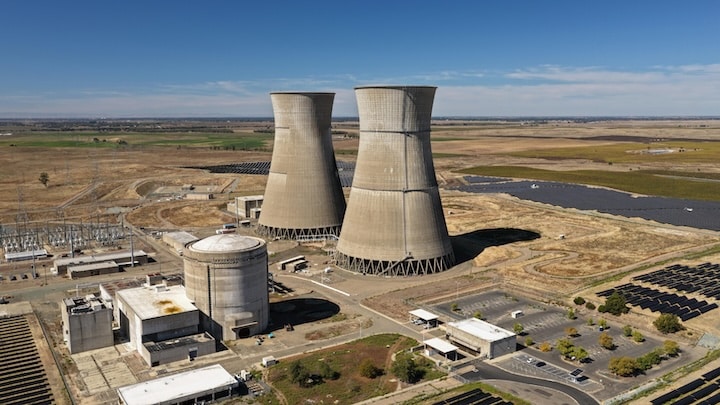
On February 24, 2026, CGEP hosted a private virtual roundtable under the Chatham House rule to discuss the importance of an independent nuclear safety regulator.
America needs a plan for Tehran's nuclear program.

Concerns about greenhouse gas emissions, air pollution, and energy security are driving increased interest in nuclear power.