Congress Looks to Charge Data Centers Billions in Sweeping Energy Plan
The permitting bill could make it easier to build data centers for A.I. but a novel provision would also force data centers to pay much more for power.
Get the latest as our experts share their insights on global energy policy.
The shift in the balance of political power will help determine which US policies can be funded and sustained over the next two years.
Hear in-depth conversations with the world’s top energy and climate leaders from government, business, academia, and civil society.
Affordability was one of the key issues that drove US voters to the polls last week, and the resulting message for the newly elected Congress is clear: driving...

Find out more about our upcoming and past events.
Putting data centers in space once seemed fanciful. Today, a growing number of companies have started doing so.
Our initiatives and programs are designed to address critical needs in key topical areas around energy.
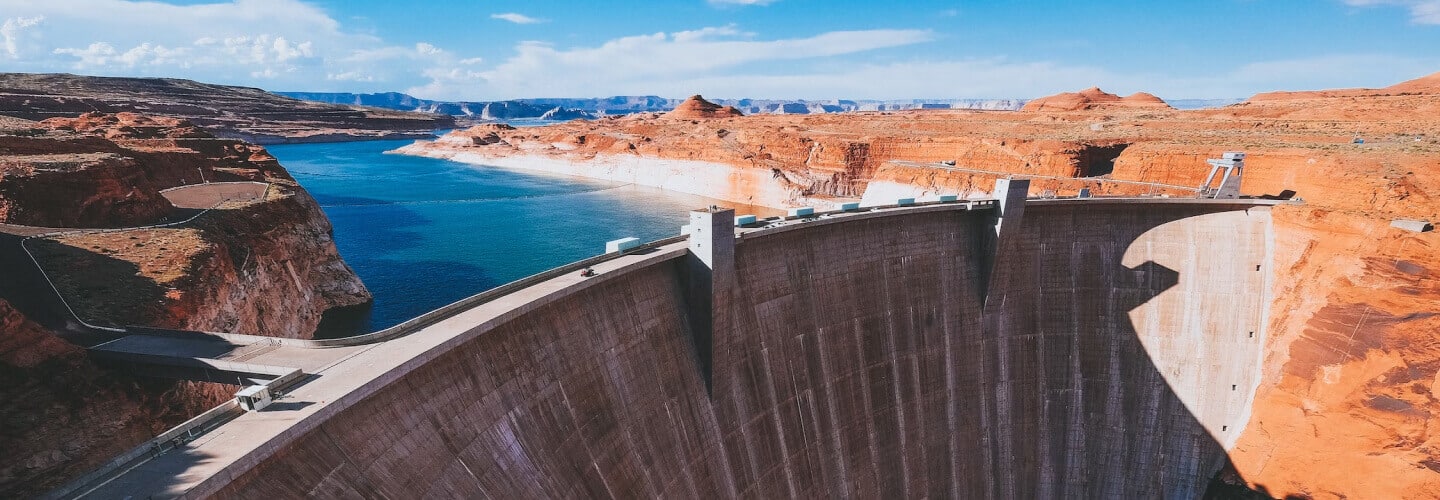
Electricity prices across the United States are facing unprecedented pressures driven by a complex mix of load growth, grid resiliency, and extreme weather. Amid growing public concern over rising utility bills—particularly with regard to the surge in demand from AI data centers—the issue has become deeply politicized.
To better understand how regulations for PCCMs are evolving across the globe, the Center on Global Energy Policy (CGEP) at Columbia University SIPA conducted a year-long project combining research and stakeholder engagement through multiple convenings. The effort examined regulatory frameworks for PCCMs and emerging trends across countries and regions, and assessed whether such frameworks could help close the integrity gap in carbon credit markets.
The global energy system is entering a period of profound change. The 2026 disruption in the Persian Gulf and Strait of Hormuz has exposed the vulnerability of energy supply chains, infrastructure, transit routes, and global markets. Even as immediate disruptions ease, their effects are likely to shape energy policy, investment, trade, and national security for years to come. The Future of Energy Security Study Group examines how governments, energy companies, investors, and markets should rethink energy security in this changing environment. The group will explore how current disruptions will reshape energy strategies through 2030 and beyond, and what those changes mean for economic development, geopolitical stability, and global cooperation. The group brings together experts across regions, industry and perspectives for research, virtual discussions, and in-person convenings and simulations. Its objective is to provide a rigorous, nonpartisan forum connecting markets, policy, and empirical analysis to help policymakers prepare for emerging energy security challenges. Members include CGEP scholars, CGEP non-resident fellows, external scholars, former policymakers, investors, and energy industry leaders. Members listed below are those who have committed to contribute analytical work in a forthcoming CGEP publication. Our aim is to provide on the ground empirical analysis and examinations of the challenges to energy security in our current geopolitical environment, and to convey those findings into recommendations for policymakers and shared knowledge for research, policy and business communities.
Our mission is to elevate women in the energy sector. The initiative offers educational programming and professional development and addresses barriers to entry and success. We work with industry to recruit, retain, and promote women into decision-making roles.
Our Lab works with global communities to improve opportunities for sustainable energy inclusion, innovation, and growth while supporting progress toward the overall goal of a just energy transition to low-carbon energy.
Columbia SIPA’s Center on Global Energy Policy and Institute of Global Politics has launched the Trade and the Clean Energy Transition (TCET) initiative to help decision-makers both within the U.S. and globally navigate the intersection of climate and trade objectives to help accelerate the transition to a net-zero economy.
Addressing the needs, barriers, and opportunities to scaling up investment in and production of critical minerals and battery supply chains
This initiative strengthens Columbia’s academic leadership in the field of carbon dioxide management.
Nuclear energy is a dispatchable low-carbon option that can be expanded quickly to accomplish decarbonization. The initiative will focus on five major thrusts to address the challenges facing nuclear energy: Communications and education, NRC regulation, reactors, fuel cycle, and international engagement.
The India Program supports India’s energy transition through collaborative research within the University, as well as with Indian think tanks and academics working on energy and environment issues.