Bipartisan Senate group urges Trump to abandon plan to buy Russian diesel amid Ukraine war
A bipartisan group of six senators is urging President Donald Trump’s administration to abandon a plan to purchase diesel from Russia.
Get the latest as our experts share their insights on global energy policy.
Mandatory application review by the Advisory Committee on Reactor Safeguards (ACRS) reflects an earlier era, when the nuclear regulator lacked today’s permanent technical staff and nuclear promotion was...

Hear in-depth conversations with the world’s top energy and climate leaders from government, business, academia, and civil society.
Carbon credit markets have become one of the most hotly debated tools in the fight against climate change. Supporters call them essential to closing the gap between corporate...

Find out more about our upcoming and past events.
The Center on Global Energy Policy at Columbia University SIPA’s Women in Energy initiative invites Columbia University students to a roundtable discussion with Pam Brown, Managing Director at...

Report by Jason Bordoff, Antoine Halff & Akos Losz • May 30, 2018
The realities of the modern oil market have thrown into question the need for the US emergency oil stockpile. For more than 40 years, the US Strategic Petroleum Reserve (SPR) has existed as a buffer between US oil markets and global supply shocks. A byproduct of the 1973–1974 oil embargo, the SPR was born in an age when US crude production was in decline, imports were rising, and the oil market was dominated by the Organization of Petroleum Exporting Countries (OPEC). Over the intervening years, the reserve was tapped only a handful of times as the oil market has grown much larger, deeper, more liquid, and better integrated and thus more able to address shortfalls of various magnitudes that previously would have caused greater pain for oil-importing countries. In regard to US national oil supply security, however, perhaps the greatest change has been the boom in domestic production over the past decade due to hydraulic fracturing of shale and other tight oil deposits.
The new US energy fortune has thus given rise to a view that the SPR—which formerly enjoyed wide bipartisan support—could be sold off to plug spending holes without creating significant energy security risks. The US Congress has already passed several measures to significantly pare down the size of the SPR through a series of drawdowns staggered over the coming decade. The emerging and important discussion over whether the SPR has become too large or altogether useless, or whether it should be kept whole, prompted the Center on Global Energy Policy at Columbia University’s School of International and Public Affairs to research how the SPR fits into the modern oil market—and indeed the wider global energy system—and whether the United States would benefit from modifying or eliminating it.
In short, the paper finds the following:
The Hormuz crisis is the latest in a series of disruptions that have exposed the continent’s energy vulnerabilities. The time to build resilience is between crises, not during them.

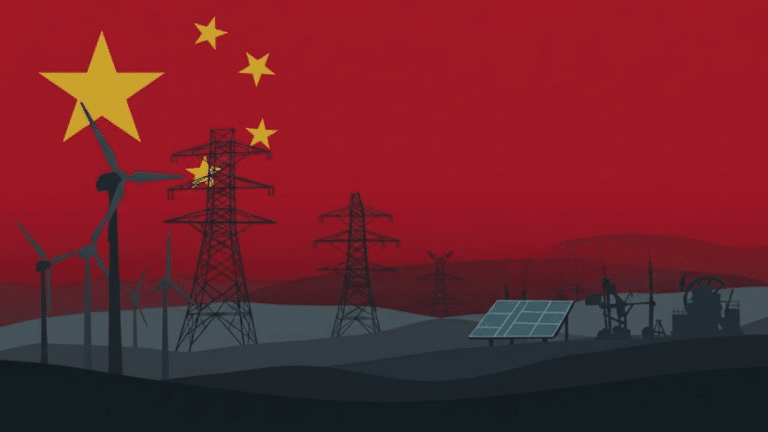
Two economic planning documents released at the March meeting of China's National People’s Congress include the term "energy powerhouse" for the first time.
Full report
Report by Jason Bordoff, Antoine Halff & Akos Losz • May 30, 2018