This website uses cookies as well as similar tools and technologies to understand visitors’ experiences. By continuing to use this website, you consent to Columbia University’s usage of cookies and similar technologies, in accordance with the Columbia University Website Cookie Notice.
Energy Explained
Get the latest as our experts share their insights on global energy policy.
Making Nuclear Regulatory Reform Durable: Efficiency Backed by Credibility and Predictability
The United States is at a rare inflection point for nuclear energy, with unprecedented momentum behind deployment and regulatory reform as nuclear becomes central to energy security, AI competitiveness, and state and corporate climate goals.
Podcasts
Hear in-depth conversations with the world’s top energy and climate leaders from government, business, academia, and civil society.
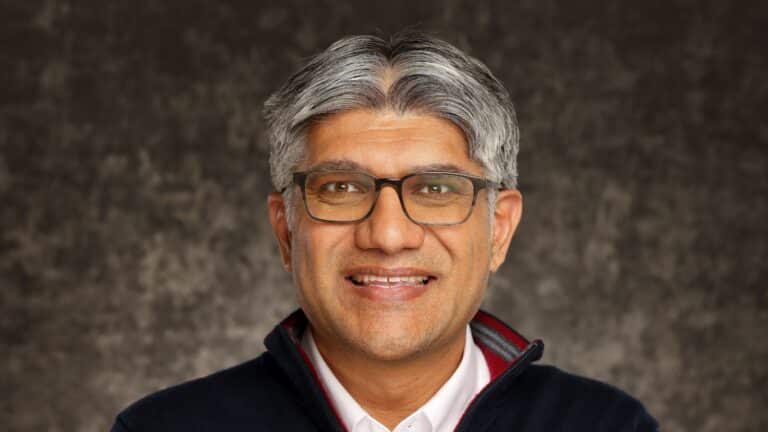
Jigar Shah Wants to Depoliticize Energy
As political support for clean energy has waxed and waned over the past twenty years, so has the government’s financial backing. In the 2010s, critics pointed to the...
Events
Find out more about our upcoming and past events.
February 16, 2026 - February 18, 2026
• 1:00 pm - 2:00 pm
est
The Energy Transition from a Fiscal Angle – A Two Part Workshop
This workshop will be conducted in two parts: Part one on February 16 from 1:00 PM to 2:00 PM EST, and Part two on February 18 from 1:00 PM to...
Event
• Center on Global Energy Policy
1255 Amsterdam Ave, New York, NY 10027
1255 Amsterdam Ave, New York, NY 10027

Podcast
Luisa Palacios and Eddie Fishman on the US Pressure Campaign on Venezuela’s Oil
December 23, 2025
Guests


-
Transcript
-
Luisa Palacios: Given how fast this has evolved and has escalated, I wonder what the exit strategy is. I would hope that the US administration also has a plan because it is going to require significant investments.
Eddie Fishman: I think it is quite remarkable and something that we should just pause and maybe reflect on for a second that the Trump administration has decided that they would rather again risk a shooting war with Venezuela than impose financial pressure on Chinese banks and refineries.
Jason Bordoff: Over the past week, President Trump has intensified pressure on Venezuelan President Nicolás Maduro by targeting the regime’s economic lifeline—oil. The United States has seized two oil tankers in just 11 days, and it’s in pursuit of an additional tanker following Trump’s declaration of what he called a total and complete blockade of vessels carrying Venezuelan crude subject to US sanctions.
The move puts one of Venezuela’s most valuable and most strategic assets squarely at the center of the conflict. The country holds an estimated 17% of the world’s oil reserves and produces nearly a million barrels a day, nearly all of which is for export. Targeting these exports marks an escalation, but the use of a naval blockade carries serious implications and raises questions about further escalation and the risk of open conflict.
How is the standoff between Washington and Caracas evolving? What diplomatic or economic off-ramps, if any, remain? What does all of this mean for global energy markets already navigating a fragile balance of supply, sanctions and geopolitical risk?
This is Columbia Energy Exchange, a podcast from the Center on Global Energy Policy at Columbia University. I’m Jason Bordoff.
In response to the increased pressure on Venezuela, we pulled in two leading experts right here at the center to discuss the Trump administration strategy in the region, what could happen in the coming days and weeks and its impact on global energy markets. Today on the show, Dr. Luisa Palacios and Eddie Fishman.
Luisa leads our research team and is a fellow here at the Center on Global Energy Policy. Previously she served as chairwoman of CITGO Petroleum Corporation, the US refining arm of Venezuela’s State Oil Company, PDVSA.
Eddie is a senior research scholar here at the center and he’s the author of the bestseller Choke Points: American Power in the Era of Economic Warfare, which was named a finalist for the Financial Times Business Book of the Year. Luisa and Eddie joined me to unpack the escalating situation in the region on the afternoon of December 22nd. Luisa Palacios, Eddie Fishman, great to see you both. Thanks for joining us on the podcast today. Good to see you.
Luisa Palacios (02:43): Great to see you, Jason.
Eddie Fishman: Thank you for having us.
Jason Bordoff (02:46): Good to be here. Well, it’s great to have you both on. As so often is the case when important and consequential events are happening in foreign policy and in energy that I want to understand better, I assume a lot of our listeners do as well. I feel fortunate that the first thing I get to do is just ask the people I work with who are the smartest people on so many of these topics and what’s happening today with Venezuela is no different. So great to have you both on and talk this through with you because it is a complicated situation. I have a bunch of questions and hopefully that’ll help me understand everything, help everyone listening understand it. But maybe we could just start with the big picture. Venezuela’s in the headlines almost every day now, and we’ll get to what’s happening day to day in the headlines. But Luisa, broadly speaking and maybe we want to start by just reminding everyone about the work you do here and your background and why you’re one of the people we turn to for Venezuela in particular. Maduro, the leader there who’s been there more than a decade, why are we all talking about Venezuela all of a sudden? What has changed that has brought this issue to such an acute potential crisis?
Luisa Palacios (03:54): Thank you, Jason. So as you know, I am the interim research director here at the Center on Global Energy Policy. I’ve been at the center now for almost 10 years, first as a non-resident fellow and also as a senior research scholar, and I also teach at the School of International Public Affairs a class on financing of the energy transition. I have also had many hats in my career, and one of them was as chairwoman of CITGO Petroleum Corporation. CITGO Petroleum Corporation is the fifth largest independent refinery in the US, but has this specific characteristic that it is owned a hundred percent by the National Oil Company of Venezuela, PDVSA. During the first Trump administration, I actually arrived to this role because of actions that were taken under the first Trump administration where it recognized the opposition leader Juan Guaidó. And that recognition of the opposition leader meant that all of the assets of the Venezuelan government abroad and in those countries that recognized Juan Guaidó were passed to opposition control.
Luisa Palacios (05:05): So I arrived at CITGO during the Trump one administration under a foreign policy of maximum pressure on the Maduro regime. So I have seen a different movie before, but a movie nonetheless that has to do with a specific or a more assertive policy towards Venezuela, the regime of President Maduro and the oil sanctions surrounding that foreign policy. So I think that’s a good background to start with because as everyone knows, Trump was elected last year. He took office and one of the major things that changed was US foreign policy towards Venezuela and sanctions policy as well towards Venezuela. And so this is a continuation of that or manifestation of that change in foreign policy stance—one that is also seeking, in my view, maximum pressure, but through other means. I think the administration learned some of the lessons of that attempt during Trump one and is trying a different approach. And this approach is an approach that has led the administration to ramp up a significant naval presence in the Caribbean off the coast of Venezuela. That pretty much started in August, but has now escalated to the headlines that we are now seeing every day in the news about possibilities of further blockade or seizure of tankers off the coast, of Venezuelan exports, of potential for strikes and other issues that I’m sure we’re going to talk about.
Jason Bordoff (06:54): But in your view, and then I want to hear Eddie’s take as well, this is, as you said, it’s in some ways a continuation, but a shift in US foreign policy strategy toward Venezuela, the US policy position being opposition to Maduro’s government. Is that motivated by a desire to see regime change there? People are reading headlines about attacks on small boats, presumably carrying drugs. People are reading headlines about a desire to get oil resources from the country. Just in your view, what is happening here? Is this about Trump would like to see Maduro out of power and that’s what this is all about, or is it something else?
Luisa Palacios (07:36): I would say that there are many reasons. One thing about Venezuela is that it’s not about just one thing. There are many reasons why this is taking place. I do believe that some of the more assertive stance towards Venezuela has to do with the election that took place last year and the fact that it was very clearly won by the opposition and that to the eyes of everyone, including international organizations that follow and track electoral behavior in other countries, it was clearly won by the opposition and stolen by Maduro. In order to stay in office, he had to resort to very aggressive means and violate pretty much the constitution of the country. So when one talks about the reasons why this is happening, that has to be part of the reasoning. I would say that in my view, the thing about this government and this regime that is different from other authoritarian regimes is that this regime cannot contain its crisis within its own borders.
Luisa Palacios (08:50): And the fact that 25% of the population has had to flee from the country is not something that is unrelated to what is happening. I do think that the Venezuela case has become a domestic issue just because of the very clear priority that this administration has given to migration. And so Venezuelans are not the only migrants into the US, but it has been caught up in migration policy. I do think that this government is a government that has taken the issue of criminality as well and drug trade as a very significant issue. And so Venezuela is also a country that has seen a significant ramp up of drug trade in the last several years. And so democracy, human rights abuses, criminality, migration—those are all in the mix. But this is a podcast about energy. And so yes, it is also about energy, but it’s not only about oil, it’s also about maybe critical minerals. And so I do think that it’s difficult just to say that there’s one reason why this is happening. There’s a confluence of reasons, and I would say the last thing is the geopolitical space that Venezuela occupies and the fact that the regime has forged ties with regimes that the US administration sees as enemies or as regimes contrary to its own interest. And so there’s, I think that also plays in the mix—that geopolitical context in which Venezuela is playing its cards.
Jason Bordoff (10:32): Anything you’d add to that, Eddie? You’ve worked on sanctions for a very long time and we’ve had sanctions on Venezuela for quite a long time, two decades or so. What has been the purpose of those sanctions? Just put everything happening today in a sort of historical context.
Eddie Fishman (10:47): Sure. So I would sort of date the beginning of the contemporary Venezuela sanctions regime to 2014, and I remember it directly because I was working on sanctions policy in the US government at the time at the State Department, and it was in that year that Congress passed what was known as the Venezuela Defense of Human Rights and Civil Society Act. This was effectively a sanctions regime imposed on Venezuela by Congress that aimed to penalize individual Venezuelans for human rights abuses, corruption, and the erosion of democratic processes—really targeted at the Maduro regime. So in some ways, the origin of the Venezuela sanctions regime was similar to other sanctions regimes that are aimed more at behavioral issues. For instance, the Magnitsky sanctions where you’re really trying to crack down on individuals who are responsible for human rights abuses and corruption. At the time, at least within the Obama administration, there wasn’t a broader political goal of the sanctions.
Eddie Fishman (11:50): We weren’t imposing these sanctions to try to affect regime change or really try to do very much of anything aside from stigmatizing the behavior of the Maduro regime. I’d also note again that it originated in Congress. This wasn’t something that the Obama administration came up with itself. They largely signed—President Obama signed this bill into law because it had passed overwhelmingly in Congress. And actually Marco Rubio, then a senator, was a significant backer of legislation of this type. When Trump came into power in 2017, the Venezuela sanctions regime, which again had sort of been more of a symbolic regime under Obama, took on much greater significance. As Luisa just described, you had stolen elections in which the Trump administration eventually recognizes a government in exile, and at that point, they really ramp up the sanctions regime from just cutting off big Venezuelan companies from debt and equity markets, very similar to the original Russia sanctions of 2014, to a much broader maximum pressure strategy that included blocking sanctions on PDVSA, the state-owned Venezuelan oil company in 2019.
Eddie Fishman (13:02): And this was really substantial, not just because PDVSA had a subsidiary, CITGO, that Luisa knows a lot better than I do, but also at the time was producing a million and a half barrels a day. So they were a pretty significant player in the oil market. I think what Trump really was trying to do, as evidenced by the fact that he had recognized the government in exile, he was trying to use sanctions to affect regime change. He was using the maximum pressure strategy to try to push Maduro out of power and get this guy Guaidó to come in as the real leader of Venezuela. Well, by the time Trump left office in 2021, it was clear that that had not worked, right? He had tried maximum pressure, the Venezuelan economy was in free fall, but Maduro did not have any major defections within the military or in his political apparatus.
Eddie Fishman (13:50): So then Biden comes in, and the question in the Biden administration is, well, what do we do with these sanctions? We’ve inherited this maximum pressure strategy. I don’t believe the Biden administration believed that sanctions could affect regime change. And so they were sort of left making the most of a policy that they didn’t really support. And so what Biden ultimately came up with was, well, could we make the most of a bad situation by at least leveraging the prospect of sanctions relief to incentivize Venezuela to have a real election in 2024? So in late 2023, they provided temporary sanctions relief—oil sanctions relief—to Venezuela, basically saying that they would reevaluate this temporary sanctions relief after Venezuela held elections in 2024. Well, we all know what happened. Venezuela held the elections and they were completely rigged, a sham, and Maduro held on to his iron grip on power.
Eddie Fishman (14:38): And so that sanctions relief proved short-lived. So by the time Biden leaves power, his one sort of attempt to use the sanctions for some political purpose had also failed. I think Trump coming in has just picked up right where he left off in 2020. He’s using the sanctions to try to affect regime change in Venezuela. It started with traditional sanctions and even with some secondary tariffs where Trump threatened a 25% tariff on anyone who bought Venezuelan oil. But I think after about nine or 10 months of this policy clearly not delivering results, in recent weeks, it has escalated and we’re now in the realm of what most people would call a naval blockade or a naval quarantine, which goes beyond financial sanctions into the use of military force to try to crack down on Maduro’s oil exports.
Jason Bordoff (15:25): And talk a little bit about that naval blockade. We have a few ships now that have been prevented from getting to Venezuela to load crude or from exporting crude oil. The regime, Luisa, depends quite a bit on oil revenue. Is this naval blockade a significant escalation in sanctions or how should we think about it? Maybe Eddie first?
Eddie Fishman (15:48): Sure. I’m glad you’re asking this, Jason, because I think this is something that there’s been a lot of misunderstanding about in the last few weeks as it’s been reported. The US has a very large naval buildup in the Caribbean off the coast of Venezuela. President Trump himself has said that he’s intending to impose a naval blockade. And in the last two weeks, we’ve already seen three ships that have been interdicted, two of which successfully interdicted. The one today, the Bella, as we’re recording, apparently is still in pursuit by US Coast Guard vessels, and we have not yet boarded that vessel. The misunderstanding here is that this is not just an escalation of sanctions. Modern sanctions—this is something I really highlighted and documented in my book, Choke Points—are really about the use of nonviolent means of applying economic pressure to other countries using choke points in the global economic system like the dollar-based financial system, like semiconductor technology to impose nonviolent economic pressure on foreign countries.
Eddie Fishman (16:49): A naval blockade is fundamentally different. It is executed by the US Navy, right? No longer do you have the Treasury Department or bank compliance officers who are implementing this. It is US sailors and Coast Guard officials who are actually interdicting ships. It is the Pentagon and the Coast Guard who is commanding this, not the Treasury Department. And I think that’s a big change because once you start interdicting ships, you get into the situation you have today. Well, what happens if a ship refuses to let you board? Do you try to board it forcefully? Then what happens if force is used? If someone opens fire on the US, it’s very easy to see how a naval blockade or quarantine—and we can get into the difference if it matters, there’s not much of a difference practically speaking, but legally there is—you could very easily see how this escalates into the use of kinetic force. So the thing I worry about is that what we’ve now done is we’ve moved the economic pressure strategy outside of the realm of sanctions and into the realm of military force. And I think once you get there, it is a slippery slope into the use of kinetic force, which I’m not sure the US population really supports at this juncture.
Jason Bordoff (17:58): Luisa, let me come to you in one second, but just a quick follow up. And why are we doing that? I think it is the case that the vast majority of Venezuelan oil exports go to China. China’s a big buyer of Iranian oil, for example, and the whole idea for financial sanctions and secondary sanctions was to avoid the need for military force in the first place. So why aren’t we going after the Central Bank of China or wherever the buyer is? Why are we moving to naval blockades?
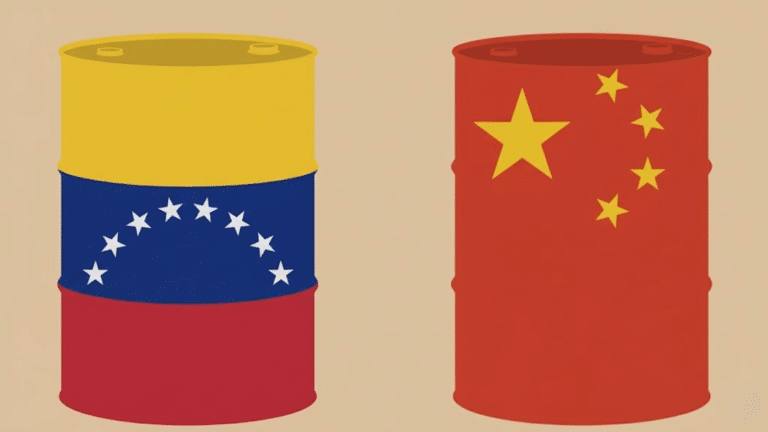
Eddie Fishman (18:22): This is a great point, and I think maybe we should just put it out there that around 80% of Venezuela’s oil exports go to China, and the rest is oil that under an OFAC license—so under the explicit permission of the US government—is going to CITGO, right? So the rest of it is all going to China. So what would we have normally done if we weren’t using a naval blockade? It would be going to oil refineries in China and banks in China and threatening them with secondary sanctions, threatening them with being cut off from the US dollar unless they comply. I think the fact that we’re not doing that, the fact that we’re prioritizing a naval blockade and potentially even risking war over pressuring China actually speaks to the shift in the balance of power between the US and China this year.
Eddie Fishman (19:09): The fact that China has showed that it can retaliate very aggressively to US sanctions, including through export controls on rare earth minerals, I think it also shows that Donald Trump has moved away from the hawkish China policy of his first term into a much more accommodating stance, and he and Xi Jinping are scheduled to meet multiple times in 2026. Trump seems very intent on ensuring that those meetings go well, that there are some deals that are announced. And so I think it is quite remarkable and something that we should just pause and maybe reflect on for a second, that the Trump administration has decided that they would rather again risk a shooting war with Venezuela than impose financial pressure on Chinese banks and refineries.
Jason Bordoff (19:50): Luisa, a lot in what Eddie just said. Respond to any of it you want, but I’m curious if you sort of see it the same way. I’m not asking you to get in Trump’s head or Marco Rubio’s, who’s an important player I think in thinking about current administration policy toward Venezuela and Latin America more broadly, about what their objective is. This is a president who sort of takes credit for ending wars, not starting them. And so I’m kind of curious how you read US policy right now toward Venezuela.
Luisa Palacios (20:18): So there’s a lot there that Eddie said. The first thing—yes, it does seem to me first lessons learned from Trump one: you did have, not only did you throw the kitchen sink at Venezuela in terms of different kinds of sanctions and thinking differently about and innovating in terms of sanctions use, you even used the secondary sanctions in a significant way, and I think you did manage to get a significant decline in oil production. I mean, as Eddie was saying, before the sanctions were imposed on Venezuela in the beginning of 2019, Venezuela was producing on average around 1.5 million barrels a day, and in the course of that year, you saw a significant decline of 40% decline in oil production. So the sanctions managed to lead to a decline in oil production. You actually also went to secondary sanctions, which is really where you put a lot of pressure.
Luisa Palacios (21:37): And even under those circumstances that regime survived. If your intention with the sanctions was changing behavior, I think if anything, one of the things that happened is that it accelerated more the rent-seeking criminal nature of the regime, so the DNA of the regime instead of changing behavior—the opposite. And so I think there are some things learned about that. I think Venezuela is an interesting case because it has not only, as Eddie has mentioned, there’s a whole history of sanctions, but my own experience at CITGO is the use of licenses as well to bring a regulatory regime and a compliance regime that actually means the sanctions are not only a zero-sum policy—either you have them or not. The use of licenses, that at least when we were at CITGO we obtained, gives a lot of leeway to how you think about exiting sanctions or changing sanctions in order to change behavior.
Luisa Palacios (22:51): So one of the things that Eddie did mention is that during the Biden administration, there was an easing of sanctions. There was not an elimination of sanctions, there was an easing of sanctions through licenses that did manage to get an acceptance by the Maduro regime of elections. Those elections that actually led the opposition—they took advantage of that window of opportunity. And you saw with María Corina Machado and with Edmundo González Urrutia, who ended up being the president-elect in those elections, that the opposition has tried everything they can through democratic means in order to, even in the context of sanctions, arrive at political change or lead to a democratic process that was thwarted. And so I do think that you do have a lot of examples in the use of sanctions. Which yes, in the whole scheme of things, I think Eddie brings an interesting point about why not go to China but stay with Venezuela and escalate in Venezuela.
Luisa Palacios (24:08): That might be one of the readings. The other reading is what are the lessons that we have learned with Venezuela itself, because we have had a whole history of lessons with Venezuela. The thing about where this is going is that I think the news reports have concentrated on what is the share of tankers that are transporting Venezuela that are sanctioned so that we can understand what really is the share of oil production that could be affected. I actually think that that’s misreading something at the point, something that I think Eddie alluded to. It doesn’t matter if it’s—you don’t need to go to the totality of a naval blockade. The impact is going to be very significant I think for Venezuela oil production and for Venezuela’s oil exports. First, for Venezuela oil production because you significantly increase the risk for anyone transporting Venezuelan oil. And therefore at some point you are going to start to see declines in oil exports that are going to trickle down into oil production.
Luisa Palacios (25:20): And so to me, the next question is when are we going to see shutdowns? Because there’s a point where you cannot get the oil out. The storage capacity of Venezuela is very, very limited. The second point is that you significantly increase the risk premium of dealing with Venezuela. And so the discounts that Venezuela now is going to see on its oil exports are going to be huge, and they’re not going to be just nominal. You might see that the oil ends up in China at a huge discount, but more importantly is that the cash at hand is going to be also impacted by the fact that you are going to have significant risk in just moving the oil. And the third point is that Venezuela’s oil—yes, Venezuela is a country that has the largest oil reserves in the world, but those oil reserves are of very heavy tar-like type of oil that needs condensates in order to be able to be transported and exported. And by impacting oil exports, you’re not only impacting the way oil flows out of the country, you’re also impacting the imports of condensates Venezuela urgently needs. And so I do think that just concentrating on exactly the amount of tankers that is going to be impacted, how much oil production is going to fall, is missing the point that this is a real change and a ramp-up in pressure that is going to lead to significant economic distress in Venezuela.
Jason Bordoff (26:53): Really, really helpful. So let me just—I want to come back to the energy market impacts, as you said, this is an energy podcast, but just to stay on the topic of economic statecraft or military statecraft and defense tools. You mentioned a moment ago, Eddie, the original sanctions on Venezuela and the legislative authority they came under, I forget the name of the bill in 2014—Human Rights and Civil Society Act, I think you said. Okay, so there’s a congressional statute that said you should impose sanctions. What’s the authority under which the president is sending the military to block cargoes and tankers from leaving or coming into Venezuela?
Eddie Fishman (27:41): It’s a very good question. So so far they’ve had apparently court seizure orders for the three tankers that they’ve pursued. In terms of exactly how they’re justifying it, it’s hard to know, but there are clues in terms of the Trump administration’s actions. If you’ve looked at the last 10 years, there have been a small handful of tankers that the US has seized before, and all of them have been related to foreign terrorist organizations. This is a designation wielded by the State Department against groups like al-Qaeda and the Islamic Revolutionary Guard Corps and Hezbollah. The tankers that have been seized, most of them have been carrying Iranian oil and have been linked to the IRGC and Hezbollah. And so if you look at US law, seizure authorities under terrorism statutes are much broader than they are under sanctions or any other type of legal authority at hand.
Eddie Fishman (28:38): When the Skipper, which was this first tanker, Venezuelan tanker, was seized on December 10th, I think was the date, Pam Bondi, the Attorney General, made clear in her statement that this was linked to foreign terrorist organizations, and indeed the Skipper had been sanctioned previously for shipping Iranian oil. So there was a hook basically that this tanker had violated—had provided material support to a foreign terrorist organization, and as a result, they were able to get a court seizure order. Trump then came out and, as Luisa mentioned, had said that the US was imposing a blockade of all sanctioned tankers, and this led to a flurry of analysis of, well, how many of the tankers carrying Venezuelan oil actually are sanctioned? I think probably the best estimate is that 40% of the tankers were sanctioned. To me, and I agree with Luisa on this, this was pretty irrelevant because all it takes is half an hour of an official in OFAC to sanction a new tanker.
Eddie Fishman (29:42): So it could even be that a tanker is leaving a Venezuelan port and they could impose sanctions on that tanker and then seize the tanker if that’s the authority. But more to the point, I don’t believe that just being sanctioned is enough, honestly, to get a court order. I do think you need this terrorist nexus. So I think the more relevant move that the Trump administration did was in November. Secretary of State Marco Rubio designated the Cartel de los Soles, this Venezuelan cartel, as a foreign terrorist organization with Maduro as its head. So I think what the purpose of that is really using a legal hook, a terrorist hook, to be able to seize Venezuelan tankers. And I think we now have better evidence that this is the strategy because the second tanker that was seized, which was called the Centuries, was not on the US sanctions list, and yet they still were able to obtain a court order for it.
Eddie Fishman (30:32): It was not related to Hezbollah, it was not related to the IRGC, and was not on the sanctions list. And so my understanding and sort of the best assessment now of people who are following this is that the Trump administration is effectively declaring legal authority to seize any tanker shipping Venezuelan oil or, to Luisa’s point, materially supporting the Venezuelan oil sector through shipments of condensates or naphtha or any other diluents because you can argue that they’re supporting the Cartel de Los Soles, which is a foreign terrorist organization. So they’re really using terrorism laws in order to justify this very far-reaching naval blockade of the Venezuelan oil sector.
Jason Bordoff (31:13): And to what end or where do you see this going? The president’s chief of staff recently said something like the president wanted to keep on blowing up boats until Maduro cries uncle, which was seen by many as saying just this is our plan until the government falls. Is that your understanding of what’s happening now and what the game plan is moving forward?
Eddie Fishman (31:35): Yes. I think that this is very clearly a strategy to use economic pressure to affect regime change. And in fact, there’s actually a very close historical analog to this. I look at the naval blockade that was imposed on Iraqi oil shipments in the 1990s. Most people don’t remember this now because when we think about sanctions on Iranian oil or Russian oil, we really do think about secondary sanctions. We think about pressuring refineries in India or banks or oil traders in Dubai. We don’t think about naval blockades, but the oil sanctions on Iraq in the 1990s were implemented through multinational naval patrols in the Persian Gulf. And you did have naval interdictions of Iraqi oil tankers for 13 years, all the way from 1990 through 2003 when George W. Bush launched the second bigger invasion of Iraq. And I guess what I would say is what that sort of lesson of history shows is that oftentimes these blockades can be a slippery slope to the use of kinetic military force because once you already have significant military assets in the region, obviously the USS Gerald Ford, this massive carrier strike group could do quite a bit of harm to Venezuelan strategic assets if it wanted to. You run the risk that what happens if there’s some sort of a skirmish that occurs in one of these interdiction campaigns or even forgetting an accident. What happens if three or four months from now, Jason, you ask Luisa and I to come back on this podcast because nothing’s changed?
Eddie Fishman (33:03): We’ve interdicted all these shipments, Venezuela’s oil sales have plummeted, the Maduro regime is even poorer than it was before, but you still have Maduro in power. Then what is Trump going to say, throw up his hands and say, we failed, this didn’t work? Or is he going to be tempted to go to the next level in the escalation ladder, which I would call sort of kinetic strikes—kinetic strikes that don’t lead to casualties, trying to strike economic or military assets in Venezuela that aren’t killing people. But look, I think the risk of this whole campaign is you have moved this US-Venezuelan problem that has now existed for over a decade outside of the realm of nonviolent coercion and into the realm of military force.
Jason Bordoff (33:47): So Luisa, I guess a critical question in that escalation ladder that Eddie just laid out is the question, coming to energy, of how important oil and oil revenue is to the Maduro regime and if it is really possible to significantly—completely squeeze that—and is that sufficient to put pressure where one might expect political change in Venezuela? Is that a sensible strategy or is this at significant risk of escalating in some of the military ways that Eddie talked about?
Luisa Palacios (34:25): It is a strategy. I’m not sure—it is a strategy after repeated attempts by multiple administrations in the US to do something, which tells you something about the staying power of some of these types of governments. I do think in this case, the US is not only in my view just impacting oil revenues. We think about, and yes, to answer your question directly, oil revenues are key to Venezuela’s economy, key to the government, key to its exports. Oil exports represent 90, if not now, 95 or 96% of total exports in the country. This is the way you generate foreign currency. And so it is devastating from an economic financial perspective. The fact that there are no dollars in a country that has hyperinflation means that you are actually now starting to feel the impact of lack of hard currency and you’re seeing it in the black market.
Luisa Palacios (35:44): And so you are experiencing significant stress already on macroeconomic variables. So all of that is happening. I think what this campaign is also doing, either directly or indirectly—I’m not sure if it’s part of the intent—but because of the way it has proceeded, it is also putting a lot of pressure on every other source of income for the Maduro regime. And so I think my reading of the situation is that you are putting pressure on the Maduro regime, but you’re putting a lot of pressure also on everyone in the coalition that supports the Maduro regime. And given how fast this has evolved and has escalated, I wonder what the exit strategy is in both cases. I do think that in the case where you do see some kind of political change, I would hope that the US administration also has a plan because it is going to require significant investments.
Luisa Palacios (37:00): I do think that you are going to see in the near term, this represents significant downside risk to oil production as we just talked about. But I do think that provided there’s a trustworthy government, a stable government, the removal of sanctions, you can actually see a recovery of oil production very quickly from where it’s going probably in the near term. That said, I do think that there’s upside even in the next one or two years with very limited investments coming from the international oil companies that continue to operate in the country because all of them are operating at very low capacity utilization level. And so don’t think that it requires massive investments to ramp up some oil production at least in the next 18 months. But provided that you do have a trustworthy government, a stable government, you have managed to return governance to the country. And then yes, I do think that there is much more upside where the conditions also lead to changes in transparency, in anti-corruption, and changes in the oil regime, the oil institutions that exist in the country, but that’s getting ahead of ourselves right now. What we have in front of us is just a lot of uncertainty and not a clear yet way of how we get from point A to point B.
Jason Bordoff (38:35): Can you just put some numbers around what you just said to flesh out for people? Just remind people how important, why is Venezuela important to the global oil market? Where is it today relative to where it’s been in the past when PDVSA was one of the state-owned companies that I think many in the world looked to for best practices and was a very well-run company and has obviously collapsed since then? And then maybe you could say a little more about what the future could hold, but just the basics of the history and where we are now.
Luisa Palacios (39:05): So Venezuela currently produces about 1 million barrels per day. It exports around 800 to 900,000 barrels per day. Most of the exports effectively go through illicit routes to China in which it is competing with Russia and with Iran in the Chinese teapot refinery ecosystem. And therefore it’s not very competitive. This is really the worst, probably the worst market for Venezuelan oil given the distance. Of the 800 to 900,000 barrels per day of oil that is exported, 200,000 go to the US and they go through a license that Chevron continues to have. And so if you ask me, those 200,000 barrels per day are not impacted by this naval blockade. So when we’re talking about it, it’s really a partial naval blockade because those flows are continuing without any kind of issues. Venezuela at peak oil production produced around 3.5 million barrels per day. When Chávez first came into office at the end of the 1990s, he inherited an oil industry that had been well capitalized because of the liberalization of the oil industry with many different types of oil companies that had invested in Venezuela, had invested in developing the extra heavy oil reserves that I was talking about, the heavy oil from the Orinoco, which is the tar-like kind of oil.
Luisa Palacios (40:34): It was the ingenuity of both the partnerships of Venezuelans with international companies that developed this emulating the Canadian oil sands business model. And so when Chávez takes office, we are almost at peak production of 3.5 million barrels per day. And in the course of Chávez’s government, there’s a loss of 1 million barrels per day oil production because of expropriations that took place of all the oil liberalization that happened in the 1990s, a significant increase in the oil take, and just a violation of property rights, problems of all kinds linked to government nationalism in relation to its industry. When Maduro takes office, there is another 1 million barrels per day of oil production that falls, and that was because at that point, Venezuela defaulted on its debt. There’s $150 billion of defaulted debt since 2017. And lack of access to financial markets had a significant impact on Venezuela and on PDVSA’s operations.
Luisa Palacios (41:44): This was the first time that we started to see financial sanctions against PDVSA, not yet oil trade, but financial sanctions starting to impact Venezuela. And so from 3.5 million barrels per day when Trump one comes to power, Maduro had already without any kind of US intervention—there was a 2 million barrels per day loss in oil production. So when Maduro comes to power again, the average production at that point was 1.5 million barrels a day. Oil sanctions came into place. There was a decline of about 1 million barrels per day of oil production during that time to 500,000 barrels per day, which had zero impact already on oil markets just because at that point Venezuela had already become irrelevant for oil markets and had lost the capacity to impact oil prices, which is what is happening right now. So yes, the Maduro administration was able to increase oil production to 1 million barrels per day. That is 1% of total oil production. All Venezuelan oil exports to the US is 1% of US oil imports. The US continues to import around 5 million barrels per day, mostly from heavy oil producers. Most of that is Canada. So Venezuela is actually irrelevant from the point of view of energy markets with really very limited capacity to impact oil markets in the near term. I think the most—
Jason Bordoff (43:13): I was going to say it does have sort of the largest reserves in the world. So one question is kind of where things are headed moving forward, and I guess the question is what’s technically possible in your view to bring Venezuelan oil production back up and then what’s politically possible? I assume the question of that outlook depends on—Maduro falling doesn’t mean there’s political stability. It could mean something worse. It could mean a stable opposition comes into power. But talk about where if something changes, what that will mean and how quickly Venezuelan oil production could come back if investment returns.
Luisa Palacios (43:47): I think that that is, to me, the relevant question from energy markets. It’s not the downside risk that Venezuela has to oil markets right now. It’s the upside risk that Venezuela has to energy markets if there is political change that brings about a stable government and a trustworthy government. What I mean by trustworthy is a government that doesn’t face sanctions. I do think that the situation changes completely because it does, in my view, not require significant investments to stabilize oil production and to maybe bring it back to pre-sanctions levels, which were about 1.5 million barrels per day from the current 1 million barrels per day that we are producing. I do think that believing that Venezuela could return to peak production is a possibility. It should not be something that could happen, but a number of conditions need to happen. And one of them is significant investments need to take place in the order of $10 to $15 billion per year in order to have an increase in oil production from one to 3.5 million barrels per day. That will take time and will take significant changes to the current oil regime. But it is predicated on the basis that we will need significant investments from outside because the government is bankrupt, because the financial needs are humongous, because this is a country with humanitarian needs. And so you will need a significant—most of that $100 to $150 billion to be able to return Venezuela to peak production will need to be shouldered by foreign investments.
Jason Bordoff (45:43): And very quickly, I wanted to widen the aperture and kind of close on a few broader points, particularly for Eddie. Venezuela, I think also can be an important natural gas supplier to other countries in Latin America. Is that part of the outlook for the importance in the energy markets as well?
Luisa Palacios (45:59): It is very important for both Colombia and Trinidad. Venezuela currently has, I think, the fifth largest natural gas reserves on the planet, the most important in the Western Hemisphere. It is underutilizing its natural gas potential. It could become a significant exporter to Colombia who’s currently importing LNG, and it could become an important exporter to Trinidad. Trinidad is an LNG exporter, the second LNG exporter in Latin America, and Trinidad’s LNG infrastructure is operating significantly below capacity and it takes very limited infrastructure investments to bring natural gas from Venezuela through Trinidad so that it can be exported. So Venezuela has huge opportunities on the export side and is currently—the country is also venting approximately the amount of consumption from Colombia. And so just bringing responsible oil and gas practices to Venezuela could lead to something between $1 to $2 billion per year if they could just monetize their natural gas resource and bring good practices about methane emissions.
Jason Bordoff (47:11): Yeah, it doesn’t sound like the carbon intensity of the Venezuelan production is best in class. I hear you saying. You wrote this great book, Eddie, about the rise of financial sanctions, tools of economic statecraft. The idea being let’s avoid the use of military force and develop creative new ways to use these economic tools. I’m just wondering what you see as the broader lessons from what’s happening in Venezuela, what you just told me about the seeming approach that the Trump administration is taking to relations with China, the understanding, the growing recognition that they have tools to hit back at us with. Is all of that weakening the toolkit you wrote so well about and is what’s happening in Venezuela a reminder that actually there are limits to these economic statecraft tools as well? And when we look at Russia or Iran or lots of other places, the risk of or return to military tools to achieve desired political ends is going to grow in the future?
Eddie Fishman (48:09): Well, I think there’s kind of a dark irony at the heart of this Venezuela story today because if you look at the rise of financial sanctions in US foreign policy over the last 20 years or so, part of it was a reaction to the perceived failures of two wars, the wars in Afghanistan and Iraq. And it was really in the mid-aughts. So right around 2005, 2006, when Iran’s nuclear program shot up to the top of the US national security agenda, that the George W. Bush administration pioneered this new use of financial sanctions, the use of the dollar as a choke point, of secondary sanctions, because there was just a thought that they couldn’t afford to do yet another war in the Middle East. And frankly, neither Afghanistan nor Iraq were particularly successful. I think both of them wound up being resounding failures. And so the rise of economic warfare was really about, in large part, the perceived unattractiveness of military force as an alternative.
Eddie Fishman (49:09): I think the irony of where we are today is that now that we are in this age of economic warfare where it’s not just the United States wielding sanctions and export controls and tariffs, but really every other major power and principally China, right, that this year, and I think it’s arguably the most important geo-economic development of 2025—China proving that it has significant chokepoint capacity over the United States in terms of the ability to shut down factories within weeks with a rare earth export control that was put in place in April and then expanded again in the fall. The irony now is that you could argue that the political costs of full-scale sanctions against a country like Venezuela, because it would certainly involve an economic confrontation with China, are now higher than the perceived costs of a limited military intervention in Venezuela. So I think in some ways we’ve now come full circle where when you’re fighting economic wars against other great powers, you do run into really hard political constraints.
Eddie Fishman (50:11): And the American people do not want to see factories shut down. We do not want to see a massive unlimited trade escalation with China that could leave us in a recession. And then I think to your other point about does this mean that military force is more likely, I think what it does show is that we may not like economic warfare, we might not like sanctions, and there are almost always significant humanitarian consequences of sanctions—look no further than Venezuela, right, where they have been very much in a humanitarian crisis, I think in large part due to the mismanagement of the Maduro regime, but no doubt exacerbated by sanctions. But even if we don’t like these tools, oftentimes the alternative to economic war is not peace. It is actual kinetic war. And so I think what that should tell policymakers is that there should be a very high premium on getting economic warfare right. And when we decide to do sanctions, choosing goals that are achievable and then choosing tools that actually might be able to deliver those goals.
Jason Bordoff (51:13): Anything you would add to the great deep dive I just did with Luisa on the oil market impacts? And I mean, I sort of heard her say, while you would think kinetic military activity would be bullish for oil prices, depending on what happens to the regime, markets might look at this and say actually the outlook for the medium term could be bearish because we see the potential for new supply to come onto the market. The Trump administration has talked about wanting to create opportunities for Chevron or other US firms to go and develop these resources.
Eddie Fishman (51:43): That’s exactly right. And one of our colleagues, Dan Stefanoff, who’s a great analyst of the oil market, I think has argued persuasively that as soon as you start seeing bombs dropping on Venezuelan targets, you’re going to have a big sell-off of oil and that you actually will have an even more bearish outlook on oil prices. And I think that’s because something that is worth mentioning—I should have said earlier—this is a very high-risk strategy, a naval blockade, because you have moved the confrontation into the realm of military force, but it’s also potentially high reward. I think as Luisa said, nonviolent regime change has failed. And if you look at the track record of nonviolent pressure campaigns leading to regime change, they’re pretty poor, right? It doesn’t often work. Military force, especially when used by the world’s greatest military power, the United States, does work quite well at achieving regime change.
Eddie Fishman (52:37): I’m sure if the US decides to use all means necessary to push Maduro out of power, the US can do that. The question is, is that a good thing, right? Did the American people want it? Can they control the aftermath? Is it going to be worth all of the downsides? I think if you do wind up seeing this naval blockade actually pushing Maduro out of power, the outlook for oil prices is probably bearish because the assumption will be that sanctions are on their way out. And to Luisa’s point, it’s not hard to see how you could easily add now 500,000 barrels of Venezuelan supply to the market in a relatively short period of time and over a longer period of time, maybe you do get back to the period pre-Chávez when you’re pumping out three and a half million barrels a day.
Jason Bordoff (53:21): I’m curious, Luisa, if you agree with all of that, and then maybe you could just comment also, when Trump talks about this, you have heard him say, well, Venezuela stole the oil from the US in the first place. Give us a little bit of history about what he may or may not be referring to and whether that has any historical accuracy.
Luisa Palacios (53:44): As part of the $150 billion that Venezuela has defaulted on, a non-negligible part of that is expropriations of all the assets of the same investors that came during the 1990s to help Venezuela increase oil production to the peak of production that we are talking about. And so all of those cases went through international courts. That is the one reason why we have been discussing CITGO. It has to do with investors have been defaulted on and they’re disgruntled and they’re going to look for Venezuelan assets to get paid. And so I think, I’m not sure if he’s talking about that specifically, but what I would say is that there has been a history of Venezuela violation of property rights and outright appropriations, and that is something that a future government will have to pay for. That said, I do think that just thinking about the idea that Venezuela can return to its peak production.
Luisa Palacios (54:55): It is not only that, and whether the US wants Venezuelan oil or not, the US is the most important producer. It exports 10 million barrels per day. It exports a significant amount of oil and petroleum products. Venezuela has a role to play in the medium term. This is not a near-term play, this is a medium-term play. If the IEA forecast of scenarios that oil demand is going to be more than a hundred million barrels per day, there is going to be a call on Venezuelan oil. And that’s not immediate, but there is going to be a call on Venezuelan oil in the future. So the question to me is, is Venezuela going to be—is there’s going to be a responsible government in Venezuela that is going to rise to that challenge in a way that brings responsible oil and gas practices? And the more important point is that with a country so blessed with natural resources, it is not only whether a different government wants their oil, it is the fact that you have a country with natural resources that has led to one of the worst humanitarian crises that South America has ever seen. And so it is the contradiction of that—that you are a government that could be a responsible oil and gas producer and meet that challenge for the future.
Jason Bordoff (56:23): I think it’s an important perspective, and you’ve written a lot about responsible oil and gas production in emerging and developing economies, state enterprises like PDVSA here, and we talk about whether we want more oil supply in the world or not, and questions about climate with that. So many celebrated María Corina Machado winning the Nobel Peace Prize, and I think what I hear you saying is if the opposition government were to come into power, the only way it would have a chance of being successful would require revenue that comes from Venezuela’s oil resources. Is that right?
Luisa Palacios (56:52): That would be right. It is the only way, but it is not sufficient. It is necessary, but not sufficient. Venezuela will have to rethink also how it becomes a responsible mining producer. Venezuela is believed to have resources of critical minerals as well, so developing its natural gas resources so that it can also play in the energy transition through natural gas, not only through oil, developing its mining exports. Venezuela used to be a very important regional mining producer, so there’s a lot that Venezuela can do, but it will take a lot to reconstruct the country, but there are a lot of opportunities ahead with a government that is a trustworthy government.
Jason Bordoff (57:39): Great. Well, I would recommend listeners who want to learn more about that, kind of read a lot of what you’ve been doing for many years here at the center, and of course, Eddie, your writing and great book Choke Points and really appreciate both of you taking the time to talk through this breaking news day-to-day issue with us now. Really important for geopolitics, for Latin America, potential military conflict, and for energy markets globally. Luisa Palacios and Eddie Fishman, thanks so much for making time.
Luisa Palacios (58:05): Thank you, Jason. Happy holidays.
Eddie Fishman (58:08): Happy Holidays. This was fun.
Jason Bordoff (58:09): Thank you again, Luisa and Eddie. And thanks to all of you for listening to this episode of Columbia Energy Exchange. The show is brought to you by the Center on Global Energy Policy at Columbia University.
The show is hosted by me, Jason Bordoff, and by Bill Loveless. The show is produced by Caroline Pitman, Mary Catherine O’Connor, and Kyu Lee. Gregory Vilfranc engineered the show.For more information about the podcast or the Center on Global Energy Policy, please visit us online at energypolicy.columbia.edu or follow us on social media at Columbia U Energy.
And please give us a rating on Apple or Spotify or wherever you get your podcasts. It really helps us out.
Thanks again for listening. We’ll see you next week with a rerun. Happy New Year, and we’ll be back with you in the new year in January.
Over the past week, President Trump has intensified pressure on Venezuelan president Nicolás Maduro by targeting the regime’s economic lifeline—oil. The United States has seized two oil tankers and is in pursuit of another, following President Trump’s declaration of what he called a “total and complete blockade” of vessels carrying Venezuelan crude subject to US sanctions.
The move places one of Venezuela’s most valuable and strategic assets squarely at the center of the conflict. The country holds an estimated 17 percent of the world’s oil reserves and produces nearly one million barrels per day, nearly all of which is exported. Targeting these exports and the use of a naval blockade carries serious implications, raising questions about the potential for further escalation.
How is the standoff between Washington and Caracas evolving? What diplomatic or economic off-ramps—if any—remain? And what does all of this mean for global energy markets already navigating a fragile balance of supply, sanctions, and geopolitical risk?
This week, Jason Bordoff speaks with Luisa Palacios and Eddie Fishman about the Trump administration’s strategy in the region.
Luisa leads the research team and is a scholar at the Center on Global Energy Policy. Previously, she served as chairwoman of CITGO Petroleum Corporation, the US refining arm of Venezuela’s state-owned oil company, PDVSA.
Eddie is a senior research scholar at the Center on Global Energy Policy. He is the author of the bestselling book Chokepoints: American Power in the Era of Economic Warfare, which was named a finalist for the Financial Times Business Book of the Year.
More Episodes
Jigar Shah Wants to Depoliticize Energy
As political support for clean energy has waxed and waned over the past twenty years, so has the government’s financial backing. In the 2010s, critics pointed to the...
Michael Webber on What’s Behind Rising Energy Costs
With electricity prices on the rise, the future of our power grid is attracting a lot more attention. Surging demand is at the center of the story, but...
Reporters’ Roundtable: What’s Driving US Energy Policy News in 2026?
From the affordability crisis and the data center boom, to the US government’s campaign to reinvigorate the Venezuelan oil market, energy is dominating headlines in unusual ways. And...
Columbia Energy Exchange Podcast
• January 20, 2026
Anja Manuel on the Next Era of Great Power Competition
Great power competition—particularly between the United States and China—is intensifying. This rivalry is reshaping everything from technology supply chains and energy security to the future of artificial intelligence. ...

Relevant
Publications
How a Conflict in Iran Could Affect Oil Markets in the Gulf Arab States
Multiple US–Iran conflict scenarios carry materially different risks for global oil infrastructure, transit routes, and prices.
Where China Gets Its Oil: Crude Imports in 2025 Reveal Stockpiling and Changing Fortunes of Certain Suppliers, Including Those Sanctioned
China’s crude oil imports hit a record-high 11.6 million barrels per day in 2025, as geopolitical tensions, low oil prices, and global oversupply spurred China to increase its oil stockpiles, a trend likely to continue in 2026.
More Efficient Use of Venezuela’s Natural Gas Could Strengthen the Region’s Energy Security and the Country’s Electricity Sector
Venezuela holds 70% of Latin America's natural gas reserves, which it could export to Colombia and Trinidad to increase revenues.
US Action Threatens Venezuela-China Oil Flows, Debt Repayment, and Investments
The US intervention in Venezuela may jeopardize both the flow of discounted Venezuelan oil to China's teapot refineries and the role of Chinese oil companies in Venezuela’s upstream business.