Current Access Level “I” – ID Only: CUID holders, alumni, and approved guests only
Campus open to active affiliate Columbia University ID (CUID) holders and approved guests only.
Columbia students, faculty, and staff can use the guest registration portal to register up to two same-day guests. Alumni can use the portal to register for campus same-day access as well. Learn more below.
This website uses cookies as well as similar tools and technologies to understand visitors’ experiences. By continuing to use this website, you consent to Columbia University’s usage of cookies and similar technologies, in accordance with the Columbia University Website Cookie Notice.
With electricity prices on the rise, the future of our power grid is attracting a lot more attention. Surging demand is at the center of the story, but...
Join us on February 25 for an in-depth, student-only conversation. Registration is required, and space is limited. The Center on Global Energy Policy at Columbia University SIPA’s Women...
Event
• Center on Global Energy Policy
1255 Amsterdam Ave Floor 1, New York, NY 10027
About Us
We are the premier hub and policy institution for global energy thought leadership. Energy impacts every element of our lives, and our trusted fact-based research informs the decisions that affect all of us.
This Energy Explained post represents the research and views of the author(s). It does not necessarily represent the views of the Center on Global Energy Policy. The piece may be subject to further revision.
Contributions to SIPA for the benefit of CGEP are general use gifts, which gives the Center discretion in how it allocates these funds. More information is available here. Rare cases of sponsored projects are clearly indicated.
Multiple US–Iran conflict scenarios carry materially different risks for global oil infrastructure, transit routes, and prices.
Across all scenarios, the Gulf Arab states would be exposed as targets of Iranian retaliation following any US and Israeli action against Iran, whether a blockade or a kinetic attack.
The financial outlook of these states depends on regional stability, which could be tested by an Iranian leadership transition—including if the Islamic Revolutionary Guard Corps (IRGC)–led authority structure remains intact.
The latest round of protests in Iran starting in December 2025 and the government’s repressive response, combined with the unresolved issue of Iran’s nuclear and ballistic missile programs, have raised the specter of renewed US and/or Israeli military action against the Islamic Republic. In the event of an attack, Iranian retaliation against US allies and partners in the Arabian Peninsula would put global oil infrastructure and associated transit ways at risk.
In a scenario involving direct kinetic attacks between the United States (possibly with Israel) and Iran, including strikes on oil infrastructure, prices would likely experience a significant shock, as both production sources and transit routes would be compromised simultaneously. But that impact would be buffered by a well-supplied market and currently low prices. In the event of an attack by the United States and/or Israel on Iranian military and government leadership, some bank analysts, including Barclays,[1] see oil prices jumping from the mid-$60s per barrel to the $80 per barrel range in the short term. A more symbolic Iranian retaliation targeting US bases but not disrupting critical oil or gas production or blocking transit routes, similar to what Iran carried out in Qatar last year, would likely result in a more modest and less sustained price impact of $3–4 per barrel.
But these are limited kinetic scenarios that may not align with the increasingly volatile and mercurial diplomatic game that the Trump administration is playing. A more likely scenario is that President Trump avoids the use of military force and instead pursues a new “deal” with Iran on its nuclear and ballistic missile programs, including US inspections and the removal of enriched uranium, coupled with a demand for Iranian leadership change, possibly including the removal of Supreme Leader Ali Khamenei—an arrangement akin to the US removal of President Nicolás Maduro in Venezuela. Whether the US pursues a negotiated removal, a “decapitation attack,” or a more robust military attack on Iran, much of the Iranian security state would likely remain intact. And as a result, Arab neighbors in the Gulf would remain deeply concerned that their territories and regional political alliances could be used by the Trump administration to reward or punish Iran. While the United Arab Emirates (UAE) and Saudi Arabia are currently at odds over their respective regional interventions and alignments with both state and nonstate actors—from Israel to Sudan to Yemen—neither has an interest in a US attack on Iran, particularly one launched from theirown territory, given the risk of Iranian retaliation on their domestic energy infrastructure. This makes the US naval assets in the US Central Command (CENTCOM) area of operations all the more vital to the United States, as both deterrence and a platform for attack and defense.
The current round of US–Iran tensions, following the twelve-day war of the summer of 2025, could not have come at a worse time for the Gulf Cooperation Council (GCC) states. After decades of efforts at economic diversification, they have finally seen significant and promising non-oil growth, even amid sustained low oil prices. The IMF estimates non-oil gross domestic product (GDP) growth in the GCC at an average of 3.7 percent in 2024, rising slightly to 3.8 percent in 2025. These growth rates are well above those expected in the US or Europe. Citi[2] estimates that the GCC’s overall economic growth will accelerate from 4.3 percent in 2025 to 4.5 percent in 2026, despite widespread projections of oil prices at or below $60 per barrel for 2026 and a complicated geopolitical landscape. This is not to say that these states are post-oil economies. Rather, the point is that the dynamism of the non-oil economies of the Arab side of the Gulf is what makes them particularly vulnerable to regional conflict. Part of this vulnerability relates to access to global debt and credit markets. Low oil prices have necessitated fiscal restraint while also leading to budget deficits financed through borrowing. Goldman Sachs estimates that a $10 swing in oil prices would move the aggregate GCC budget deficit by around 2 percent of GDP, which would require cumulative government borrowing of $160 billion, to be raised mainly through a combination of internal and external borrowing. Should oil prices fall to $50 per barrel, the borrowing requirement could exceed $300 billion, raising significant risks for local and foreign investors and the cost of capital—risks that would be exacerbated if the security situation were to deteriorate.
Rising female participation in the workforce, along with a vibrant expatriate community that stimulates both consumption of and demand for financial services, help make the GCC among the most urbanized regions of the world, with over 90 percent of the population residing in cities. Urbanization has in turn stimulated continuous infrastructure development and new global logistics and transportation hubs. Tourism is booming, especially in Saudi Arabia, where the first quarter of 2025 saw a near 102 percent growth in international visitors compared with Q1 2019. The GCC is also establishing itself as a technology hub in the AI race, with its sovereign funds making significant investments in the United States and multiple partnerships and domestic investment projects bringing data centers and computing capacity to the UAE and Saudi Arabia in particular. In short, the Gulf states are navigating lower oil prices with some success, but even a short-term price spike stemming from a US–Iran conflict would jeopardize the foundations of non-oil growth and diversification, which are now far more important to these states’ long-term economic growth than a brief spike in oil revenues.
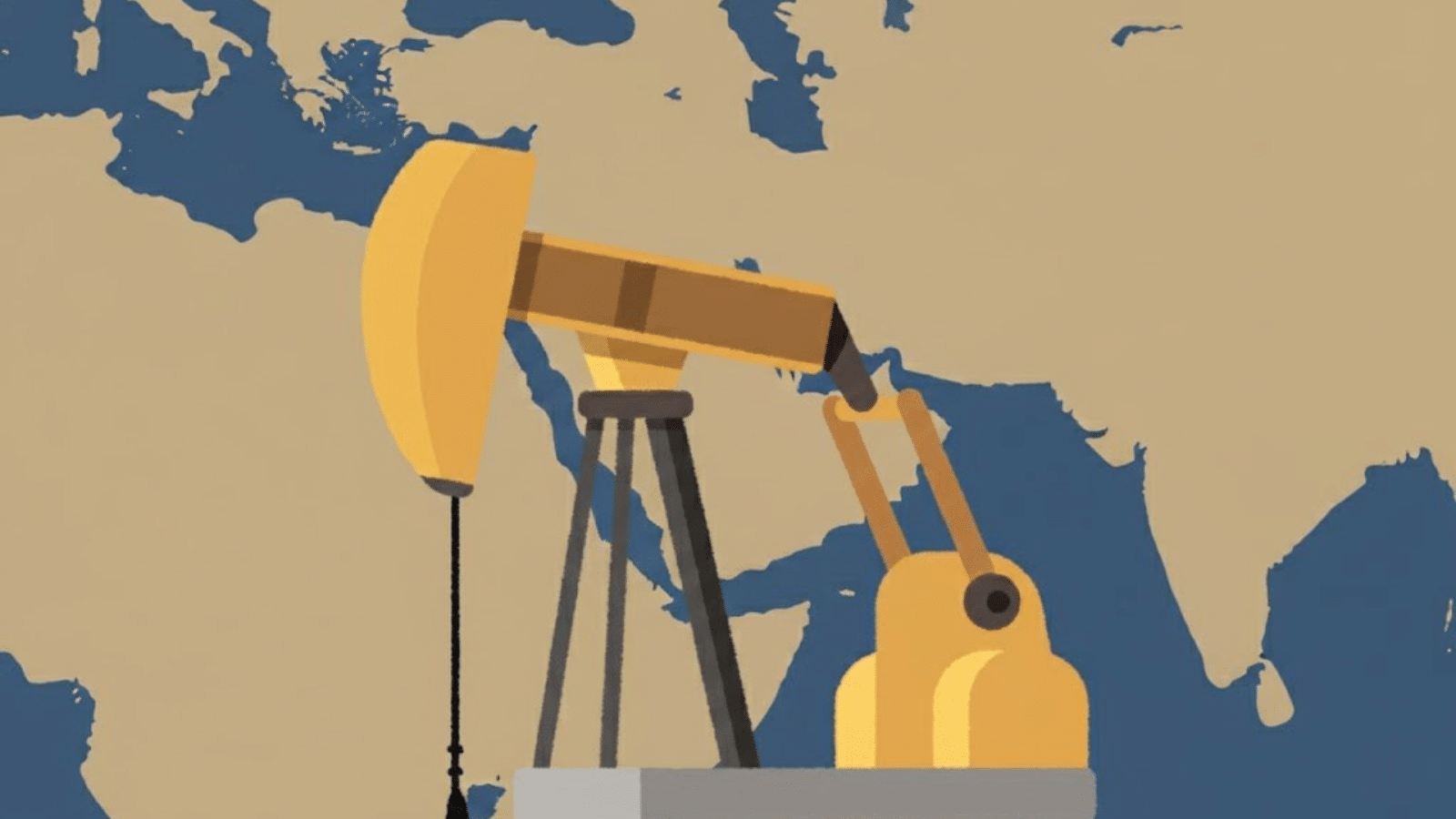
The Arabian Peninsula rests between three key geographic chokepoints—the Strait of Hormuz, the Bab el-Mandeb, and the Suez Canal—but it is now also a prominent node in the global economy—one anchored by oil and gas but increasingly emerging as a middle-power center of finance and technology. Roughly 18–19.5 million barrels per day (mb/d) of crude and refined products transit the Strait of Hormuz, representing 25 percent of all seaborne oil trade. Blockage here would trap most of the exports of Saudi Arabia, Kuwait, the UAE, and Iraq simultaneously. The region has no available pipeline infrastructure capable of fully bypassing the Strait of Hormuz and diverting this volume of oil to other ports, such as those on the Red Sea or Gulf of Oman, even with the east-west pipeline in Saudi Arabia and the UAE’s port of Fujairah on the Gulf of Oman. Saudi Arabia, the UAE, and Kuwait currently hold significant spare capacity—Saudi Arabia with roughly 2–3 mb/d, the UAE expanding significantly to about 4.5 mb/d, and Kuwait aiming for 3.2 mb/d by 2026, with plans to reach 4 mb/d by 2035-2040—which typically buffers the market against outages elsewhere. But a scenario of Iranian retaliation involving attacks on GCC infrastructure—as occurred in 2019 at Saudi Arabia’s Abqaiq and Khurais facilities—or the blocking of the Strait of Hormuz would strand this spare capacity. The world would then lose not only current supply but also the ability to ramp up production to offset the shortfall.
Core GCC producers (Kuwait, Saudi Arabia, and the UAE) have been unwinding OPEC+ production cuts throughout 2025, ramping up production toward 16 mb/d. The global market has integrated these returning barrels into its supply/demand balance. A disruption now would potentially remove some base supply, not just marginal barrels, creating a deeper physical deficit than if the conflict had occurred when production was artificially suppressed. Iran’s own exports have been resilient, hovering around 1.5–2 mb/d, with total output near 3.5 mb/d. In the unlikely event of US or Israeli strikes on Iranian export terminals (e.g., Kharg Island) or production fields, as much as 3.5 mb/d of Iranian supply—with export volumes over 1.5 mb/d still moving despite sanctions—could be blockaded or interdicted by US forces, likely pushing oil prices higher while also raising fears of extended retaliation against Gulf Arab state exporters. Combined with even a 20–30 percent drop in GCC exports due to transit delays or blockages, this could result in shorter-term but more severe price spikes in the $80–$100 per barrel range.
[1] Barclays FICC Commodities research note to clients, January 17, 2026, “Iran Unrest: Tensions Remain Elevated.”
[2] Citi Research, note to clients, January 20, 2026, “Navigating Growth Amid Oil Oversupply and Geopolitical Uncertainty.”
China’s crude oil imports hit a record-high 11.6 million barrels per day in 2025, as geopolitical tensions, low oil prices, and global oversupply spurred China to increase its oil stockpiles, a trend likely to continue in 2026.
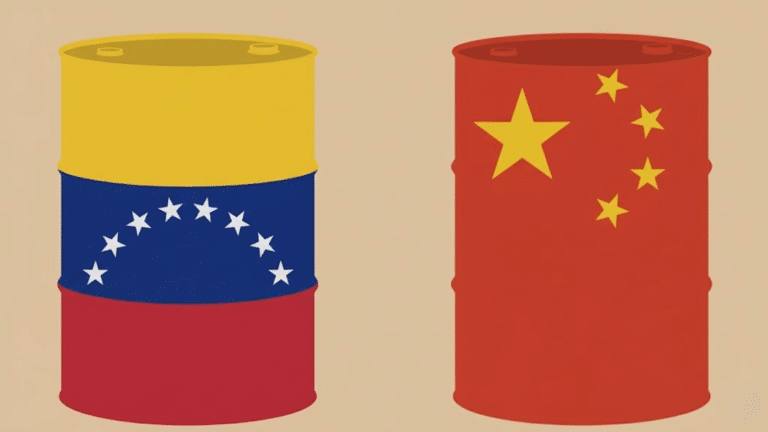
The US intervention in Venezuela may jeopardize both the flow of discounted Venezuelan oil to China's teapot refineries and the role of Chinese oil companies in Venezuela’s upstream business.
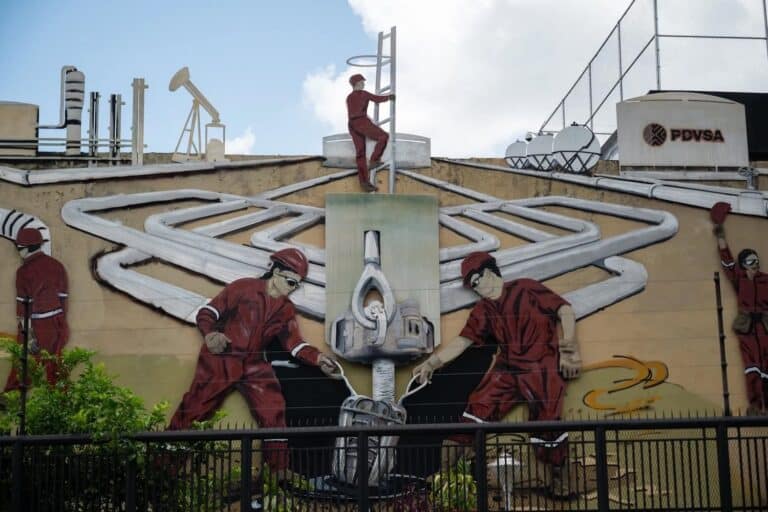
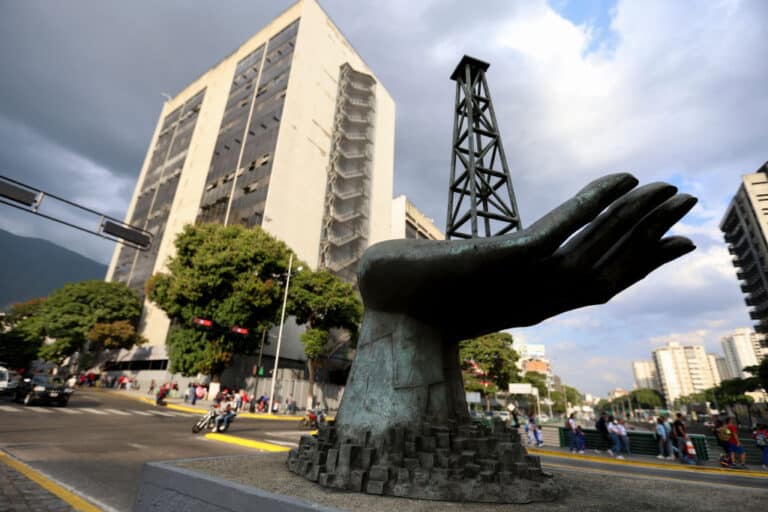
In discussing the dramatic seizure of Venezuelan President Nicolás Maduro and his wife, Cilia Flores, over the weekend, President Donald Trump declared that the United States would now “take back” the country’s oil. Yet he has offered little clarity on what exactly this means.
Last month, the Trump administration imposed fresh sanctions on Russia’s two largest oil companies, Rosneft and Lukoil, signaling a renewed desire to drive Moscow to the negotiating table in its war against Ukraine. But although these measures have the potential to harm the Russian economy, just how much damage they inflict will depend largely on one actor: Beijing. China bought almost half the oil Russia exported in 2024, evading Washington’s existing restrictions in the process. And new sanctions alone will do little to push China into significantly reducing its purchases.