Prix des carburants : pourquoi les raffineries sont au cœur de la tempête
Plus que d'un problème pétrolier, la flambée des prix du carburant résulte de tensions sur les capacités mondiales de raffinage.
Get the latest as our experts share their insights on global energy policy.
Last week's summit between US President Trump and Chinese President Xi was the second meeting between the two leaders since the US and Israel attacked Iran.
Hear in-depth conversations with the world’s top energy and climate leaders from government, business, academia, and civil society.
Carbon credit markets have become one of the most hotly debated tools in the fight against climate change. Supporters call them essential to closing the gap between corporate...

Find out more about our upcoming and past events.
Apply to Register The Center on Global Energy Policy at Columbia University SIPA’s Women in Energy initiative invites Columbia University students to a roundtable discussion with Pam Brown,...

For many years, the petroleum industry has had the reputation of being a male club. With far more men than women occupying jobs and running the business, the sector faces the challenge of bridging the gender gap. On this episode of the Columbia Energy Exchange, host Bill Loveless speaks with Hosnia Hashim, Deputy Chief Executive Officer of Kuwait’s Petrochemical Industries Company, who has more than 25 years of experience in the sector. Their conversation followed a Women in Energy event at the Center on Global Energy Policy in New York where Hashim was a guest speaker. Among the topics they discussed include: How Hashim arrived in Kuwait’s petroleum industry and her path through the ranks; Opportunities for women in Kuwait’s petroleum sector compared to other Middle East nations; Steps taken by Kuwait’s government to promote education of women in science, technology, engineering and math; Hashim’s advice for women interested in entering the petroleum industry; Changes in Kuwait’s oil and gas industry.
Carbon credit markets have become one of the most hotly debated tools in the fight against climate change. Supporters call them essential to closing the gap between corporate...
Global gas markets, especially in Europe, are approaching winter under serious pressure. With storage inventories lagging behind historical averages and shipping disruptions from the Middle East threatening key...

Seven months into the largest oil supply disruption in history, there's still no resolution in sight. This week, on the sidelines of the UN General Assembly, US and Iranian officials held their first indirect talks since the Memorandum of Understanding collapsed in July—but neither side appears ready for concessions.
This week, Chinese President Xi Jinping travels to Washington for a state visit with President Trump, their second face-to-face meeting this year. Energy is likely to be high...

Last week's summit between US President Trump and Chinese President Xi was the second meeting between the two leaders since the US and Israel attacked Iran.
In this edition of Global Institute Dialogues Jason Bordoff discusses how the Iran crisis, China’s electrification strategy, and the US shale revolution have changed energy geopolitics.
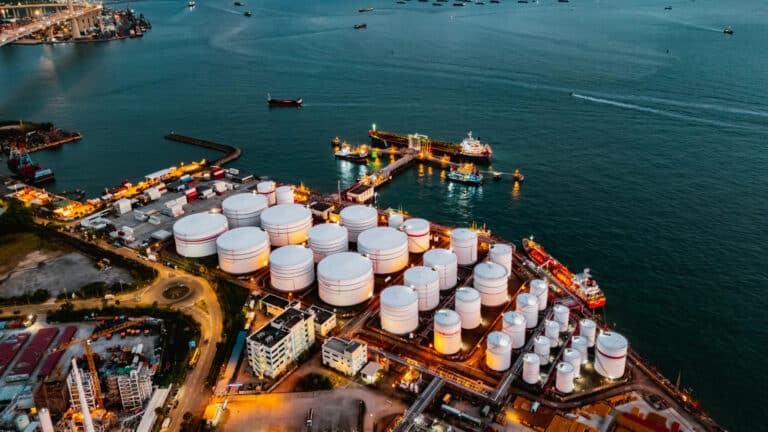
The Middle East crisis has increased demand for China's clean technologies.
The United States has struggled for decades to make progress on managing spent nuclear fuel (SNF) from its commercial power reactors.