World Bank scraps climate financing after facing pressure from Trump
The 45% target was set following the United Nations’ climate conference in 2023, pledging the funding to climate-related projects by 2025.
Get the latest as our experts share their insights on global energy policy.
This Energy Explained post represents the research and views of the author(s). It does not necessarily represent the views of the Center on Global Energy Policy. The piece...

Hear in-depth conversations with the world’s top energy and climate leaders from government, business, academia, and civil society.
Concerns about the affordability of electricity in the US have been rising along with prices. And while the headlines have pointed to AI and data centers as the...
Past Event
April 2, 2013
9:15 am - 10:30 am
The Center on Global Energy Policy hosted a lecture by Piotr Galitzine, Chairman of TMK IPSCO. Mr. Galitzine is the head of North and South American operations for TMK, Russia’s largest manufacturer and exporter of steel pipes. TMK ranks in the top three among the global pipe producers. Prior to joining TMK IPSCO, Mr. Galitzine served on the Board of Directors of TMK as an independent director and has an extensive international background and career, including senior positions with Mannesmann AG and BASF AG. Mr. Galitzine graduated from Massachusetts Institute of Technology with a degree in Mechanical Engineering and a specialization in design, materials, and analysis. This event was co-sponsored with the Harriman Institute at Columbia University.
On February 28, the United States and Israel launched an attack on Iran, resulting in the deaths of Iranian Supreme Leader Ali Hosseini Khamenei and senior Iranian leaders...


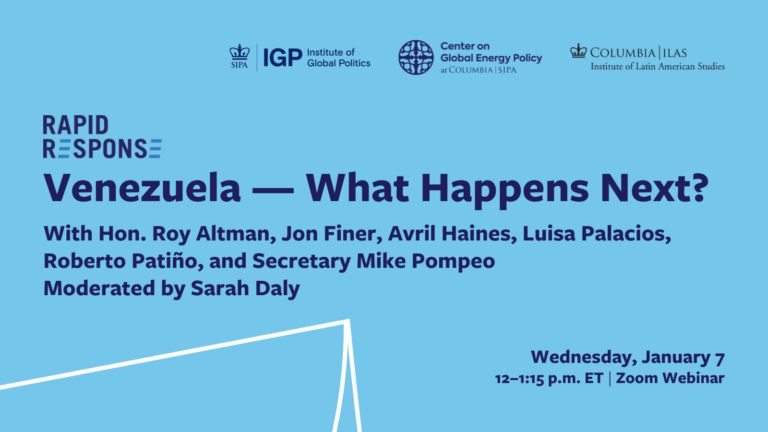
The recent military operation to remove Venezuelan President Nicolás Maduro and First Lady Cilia Flores raises several implications for the future of Venezuela and Latin America, geopolitics, and energy markets. Cosponsored by SIPA’s Institute of Global Politics (IGP) and Center for Global Energy Policy (CGEP), along with Columbia’s Institute of Latin American Studies (ILAS), this webinar will analyze the circumstances and impact of their capture and extradition to New York to face narcoterrorism and drug trafficking charges.
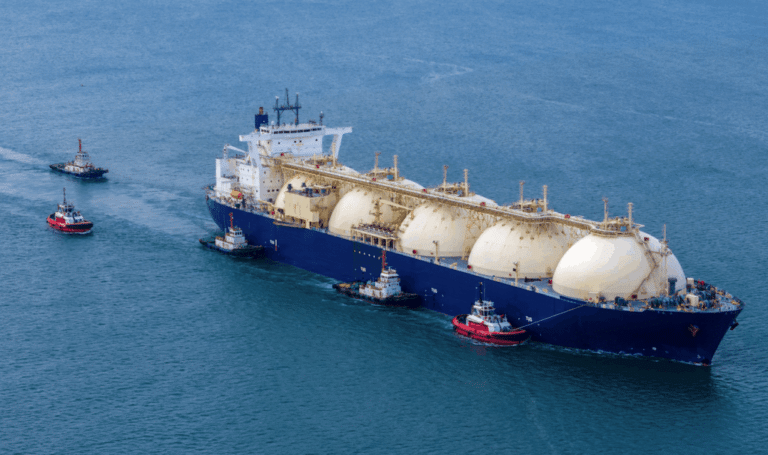
https://www.youtube.com/watch?v=vWh5WQVVMLc Global gas markets are set to undergo major changes by the end of the decade, with the coming wave of liquefied natural gas (LNG) production capacity poised...
On October 22, the United States Department of the Treasury announced the imposition of sanctions on Russia’s two largest oil companies, Rosneft and Lukoil, as a penalty for what it characterized as a lack of Russian commitment to ending the war in Ukraine.
CHRONIQUE. Nouvelles usines de liquéfaction et augmentation des exportations expliquent, entre autres, pourquoi les prix du gaz ne connaissent pas le pic observé en 2022, lors de l’invasion de l’Ukraine. Mais cette stabilité des prix ne traversera pas l’été, écrit Anne-Sophie Corbeau, spécialiste de l’énergie au Center on Global Energy Policy de l’Université Columbia
Europe is entering the 2026 gas injection season with its lowest level of gas in storage since 2018.