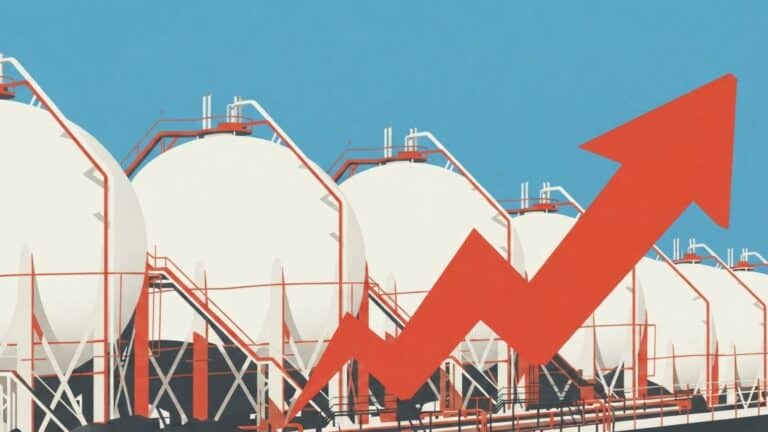
Europe’s economy faces a one-two punch from extreme weather and war
Soaring temperatures are forcing drastic measures in Europe, where heatwaves are straining an economy under pressure from higher energy prices due to the Iran war.
Get the latest as our experts share their insights on global energy policy.
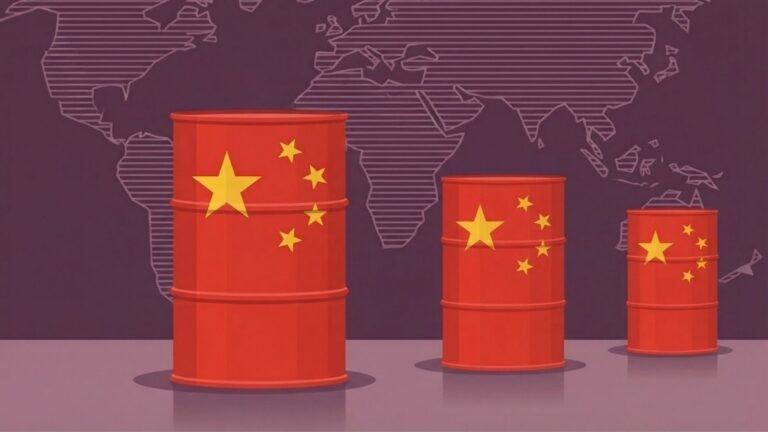
The ongoing disruption of oil exports through the Strait of Hormuz has caused a substantial decline in China's crude oil imports.
Hear in-depth conversations with the world’s top energy and climate leaders from government, business, academia, and civil society.
It started last year as a pressure campaign at sea, with the United States seizing tankers as part of what President Trump called a “total and complete blockade”...
Find out more about our upcoming and past events.
Join industry leaders, innovators, employers, and emerging talent for an evening exploring the technologies, trends, and career opportunities shaping the future of climate tech.

Past Event
October 5, 2018
12:30 pm - 2:00 pm
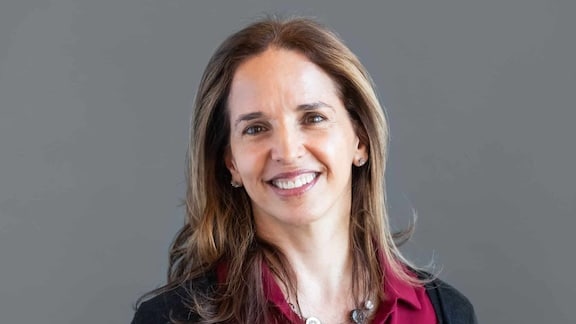
Please join the Center on Global Energy Policy for a Women in Energy lunch and roundtable discussion with Dr. Rose M. Mutiso is co-founder and CEO of the Mawazo Institute. Dr. Mutiso will discuss her job history, career paths, and perspectives on what it means to be a female leader in the energy industry. Biography Dr. Rose M. Mutiso is co-founder and CEO of the Mawazo Institute. She is also a Senior Fellow of the Energy for Growth Hub, focusing on African energy sector development. She is the current Next Einstein Forum Ambassador representing Kenya. Previously, Rose was a Senior Fellow in the Office of International Climate and Clean Energy at the U.S. Department of Energy (DOE), where she led DOE’s engagement on technology and policy dimensions of energy access in sub-Saharan Africa and South Asia. Prior to this, she served as an Energy and Innovation Policy Fellow in the office of U.S. Senator Christopher A. Coons, where she authored several pieces of legislation that were signed into law by President Barack Obama. A materials engineer by training, Rose has technical experience in the fields of nanotechnology and polymer physics, including nanoelectronics and next-generation energy technologies. She earned her BA and BE in Engineering Sciences with a concentration in Materials Science from Dartmouth College, and her PhD in Materials Science and Engineering from the University of Pennsylvania. Born and raised in Nairobi, Kenya, she is passionate about helping elevate women to positions of leadership and influence in African society. This event is open to current female grad students. Space is limited therefore please register only if you can commit to attending the roundtable. Lunch will be provided. If you have any questions, please contact: [email protected]
Building Abundant Energy in the Global South – Energy Opportunity Forum 2026 The Center on Global Energy Policy will host a public program during New York Climate Week...
For today’s leaders and policymakers, the global energy transition and climate change are increasingly informing decisionmaking at the highest levels around the world. On the sidelines of the...
The Columbia Fashion, Energy, and Climate Summit will bring together leaders from fashion, energy, climate, technology, business, academia, policy, and design.

The Center on Global Energy Policy at Columbia University SIPA will host a series of energy and climate focused events this September during Climate Week NYC.

By almost any measure, the world should be suffering a far more severe energy crisis.

The ongoing disruption of oil exports through the Strait of Hormuz has caused a substantial decline in China's crude oil imports.
Amid the surge in US gas demand coming from LNG exporters, there is a lack of equivalent new working gas storage capacity in the US.