Devex Pro Insider: Nerves in Davos, one year on from the fall of USAID
Highlights from Davos, and the latest career moves in the global development sector.
Current Access Level “I” – ID Only: CUID holders, alumni, and approved guests only
Get the latest as our experts share their insights on global energy policy.
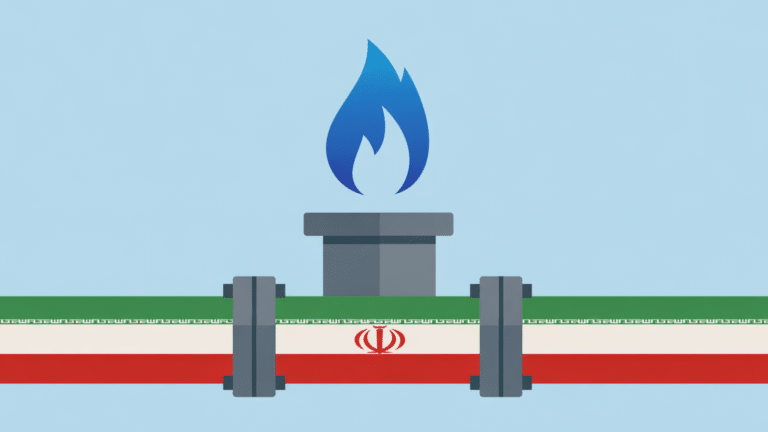
Iran appears to be a natural gas giant, due to its large proved gas reserves and significant gas production and consumption.
Hear in-depth conversations with the world’s top energy and climate leaders from government, business, academia, and civil society.
From the affordability crisis and the data center boom, to the US government’s campaign to reinvigorate the Venezuelan oil market, energy is dominating headlines in unusual ways. And...

Find out more about our upcoming and past events.
The Center on Global Energy Policy at Columbia University SIPA's Women in Energy initiative and Accenture invite you to join us for an evening of conversation and networking...

Past Event
September 12, 2016
2:00 pm - 3:30 pm
Please join the Center on Global Energy Policy and the New York Energy Forum for a discussion on the oil industry’s technological responses to low prices. Distinguished experts joining us include Bobby Tudor, Chairman and CEO of Tudor, Pickering, Holt & Co., LLC and Robert Kleinberg, physicist and fellow at Schlumberger. Ed Morse, Chair of the Energy Forum Advisory Board and Managing Director and Global Head of Commodity Research for Citigroup, will moderate the discussion following remarks by Mr. Tudor and Mr. Kleinberg.
The Center on Global Energy Policy at Columbia University SIPA is pleased to host a virtual webinar with experts from Kenya, India, and Brazil to discuss and better understand the landscape...
Join us on February 25 for an in-depth, student-only conversation. Registration is required, and space is limited. The Center on Global Energy Policy at Columbia University SIPA’s Women...

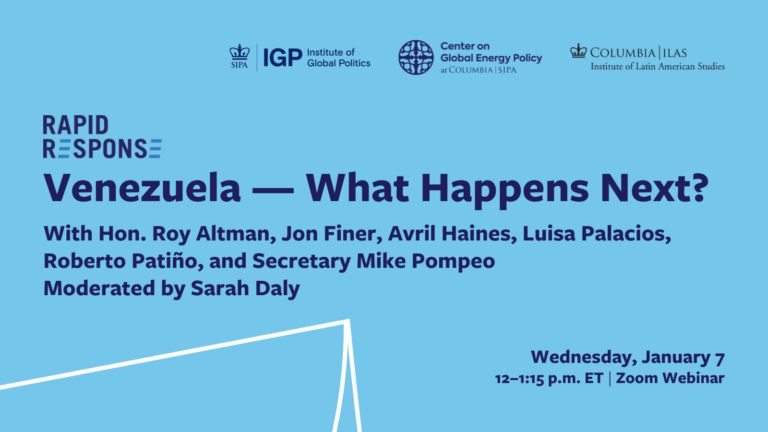
The recent military operation to remove Venezuelan President Nicolás Maduro and First Lady Cilia Flores raises several implications for the future of Venezuela and Latin America, geopolitics, and energy markets. Cosponsored by SIPA’s Institute of Global Politics (IGP) and Center for Global Energy Policy (CGEP), along with Columbia’s Institute of Latin American Studies (ILAS), this webinar will analyze the circumstances and impact of their capture and extradition to New York to face narcoterrorism and drug trafficking charges.

On January 1, 2026, the European Union's highly-anticipated Carbon Border Adjustment Mechanism (CBAM) will take effect. Introduced in 2023, CBAM will require the importers of certain carbon-intensive goods...
Iran appears to be a natural gas giant, due to its large proved gas reserves and significant gas production and consumption.
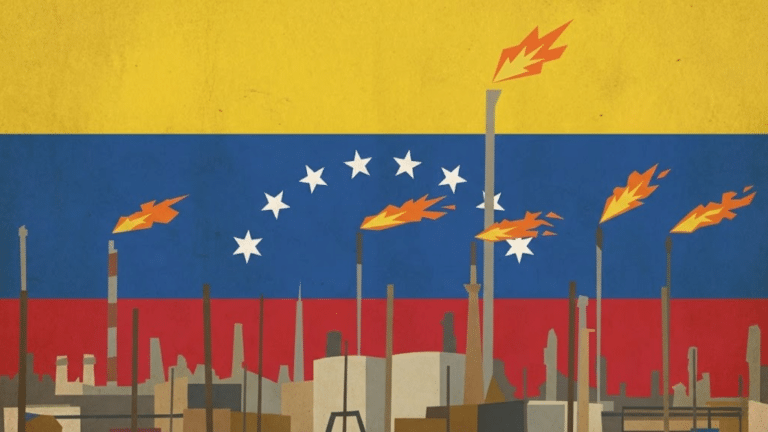
Venezuela holds 70% of Latin America's natural gas reserves, which it could export to Colombia and Trinidad to increase revenues.
Models can predict catastrophic or modest damages from climate change, but not which of these futures is coming.
