This website uses cookies as well as similar tools and technologies to understand visitors’ experiences. By continuing to use this website, you consent to Columbia University’s usage of cookies and similar technologies, in accordance with the Columbia University Website Cookie Notice.
Energy abundance means different things in today’s global context than it did even a decade ago. It is about expanding electricity access while meeting rising energy demand. It...
PCCMs facilitate the generation, trading, and retirement of carbon credits from projects that remove, reduce, or avoid greenhouse gas emissions. By creating a revenue stream from verified climate...
Event
About Us
We are the premier hub and policy institution for global energy thought leadership. Energy impacts every element of our lives, and our trusted fact-based research informs the decisions that affect all of us.
New nuclear reactors could be a valuable tool for reducing carbon emissions in the United States, but high costs and cost overruns – in both recent years and past decades – loom over the sector’s future.
Please join the Center on Global Energy Policy at Columbia SIPA for a session featuring opening remarks by Jeff Lyash, CEO of Tennessee Valley Authority. Mr. Lyash will share his insights on the potential deployment of small modular reactors and their integration into decarbonization strategies. Following his remarks, a panel of experts will delve into various topics, including the role of nuclear energy in decarbonization modeling, past cost overruns experienced in US reactor projects (including the AP1000 endeavors), and prospective strategies to achieve more cost-effective outcomes in the future.
Moderator:
Matt Bowen, Senior Research Scholar, Center on Global Energy Policy at Columbia SIPA
Speakers:
Shannon Bragg-Sitton, Director, Integrated Energy and Storage Systems, Idaho National Laboratory
Jacopo Buongiorno, Director, Center for Advanced Nuclear Energy Systems, Massachusetts Institute of Technology
Karl Hausker, Senior Fellow, World Resources Institute
Julie Kozeracki, Senior Advisor, U.S. Department of Energy Loan Programs Office
—
This webinar will be hosted via Zoom. Advance registration is required. Upon registration, you will receive a confirmation email with access details. The event will be recorded and the video recording will be added to our website following the event.
This event is open to the press, and registration is required to attend. For media inquiries or requests for interviews, please contact CGEP Communications ([email protected]).
For more information about the event, please contact [email protected].
Share
CGEP @ Climate Week 2026
September 21-25, 2026 | Columbia University | New York City
The Center on Global Energy Policy will host a series of energy
and climate focused events this September during Climate Week NYC.
On February 28, the United States and Israel launched an attack on Iran, resulting in the deaths of Iranian Supreme Leader Ali Hosseini Khamenei and senior Iranian leaders...
The Center on Global Energy Policy at Columbia University SIPA's Women in Energy initiative and Accenture invite you to join us for an evening of conversation and networking...
Event
• Accenture – One Manhattan West
395 9th Ave, New York
*Registration is closed for this event. The Center on Global Energy Policy at Columbia University SIPA's Women in Energy initiative, in collaboration with the Columbia Policy Institute, invites...
Event
• International Affairs Building,
Columbia SIPA
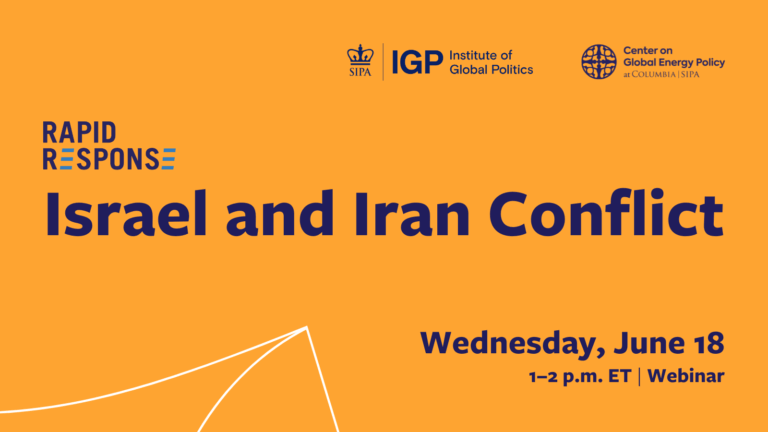
On the night of June 12, the Israeli military conducted widespread strikes on sites in Iran that targeted the country’s nuclear program and its senior military leadership.
India’s SHANTI Act opens the nuclear power sector to private participation while retaining state oversight of strategic assets. The move addresses limits of the state-led model and supports India’s goal of reaching 100 GW of nuclear capacity by 2047. Stronger regulation and private investment could accelerate nuclear expansion, strengthen energy security and aid decarbonisation.
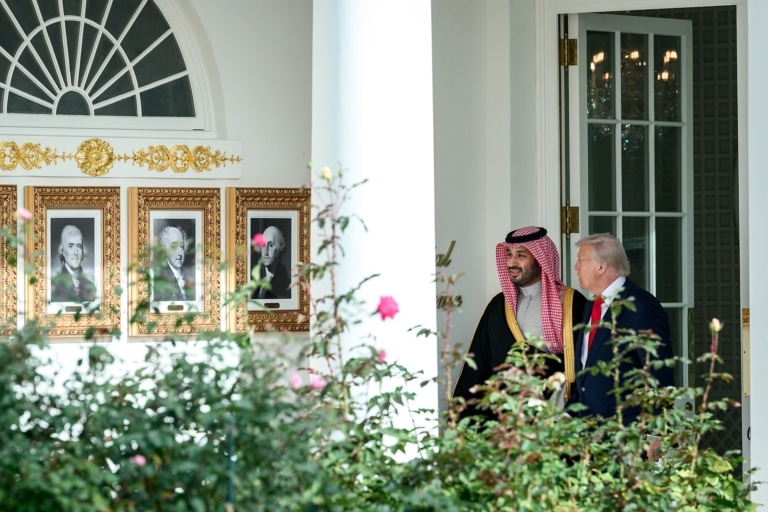
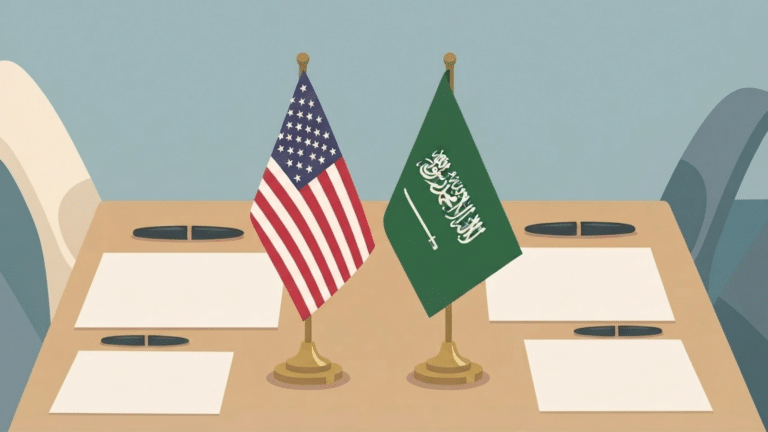
On June 22, the United States announced that it had signed a nuclear cooperation agreement with Saudi Arabia. This type of agreement broadly authorizes
The Trump administration and Saudi leadership have reportedly agreed to a nuclear agreement that could enable US nuclear technology transfers to Saudi Arabia.