This website uses cookies as well as similar tools and technologies to understand visitors’ experiences. By continuing to use this website, you consent to Columbia University’s usage of cookies and similar technologies, in accordance with the Columbia University Website Cookie Notice.
Two economic planning documents released at the March meeting of China's National People’s Congress include the term "energy powerhouse" for the first time.
It has been a tumultuous 24 hours for the global energy landscape. Yesterday, the United Arab Emirates sent shockwaves through the oil industry by announcing its withdrawal from...
We are the premier hub and policy institution for global energy thought leadership. Energy impacts every element of our lives, and our trusted fact-based research informs the decisions that affect all of us.
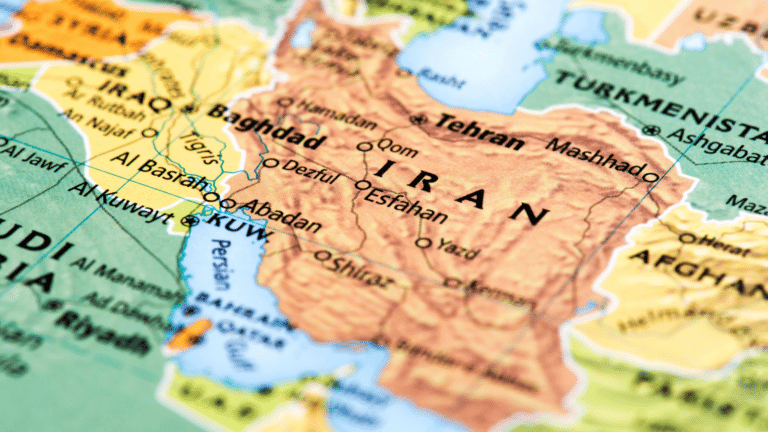
Iran Post Sanctions: How Much Oil will Hit the Market?
Past Event
September 28, 2015
2:00 pm - 4:00 pm
Share
The Center on Global Energy Policy and the NY Energy Forum hosted a discussion on the outlook for Iran following the implementation of the nuclear accord. Our speakers, Bijan Khajehpour, leading expert on Irans energy sector, and Richard Nephew, former Principal Deputy Coordinator for Sanctions Policy at the Department of State, shared their insights on the mechanism for sanctions removal and whether to expect a rebound in Iranian oil production in the near term considering technical, political and other market factors. Following the presentation, Edward Morse, Chair of the NY Energy Forum and Global Head of Commodity Research at Citigroup, moderated a discussion with the audience.
SPEAKERS:
Bijan Khajehpour is a managing partner at Atieh International, the Vienna-based international arm of the Atieh Group of Companies, a group of strategic consulting firms based in Tehran, Iran. Bijan co-founded the Atieh Group in 1994. Atieh Group has been recognized as one of the leading consulting firms in Iran with a wide range of clients operating in and outside of Iran. Bijan is an internationally recognized commentator of Iranian political and economic developments, especially the countrys energy sector. He is a regular speaker at international conferences and a contributor to Al-Monitor. His publications include contributions to The Caspian Region at a Crossroad: Challenges of a New Frontier of Energy and Development (St. Martin’s Press, 2000), Iran at the Crossroads (Palgrave, 2001) Security in the Persian Gulf: Origins, Obstacles, and the Search for Consensus (Palgrave, 2002), Léconomie réelle de lIran (LHarmattan, 2014) and Social Change in Post-Khomeini Iran (CIRS, 2014). He completed his graduate studies in management and economy in Germany and the UK and his Doctorate of Business Administration at the International School of Management in Paris.
Richard Nephew joined the Center on Global Energy Policy February 1, 2015 directly from his role as Principal Deputy Coordinator for Sanctions Policy at the Department of State, a position he held since February 2013. Nephew also served as the lead sanctions expert for the U.S. team negotiating with Iran. From May 2011 to January 2013 Nephew served as the Director for Iran on the National Security Staff where he was responsible for managing a period of intense expansion of U.S. sanctions on Iran. Earlier in his career he served in the Bureau of International Security and Nonproliferation at the State Department and in the Office of Nonproliferation and International Security at the Department of Energy. Nephew holds a Masters in Security Policy Studies and a Bachelors in International Affairs, both from The George Washington University.
MODERATOR:
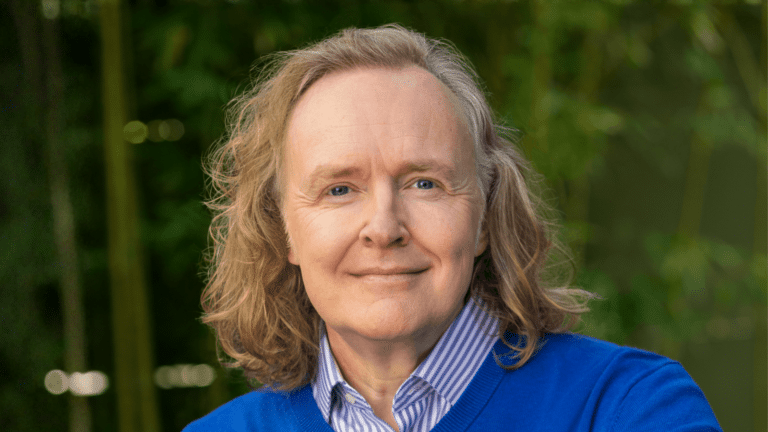
Edward Morse is Chair of the Energy Forum Advisory Board and Managing Director and Global Head of Commodity Research at Citigroup. Formerly Head of Commodity Research for Credit Suisse, Chief Economist, LCM Commodities and Managing Director and Chief Energy Economist for Lehman Brothers, his career in the energy sector spans more than three decades and includes senior positions in business, government, academia and publishing. Dr. Morse earned his doctorate in politics at Princeton University and his masters degree at the Johns Hopkins School of Advanced International Studies.
This roundtable is open only to currently enrolled Columbia University students. To register, you must sign in with your UNI. Join the Center on Global Energy Policy’s Women...
Event
• Center on Global Energy Policy
1255 Amsterdam Ave, New York, NY 10027
This roundtable is open only to currently enrolled Columbia University students. To register, you must sign in with your UNI. The Center on Global Energy Policy (CGEP) at...
Event
• Center on Global Energy Policy
1255 Amsterdam Ave, New York, NY 10027
This roundtable is open only to currently enrolled Columbia University students. To register, you must sign in with your UNI. The Center on Global Energy Policy at Columbia...
Event
• Center on Global Energy Policy
1255 Amsterdam Ave, New York, NY 10027
Two economic planning documents released at the March meeting of China's National People’s Congress include the term "energy powerhouse" for the first time.