This website uses cookies as well as similar tools and technologies to understand visitors’ experiences. By continuing to use this website, you consent to Columbia University’s usage of cookies and similar technologies, in accordance with the Columbia University Website Cookie Notice.
This Energy Explained post represents the research and views of the author(s). It does not necessarily represent the views of the Center on Global Energy Policy. The piece...
The energy transition is in the midst of its own transition. Spiking electricity demand and geopolitical events are driving up energy prices, while debates over the best sources...
This event will take place in-person in Washington DC, at the Rayburn House Office Building, Room 2168 (Gold Room). Advance registration is required. Announcing New Columbia University Publications...
We are the premier hub and policy institution for global energy thought leadership. Energy impacts every element of our lives, and our trusted fact-based research informs the decisions that affect all of us.
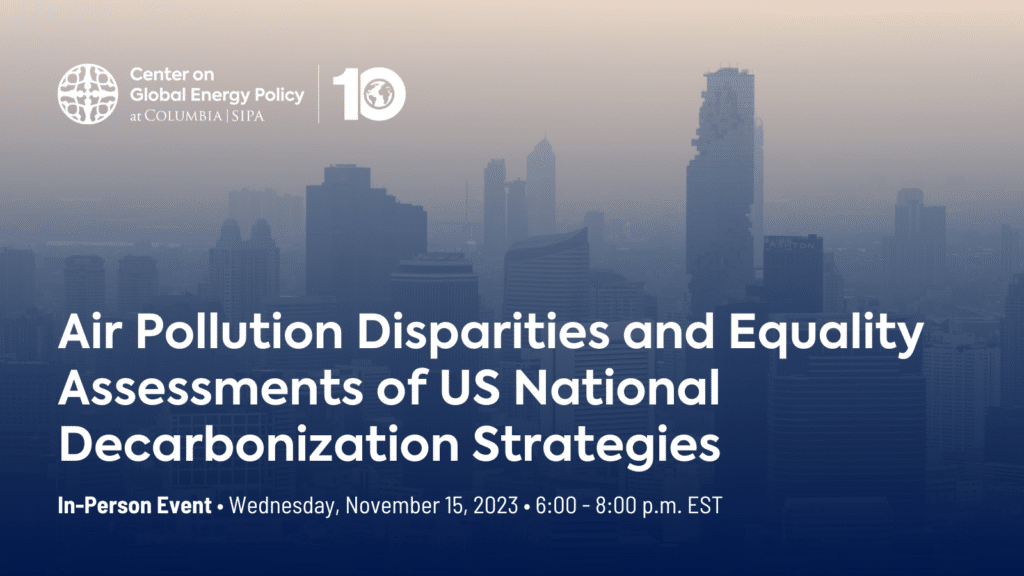
Air Pollution Disparities and Equality Assessments of US National Decarbonization Strategies
Past Event
November 15, 2023
6:00 pm - 8:00 pm est
Share
Energy transitions and decarbonization require rapid changes to a nation’s electricity generation mix. There are many feasible decarbonization pathways for the electricity sector, yet there is vast uncertainty about how these pathways will advance or derail the nation’s energy equality goals. We present a framework for investigating how decarbonization pathways, driven by a least-cost paradigm, will impact air pollution inequality across vulnerable groups (e.g., low-income, minorities) in the United States.
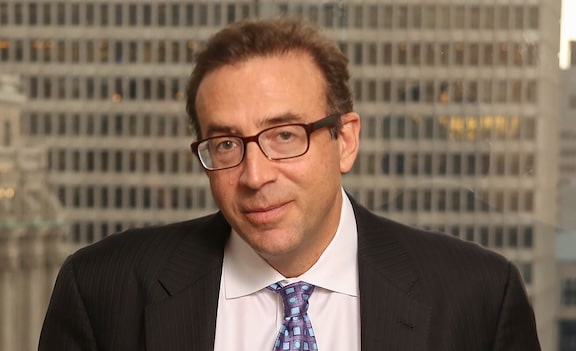
The Center on Global Energy Policy (CGEP) at Columbia University’s School of International and Public Affairs will host Dr. Destenie Nock, visiting faculty member at CGEP and an assistant professor of engineering and public policy and civil and environmental engineering at Carnegie Mellon University for a fireside chat to explore these issues. Dr. Geoffrey Heal, Donald C. Waite III professor of social enterprise, and Paul Garrett professor of public policy and corporate responsibility, Columbia Business School, will moderate.
Doors will open at 5:45 p.m. and the conversation will begin promptly at 6:00 p.m. A cocktail reception will follow the conversation.
This event will be hosted in person in New York City.
Advance registration is required. This event will be hosted in person and capacity is limited. We ask that you register only if you can attend this event in its entirety. Upon registration, you will receive a confirmation email. The event will be recorded and the video recording will be added to our website following the event.
This event is open to press, and registration is required to attend. For media inquiries or requests for interviews, please contact Natalie Volk ([email protected]).
For more information about the event, please contact [email protected].
On February 28, the United States and Israel launched an attack on Iran, resulting in the deaths of Iranian Supreme Leader Ali Hosseini Khamenei and senior Iranian leaders...
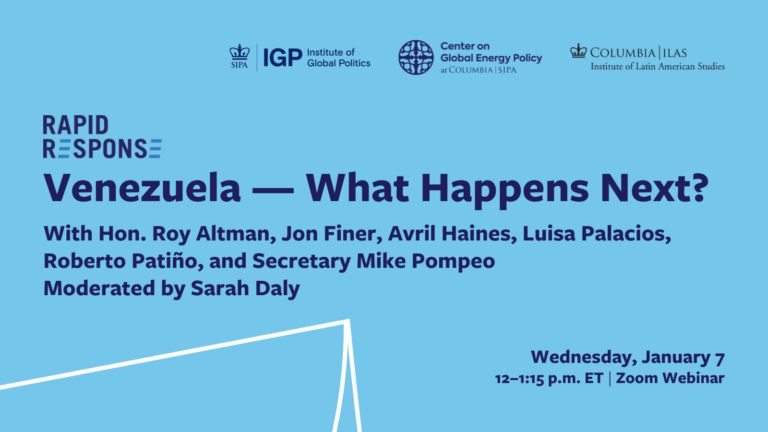
The recent military operation to remove Venezuelan President Nicolás Maduro and First Lady Cilia Flores raises several implications for the future of Venezuela and Latin America, geopolitics, and energy markets. Cosponsored by SIPA’s Institute of Global Politics (IGP) and Center for Global Energy Policy (CGEP), along with Columbia’s Institute of Latin American Studies (ILAS), this webinar will analyze the circumstances and impact of their capture and extradition to New York to face narcoterrorism and drug trafficking charges.
The Columbia Global Energy Summit 2026 is an annual event dedicated to thought-provoking discussions around the critical energy and climate challenges facing the global community.