The Institute of Global Politics (IGP) and Center on Global Energy Policy (CGEP) at Columbia SIPA today announced a new task force focused on analyzing how tools of economic statecraft—including sanctions, tariffs, export controls, and industrial policy—have been used over the past two decades by policymakers worldwide to impact foreign policy, geopolitics, and the global economy. The task force, which is composed of thought leaders with distinguished backgrounds in government, civil society, and the private sector, met for the first time at Columbia University on February 6.
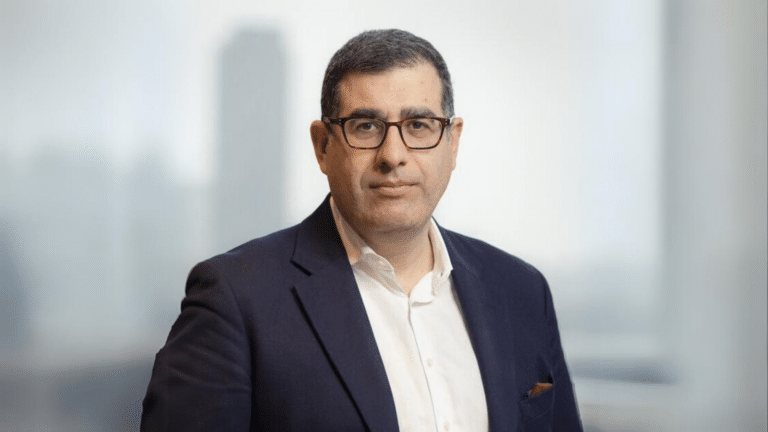
The task force will be chaired by Secretary Jacob J. Lew, a professor of international and public affairs at Columbia SIPA, IGP faculty policy director and former White House chief of staff, director of the Office of Management and Budget (OMB), US secretary of the treasury, and US ambassador to Israel; and Edward Fishman, adjunct senior research scholar at the Center on Global Energy Policy and senior fellow and director of the Maurice R. Greenberg Center for Geoeconomic Studies at the Council on Foreign Relations.
“The tools of economic statecraft—from tariffs, to sanctions, to export controls—have become crucial to US foreign policy over the last 20 years, and we have much to learn from the successes and failures of the policymakers who drove that shift,” said Lew. “Thanks to the convening power of IGP and CGEP, Columbia University and SIPA are perfectly positioned to bring together practitioners, private sector leaders, and scholars who can shed light on the last two decades of economic statecraft and educate the policy community on options for the road ahead.”
“The use of economic statecraft has expanded significantly in recent decades, and while the United States has been at the forefront of this shift, these tools are now deployed by many countries, including our allies and rivals,” said Fishman. “The United States confronts a far more complex and contested geoeconomic landscape today than it did just a decade ago. Leaders across government, business, and academia must rethink how to use these tools in this new environment. Our task force will generate rigorous, practical insights to inform both policymakers and scholars.”
During the first meeting earlier this month, participants took stock of the last 20-plus years of economic statecraft best practices, challenges, and the cross-cutting lessons that can be drawn from participants’ past experiences. The task force will convene several times over the remainder of the year with the aim of identifying common themes at subsequent meetings in order to develop a framework of path-forward policy recommendations for decisionmakers.
“A core mission of SIPA, IGP, and CGEP is to bring academic experts and policymakers together to inform our current thinking on critical policy decisions and practices,” said Keren Yarhi-Milo, dean of Columbia SIPA and a cofounder of IGP. “This task force embodies that mission and will enable policymakers to make better sense of economic statecraft at a time when it is increasingly used as a tool of coercive diplomacy.”
About the Task Force Members
- Wally Adeyemo, Former Deputy Secretary of the U.S. Treasury Department
- Alice P. Albright, Former CEO of the Millennium Challenge Corporation, IGP Carnegie Distinguished Fellow, Columbia SIPA
- Jason Bordoff, Founding Director, Center on Global Energy Policy
- Theodore Bunzel, Managing Director, Head of Lazard Geopolitical Advisory
- Heidi Crebo-Rediker, Senior Fellow, Council on Foreign Relations
- Jon Finer, former Assistant to the President and Principal Deputy National Security Advisor; former IGP Carnegie Distinguished Fellow
- Jeffry Frieden, Professor of International and Public Affairs and Political Science, Columbia University
- Mike Froman, President, Council on Foreign Relations; former U.S. Trade Representative
- Julian Gewirtz, Senior Research Scholar, IGP/SIPA
- Merit Janow, Dean Emerita, Professor of Practice, International Economic Law & International Affairs, Columbia University SIPA
- Emily Kilcrease, Senior Fellow and Director, Energy, Economics and Security Program, Center for a New American Security
- Nikita Lalwani, Nonresident Scholar, Carnegie Endowment for International Peace; Lecturer, Johns Hopkins SAIS
- Stuart Levey, EVP and Chief Legal Officer, Oracle Corporation and former Under Secretary of Treasury for Terrorism and Financial Intelligence
- Brent McIntosh, Chief Legal Officer & Corporate Secretary, Citigroup; Former Under Secretary of the Treasury for International Affairs
- Chris Miller, Professor, The Fletcher School
- Richard Nephew, Senior Research Scholar, Center on Global Energy Policy, Columbia SIPA
- Mike Schmidt, Distinguished Visitor at Princeton University; former Director of the CHIPS Program Office at the Commerce Department
- Jesse Schreger, Professor, Columbia University and the Global Capital Allocation Project
- Brad Setser, Whitney Shepardson Senior Fellow, Council on Foreign Relations
- Daleep Singh, Vice Chair and Chief Global Economist , PGIM, former US Deputy National security adviser for International Economics
- Adam Szubin, Professor of Practice at Johns Hopkins School of Advanced International Studies (SAIS) and Of Counsel at Covington
- Matthew C. Waxman, Liviu Librescu Professor of Law, Columbia University
- Juan C. Zarate, Chairman and Co-Founder, Center for Economic and Financial Power (Foundation for Defense of Democracies); former Deputy Assistant to the President and Deputy National Security Advisor for Combatting Terrorism (2005-2009); first-ever Assistant Secretary of the U.S. Treasury for Terrorist Financing and Financial Crimes; Author of “Treasury’s War: The Unleashing of a New Era of Financial Warfare.”
About the Co-chairs
Jacob J. Lew
Jacob J. Lew is a professor of international and public affairs at SIPA. In the Biden administration, he served as US ambassador to Israel. Previously, he served as the 76th secretary of the Treasury and White House chief of staff in the Obama administration. Lew has also served in numerous additional roles at the White House and in Congress, including twice as director of the Office of Management and Budget (OMB), as well as private sector roles at Citigroup and New York University. He is a member of the American Academy of Arts and Science, the Council on Foreign Relations, the National Academy of Social Insurance, and a member of the bar in Massachusetts and the District of Columbia. He holds an AB from Harvard University and a JD from Georgetown University Law Center.
Edward Fishman
Edward Fishman is an adjunct senior research scholar at the Center on Global Energy Policy and director of the Maurice R. Greenberg Center for Geoeconomic Studies at the Council on Foreign Relations. He is the New York Times–bestselling author of Chokepoints: American Power in the Age of Economic Warfare. Previously, Fishman served at the U.S. State Department as a member of the Secretary of State’s Policy Planning Staff and as Russia and Europe Sanctions Lead, at the Pentagon as an advisor to the Chairman of the Joint Chiefs of Staff, and at the U.S. Treasury Department as special assistant to the Under Secretary for Terrorism and Financial Intelligence. He has also worked in operating roles at several high-growth technology companies. He holds a BA from Yale University, an MPhil from the University of Cambridge, and an MBA from Stanford University.