Après la Russie, comment le piège du gaz naturel américain s’est refermé sur l’Europe
DÉCRYPTAGE - Les Vingt-Sept cherchent désormais des solutions pour sortir de cette nouvelle dépendance à l’égard d’un État qui ne leur veut pas toujours du bien.
Current Access Level “I” – ID Only: CUID holders, alumni, and approved guests only
Get the latest as our experts share their insights on global energy policy.
Securing critical minerals is a top priority of governments around the world.

Hear in-depth conversations with the world’s top energy and climate leaders from government, business, academia, and civil society.
Under the second Trump administration, the US Department of Energy significantly shifted its priorities to align with its “energy dominance" agenda. But one significant point of continuity with...
Find out more about our upcoming and past events.
This workshop will be conducted in two parts: Part one on February 16 from 1:00 PM to 2:00 PM EST, and Part two on February 18 from 1:00 PM to...

To kick-off Earth Week, CGEP and the Sabin Center for Climate Change Law hosted a discussion with leading experts who presented and compared strategies for deep decarbonization in the United States by 2050. The panel included the following distinguished experts: Jeff Sachs, Director, Center for Sustainable Development, The Earth Institute; Karl Hausker, Senior Fellow, World Resources Institute; Geoff Heal, Donald C. Waite III Professor of Social Enterprise at Columbia Business School; Judi Greenwald, Principal, Greenwald Consulting; and Michael Gerrard, Director, Sabin Center for Climate Change Law.
Under the second Trump administration, the US Department of Energy significantly shifted its priorities to align with its “energy dominance" agenda. But one significant point of continuity with...
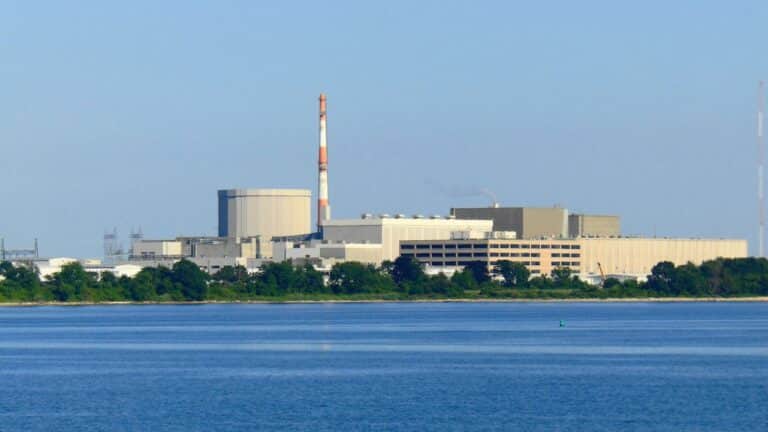
The Trump administration has prioritized nuclear energy expansion, aiming to increase US nuclear capacity fourfold by 2050. This nuclear energy resurgence in the US is a rare issue...
As political support for clean energy has waxed and waned over the past twenty years, so has the government’s financial backing. In the 2010s, critics pointed to the...
With electricity prices on the rise, the future of our power grid is attracting a lot more attention. Surging demand is at the center of the story, but...
Models can predict catastrophic or modest damages from climate change, but not which of these futures is coming.

On November 6, 2025, in the lead-up to the annual UN Conference of the Parties (COP30), the Center on Global Energy Policy (CGEP) at Columbia University SIPA convened a roundtable on project-based carbon credit markets (PCCMs) in São Paulo, Brazil—a country that both hosted this year’s COP and is well-positioned to shape the next phase of global carbon markets by leveraging its experience in nature-based solutions.
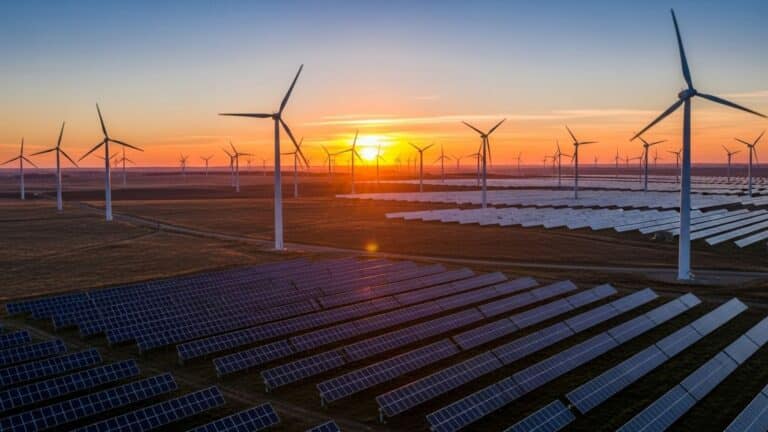
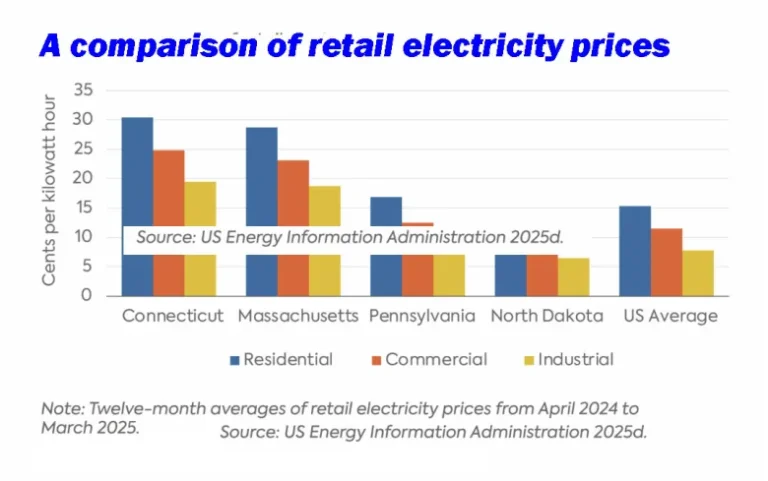
Connecticut needs an honest debate, and fresh thinking, to shape a climate strategy fit for today, not 2022.