This website uses cookies as well as similar tools and technologies to understand visitors’ experiences. By continuing to use this website, you consent to Columbia University’s usage of cookies and similar technologies, in accordance with the Columbia University Website Cookie Notice.
The US Export-Import Bank is preparing to close the first funding tranche of Project Vault, a public-private partnership establishing the US Strategic Critical Minerals Reserve.
Despite all the advancements we have achieved globally in recent decades, as many as 750 million people still lack access to electricity. Tackling energy poverty requires far more...
We are the premier hub and policy institution for global energy thought leadership. Energy impacts every element of our lives, and our trusted fact-based research informs the decisions that affect all of us.
This Energy Explained post represents the research and views of the author(s). It does not necessarily represent the views of the Center on Global Energy Policy. The piece may be subject to further revision.
Contributions to SIPA for the benefit of CGEP are general use gifts, which gives the Center discretion in how it allocates these funds. More information is available here. Rare cases of sponsored projects are clearly indicated.
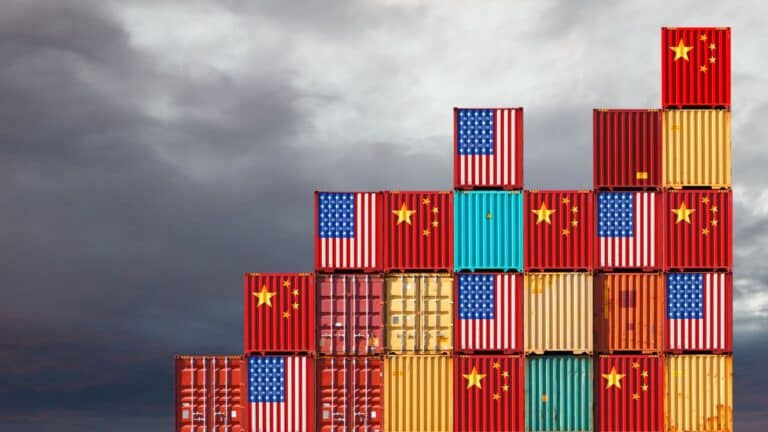
China has recently made several bold and unexpected moves related to its trade relations with the United States and India and at the WTO.
These actions suggest that China may be shifting to a more assertive posture in defending its economic interests abroad and shaping the terms of global trade.
They also point to a possible future in which China’s influence and power in the international system is linked to its dominant position in clean energy industries.
In the last six weeks, the Chinese government has made several bold moves related to its trade relations. First, on September 23, Chinese Premier Li Qiang made a surprise announcement that Beijing would no longer seek the “special and differential treatment” privileges (SDT) afforded to developing countries within the WTO system. Then, on October 9, China’s Ministry of Commerce published stringent export controls on rare earth materials and battery manufacturing equipment. Finally, on October 15, China’s WTO delegation initiated a dispute against India over the latter country’s efforts to boost domestic manufacturing of electric vehicles and advanced chemistry cell batteries.
These developments may seem unrelated. But all three are a notable departure from China’s usual low profile relative to other economic heavyweights in shaping global trade conditions. Taken together, they signal that China may be shifting to a more assertive posture in defending its economic interests abroad and shaping the terms of global trade. Thus far, the strongest evidence for this shift relates to Beijing’s engagement on an issue that has been a recurring source of tension with its trading partners: clean energy.
Keeping a (relatively) low profile
China’s rapid transformation into the world’s largest exporter following its accession to the WTO, even as it maintained comparatively high barriers on its own economy, has given Beijing a natural interest in maintaining the status quo in the global trade system. Unlike the United States, China is not wielding tariffs coercively in a bid to overturn established trade norms. Unlike the European Union, it is not leveraging its market power to strengthen its trading partners’ labor and environmental standards. Instead, China has primarily focused on building a network of free trade agreements to complement its unrivaled overseas investment footprint.
At the WTO, China has generally taken a more pragmatic approach to its diplomacy than other influential developing economies, such as by joining plurilateral initiatives like the Multi-Party Interim Appeal Arbitration Agreement (MPIA) and the Trade and Environmental Sustainability Structured Discussions (TESSD). Although Beijing has been involved in many trade controversies, it is usually in a reactive capacity—that is, as a respondent or third party in a WTO dispute or in response to tariffs and countervailing duties that other governments have imposed on Chinese goods.
A shift in strategic posture
In this context, Beijing’s recent moves are significant, but not necessarily for the reasons one might assume. Li’s announcement about SDT is not a major shift in Beijing’s negotiating position. China has routinely declined developing-country privileges at the WTO and the announcement simply codifies this practice into policy. Likewise, China has on many previous occasions imposed export restrictions on rare earths and other mineral elements. China’s dispute with India, meanwhile, mirrors an earlier challenge it brought against the United States related to subsidies established under the Inflation Reduction Act.
The significance of these moves is instead in their scope and message, which suggest a shift in strategic posture. Li’s SDT announcement, for example, criticized “unilateralism and protectionism” and warned against “decoupling, severing supply chains, and bloc confrontation.” Li also remarked that China would “continue to promote the green transition” and “shoulder its due responsibilities” to contribute to global development. He drew special attention to China’s role in global clean energy supply chains, observing that it had reduced the costs of both solar and wind energy generation and “carried out green energy cooperation projects with over 100 countries and regions.” These remarks drew an implicit contrast with the Trump administration, which has rejected multilateral cooperation on trade and pressured other countries to buy US oil and gas products.
Washington has for many years been a staunch critic of SDT privileges in the WTO system, particularly for China. By defusing this critique and presenting itself as a fair minded, generous, and collaborative international partner, Beijing is positioning itself for a more prominent role in global governance and burnishing its credentials as a champion of multilateral institutions. In this sense, Li’s remarks dovetailed with another high-profile Chinese policy shift announced in September: the launch of the Global Governance Initiative, which seeks to redefine international cooperation and rule setting under the aegis of “new multilateralism” in opposition to US “hegemonic thinking.”
If Beijing’s pivot on SDT reflects a new appetite to revive and reform multilateral institutions, its other recent moves send a less cooperative message. Its latest export controls, which build on earlier restrictions imposed in response to the Trump administration’s “Liberation Day” tariffs and appear to be a direct response to a US Commerce Department rulemaking that expanded the number of Chinese or Chinese-linked firms subject to US export restrictions, are significantly stricter and broader than previous controls. Indeed, they pose a grave threat to multiple US industries. The controls were reportedly designed to give Beijing powerful leverage in future trade negotiations with the Trump administration; according to President Trump, China has agreed to suspend the controls for a year as part of a larger deal negotiated between Trump and Xi Jinping on October 30.
China’s dispute at the WTO, meanwhile, targets subsidies and other incentives designed to attract investment to battery and electric vehicle manufacturing in India under the broader “Make in India” campaign launched in 2014. China’s claim is notable in two respects. First, it contests India’s use of industrial policy tools to expand domestic production of clean energy technologies, despite China’s well-documented record of deploying subsidies and domestic content requirements on a far larger scale to support Chinese manufacturing of these same goods. Second, it marks the first time China has initiated a dispute against a country with a lower level of economic development than its own. SDT privileges have been a key component of India’s negotiation strategy at the WTO and New Delhi has strongly opposed reforming WTO rules related to SDT; even before China initiated its dispute, Indian commentators had observed that China’s decision not to seek SDT privileges would put greater scrutiny on this strategy.
Mixed messages, or a turn to green power competition?
At first glance, China’s recent moves may appear to send conflicting signals. On the one hand, Beijing is relinquishing a favorable negotiating position at the WTO with the stated purpose of working arm-in-arm with other countries to reinvigorate international institutions and enable broad deployment of clean energy technologies. On the other hand, it is weaponizing its monopoly on key inputs into clean energy supply chains to inflict pain on a geopolitical rival and contesting a fellow developing country’s green industrial policies.
But these two positions may not be as irreconcilable as they seem. They both point to a vision of China’s role in global affairs in which Chinese dominance of clean energy industries provides both an instrument of and justification for Chinese power and influence. More specifically, China would serve as a benefactor of other countries’ decarbonization and sustainable development ambitions, even if doing so requires undercutting their efforts to build alternatives to Chinese products and investment. In confronting competitors and adversaries seeking to decouple themselves to some extent from Chinese supply chains, Beijing appears willing to risk tensions with other Global South governments and leverage its control of critical chokepoints of global trade, which are primarily clustered in the clean energy sector.
Such tactics would not make China an outlier among major powers, all of which marshal their diplomatic and economic heft to shape norms and institutions, cultivate allies, and strengthen their global competitiveness. But China is the only power that is lending clean energy a critical role in advancing these goals. Recent signs from China’s top leadership that it will continue to prioritize industrial growth suggest that this approach will endure. Advocates of climate action and sustainable development will likely view this as a positive development. At the same time, Beijing’s approach risks exacerbating geopolitical tensions around the green transition, which could undermine collective action on climate change.
This Energy Explained post represents the research and views of the author(s). It does not necessarily represent the views of the Center on Global Energy Policy. The piece...
Two trade agreements recently negotiated by the Trump administration contain novel and coercive provisions with little precedent in US trade policy or the global trade system.
The European Commission released a proposed regulation on Oct. 7 that would replace the EU's existing "safeguard" duties on imported steel products set to expire in June 2026.
The global clean energy economy today looks starkly different than it did even 10 years ago. Not only have production and deployment of clean energy technologies expanded significantly, the geographic distribution of clean energy manufacturers, resellers, and end-users has shifted dramatically.