Kuwait looks to the cloud as power grid feels the strain
Kuwait has invited bids to construct three power substations that will supply electricity to Google Cloud data storage centres
Current Access Level “I” – ID Only: CUID holders, alumni, and approved guests only
Get the latest as our experts share their insights on global energy policy.
Venezuela holds 70% of Latin America's natural gas reserves, which it could export to Colombia and Trinidad to increase revenues.
Hear in-depth conversations with the world’s top energy and climate leaders from government, business, academia, and civil society.
From the affordability crisis and the data center boom, to the US government’s campaign to reinvigorate the Venezuelan oil market, energy is dominating headlines in unusual ways. And...

Find out more about our upcoming and past events.
The Center on Global Energy Policy at Columbia University SIPA's Women in Energy initiative and Accenture invite you to join us for an evening of conversation and networking...



On June 12th, Israel carried out overnight airstrikes targeting Iranian nuclear facilities, military infrastructure, military leaders, and nuclear scientists. While the full scope and implications of the attack are still emerging, energy markets responded immediately. Oil prices spiked in the aftermath, although they subsequently eased.
What are the regional implications of this conflict? How might Iran retaliate and how might the US respond? How will this impact ongoing negotiations between the US and Iran over Iran’s nuclear program? And what are the possible impacts on energy markets?
For this special episode, we pulled in two leading experts from the Center on Global Energy Policy to discuss what we know so far about Israel’s attack on Iran and what could happen in the coming days and weeks.
Richard Nephew is a senior research scholar at the Center on Global Energy Policy. He formerly served as the US Deputy Special Envoy for Iran under the Biden administration where he played a key role in negotiations over the Iran nuclear deal.
Karen Young is a senior research scholar at the Center on Global Energy Policy and a senior fellow at the Middle East Institute, where she focuses on the political economy of the Gulf states and energy policy.
Karen and Richard joined host Jason Bordoff to unpack the escalating conflict in the region. They discussed the current state of Iran’s nuclear program, the potential consequences of the unfolding crisis, and what key developments to watch for.
From the affordability crisis and the data center boom, to the US government’s campaign to reinvigorate the Venezuelan oil market, energy is dominating headlines in unusual ways. And...
Great power competition—particularly between the United States and China—is intensifying. This rivalry is reshaping everything from technology supply chains and energy security to the future of artificial intelligence. ...

Early on January 3, 2026, the United States apprehended Venezuelan President Nicolás Maduro and his wife and removed Maduro from power. Maduro was transported to New York, where he now faces federal charges of narco-terrorism and drug trafficking.

This has been a crucial year for US energy policy. The passage of the One Big Beautiful Bill Act eliminated many of the clean energy incentives that were...

Venezuela holds 70% of Latin America's natural gas reserves, which it could export to Colombia and Trinidad to increase revenues.
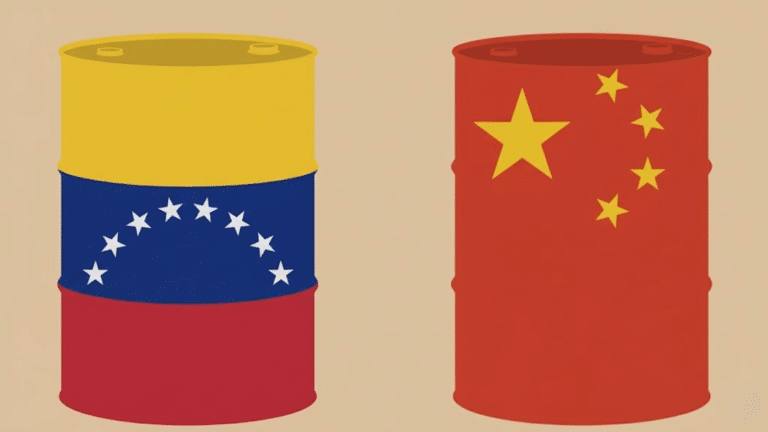
The US intervention in Venezuela may jeopardize both the flow of discounted Venezuelan oil to China's teapot refineries and the role of Chinese oil companies in Venezuela’s upstream business.
In discussing the dramatic seizure of Venezuelan President Nicolás Maduro and his wife, Cilia Flores, over the weekend, President Donald Trump declared that the United States would now “take back” the country’s oil. Yet he has offered little clarity on what exactly this means.
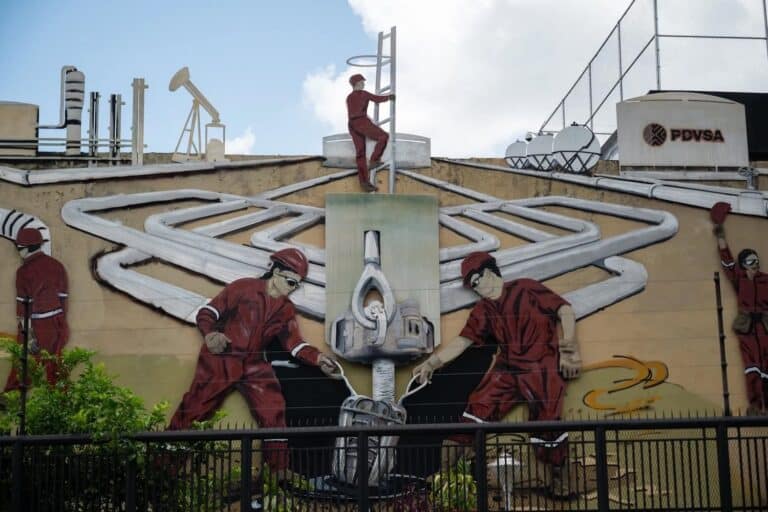
Early on 3 January 2026, the United States launched a military operation to arrest President Nicolás Maduro and remove him from Venezuela.