Current Access Level “I” – ID Only: CUID holders, alumni, and approved guests only
Campus open to active affiliate Columbia University ID (CUID) holders and approved guests only.
Columbia students, faculty, and staff can use the guest registration portal to register up to two same-day guests. Alumni can use the portal to register for campus same-day access as well. Learn more below.
This website uses cookies as well as similar tools and technologies to understand visitors’ experiences. By continuing to use this website, you consent to Columbia University’s usage of cookies and similar technologies, in accordance with the Columbia University Website Cookie Notice.
The US Secretary of Energy Chris Wright has directed the Federal Energy Regulatory Commission to make a rule that would help rapidly move electricity onto the US grid in large amounts.
The national conversation around climate change is shifting. There’s more focus on energy affordability and demand, as well as on the dual role artificial intelligence plays as both...
The event is for CUID holders only. Please note: space is limited. The Center on Global Energy Policy at Columbia University SIPA invites Columbia University students to a...
Event
• Large Conference Room
Center on Global Energy Policy
About Us
We are the premier hub and policy institution for global energy thought leadership. Energy impacts every element of our lives, and our trusted fact-based research informs the decisions that affect all of us.
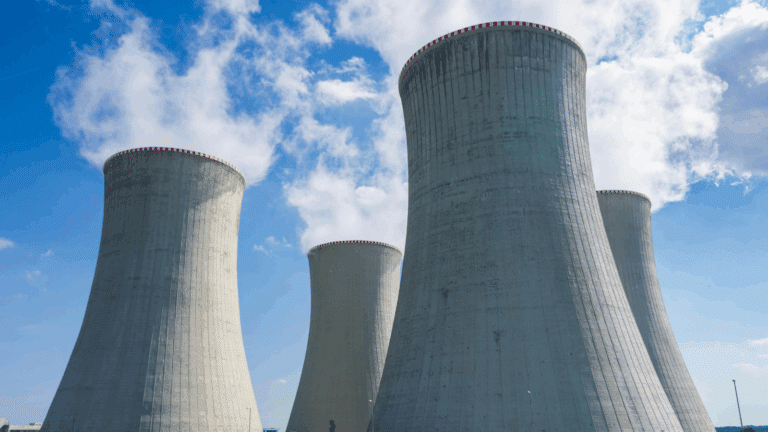
New nuclear reactors could be a valuable tool for reducing carbon emissions in the United States, but high costs and cost overruns – in both recent years and past decades – loom over the sector’s future.
Please join the Center on Global Energy Policy at Columbia SIPA for a session featuring opening remarks by Jeff Lyash, CEO of Tennessee Valley Authority. Mr. Lyash will share his insights on the potential deployment of small modular reactors and their integration into decarbonization strategies. Following his remarks, a panel of experts will delve into various topics, including the role of nuclear energy in decarbonization modeling, past cost overruns experienced in US reactor projects (including the AP1000 endeavors), and prospective strategies to achieve more cost-effective outcomes in the future.
Moderator:
Matt Bowen, Senior Research Scholar, Center on Global Energy Policy at Columbia SIPA
Speakers:
Shannon Bragg-Sitton, Director, Integrated Energy and Storage Systems, Idaho National Laboratory
Jacopo Buongiorno, Director, Center for Advanced Nuclear Energy Systems, Massachusetts Institute of Technology
Karl Hausker, Senior Fellow, World Resources Institute
Julie Kozeracki, Senior Advisor, U.S. Department of Energy Loan Programs Office
—
This webinar will be hosted via Zoom. Advance registration is required. Upon registration, you will receive a confirmation email with access details. The event will be recorded and the video recording will be added to our website following the event.
This event is open to the press, and registration is required to attend. For media inquiries or requests for interviews, please contact CGEP Communications ([email protected]).
For more information about the event, please contact [email protected].
*Registration is closed for this event. The Center on Global Energy Policy at Columbia University SIPA's Women in Energy initiative, in collaboration with the Columbia Policy Institute, invites...
Event
• International Affairs Building,
Columbia SIPA
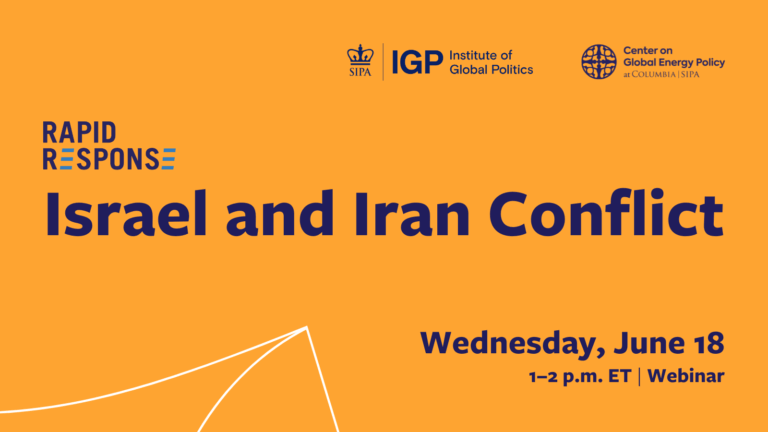
On the night of June 12, the Israeli military conducted widespread strikes on sites in Iran that targeted the country’s nuclear program and its senior military leadership.
On May 23, President Donald Trump signed four executive orders that aim to reform the United States Nuclear Regulatory Commission, streamline National Laboratory processes for reactor testing, advance...
Nuclear energy is essential for addressing climate change and growing electricity demand. The United States has joined over twenty other countries in pledging to triple its nuclear energy...
The NRC is already experimenting and making improvements in reducing licensing review times without changing the diligence or substance of its evaluations, and the results are promising. If the projected volume of applications materializes, the NRC will need to continue to apply the new approaches it has begun using, as well as seek out additional efficiencies. This paper lays out actionable recommendations on what NRC can do now—under existing statutory authority—to further compress schedules while preserving safety, due process, and analytical quality.