Kuwait looks to the cloud as power grid feels the strain
Kuwait has invited bids to construct three power substations that will supply electricity to Google Cloud data storage centres
Current Access Level “I” – ID Only: CUID holders, alumni, and approved guests only
Get the latest as our experts share their insights on global energy policy.
Venezuela holds 70% of Latin America's natural gas reserves, which it could export to Colombia and Trinidad to increase revenues.
Hear in-depth conversations with the world’s top energy and climate leaders from government, business, academia, and civil society.
From the affordability crisis and the data center boom, to the US government’s campaign to reinvigorate the Venezuelan oil market, energy is dominating headlines in unusual ways. And...
Find out more about our upcoming and past events.
The Center on Global Energy Policy at Columbia University SIPA's Women in Energy initiative and Accenture invite you to join us for an evening of conversation and networking...

Past Event
October 26, 2023
6:00 pm - 8:00 pm edt
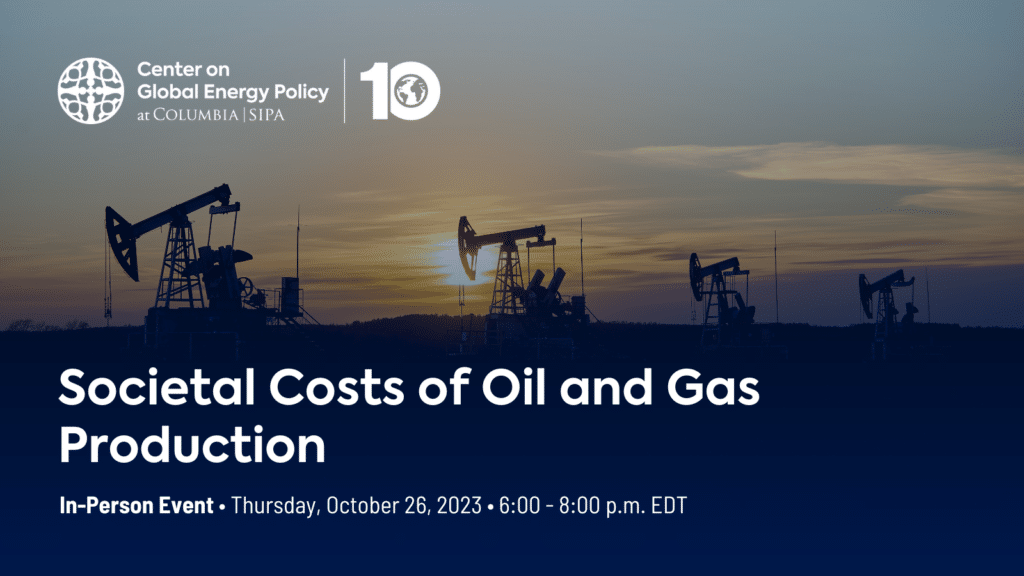
A legacy of costs from oil and gas production will remain long after achieving a net-zero future. The Center on Global Energy Policy (CGEP) at Columbia University’s School of International and Public Affairs will host Professor Lucija Muehlenbachs, CGEP visiting faculty member, associate professor of economics at the University of Calgary, and a university fellow at Resources for the Future, for a fireside chat focused on some of these burdens, such as methane emissions and well-site cleanup, as well as recent policy developments.
Dr. Geoffrey Heal, Donald C. Waite III professor of social enterprise and Paul Garrett professor of public policy and corporate responsibility, Columbia Business School, will moderate.
5:45-6:00 p.m. EDT – Check-in
6:00-7:00 p.m. EDT – Fireside Chat
7:00-8:00 p.m. EDT – Reception
—
This event will be hosted in person in New York City and live streamed via Zoom.
Advance registration is required. Upon registration, you will receive a confirmation email. The event will be recorded and the video recording will be added to our website following the event.
This event is open to press, and registration is required to attend. For media inquiries or requests for interviews, please contact Natalie Volk ([email protected]).
For more information about the event, please contact [email protected].
The recent military operation to remove Venezuelan President Nicolás Maduro and First Lady Cilia Flores raises several implications for the future of Venezuela and Latin America, geopolitics, and energy markets. Cosponsored by SIPA’s Institute of Global Politics (IGP) and Center for Global Energy Policy (CGEP), along with Columbia’s Institute of Latin American Studies (ILAS), this webinar will analyze the circumstances and impact of their capture and extradition to New York to face narcoterrorism and drug trafficking charges.

On October 22, the United States Department of the Treasury announced the imposition of sanctions on Russia’s two largest oil companies, Rosneft and Lukoil, as a penalty for what it characterized as a lack of Russian commitment to ending the war in Ukraine.
*Registration is closed for this event. The Center on Global Energy Policy at Columbia University SIPA's Women in Energy initiative, in collaboration with the Columbia Policy Institute, invites...

A legacy of costs from oil and gas production will remain long after achieving a net-zero future. The Center on Global Energy Policy (CGEP) at Columbia University's School...
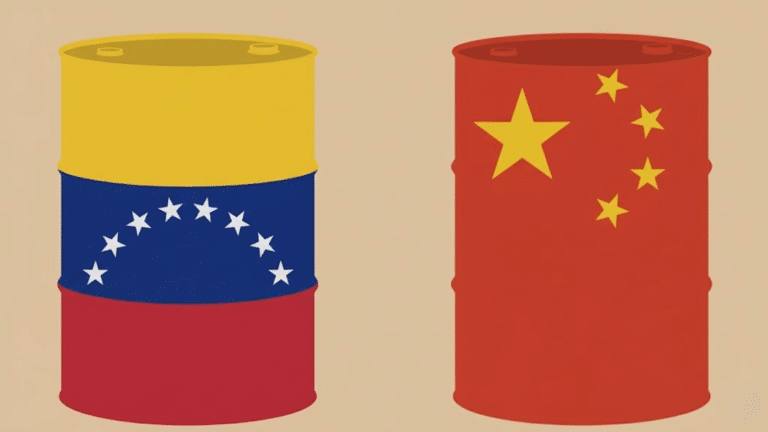
The US intervention in Venezuela may jeopardize both the flow of discounted Venezuelan oil to China's teapot refineries and the role of Chinese oil companies in Venezuela’s upstream business.
In discussing the dramatic seizure of Venezuelan President Nicolás Maduro and his wife, Cilia Flores, over the weekend, President Donald Trump declared that the United States would now “take back” the country’s oil. Yet he has offered little clarity on what exactly this means.
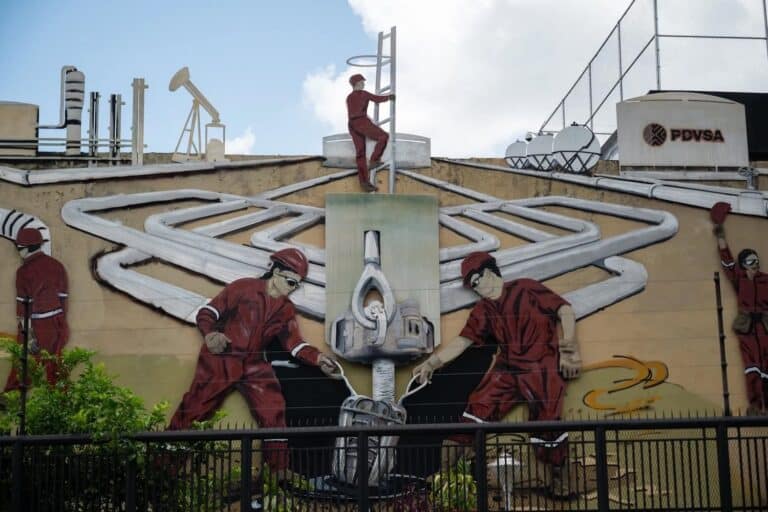
The country could see a relatively rapid recovery of some oil production, depending on the leadership that emerges.