On with Kara Swisher: Venezuela After Maduro, Can Trump Control Caracas From Afar?
The arrest of Venezuelan President Nicolas Maduro, on Saturday, sent shockwaves across the globe. And although the targeted military operation was a success, th
Current Access Level “I” – ID Only: CUID holders, alumni, and approved guests only
Climate change is a top priority for the new Biden administration, starting with a slew of early executive orders signed during President Biden’s first week in office. In this “whole-of-government” approach to climate change, the Department of Energy is a key player not only in policy, but also basic research, commercialization, and deployment of new clean energy technologies which will be critical to get on a pathway to deep decarbonization.
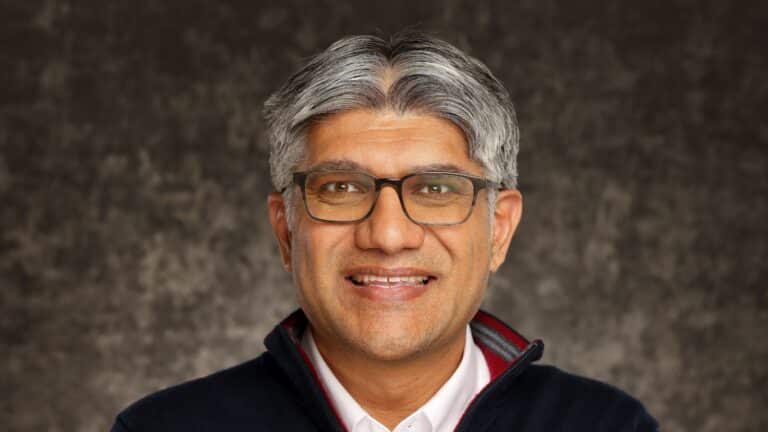
In this edition of Columbia Energy Exchange, host Jason Bordoff is joined by Dr. Arun Majumdar to discuss the outlook for energy technology and climate policy under the Biden administration.
Dr. Arun Majumdar is a Professor at Stanford University, a faculty member of the Departments of Mechanical Engineering and Materials Science and Engineering and former Director and Senior Fellow of the Precourt Institute for Energy at Stanford University. He served as the Founding Director of the Advanced Research Projects Agency – Energy (ARPA-E), and also served for a year as the Acting Under Secretary of Energy under President Obama. After leaving Washington, Arun was the Vice President for Energy at Google. He also led the energy agency review team for the Biden-Harris Presidential Transition, which covered the Department of Energy, Federal Energy Regulatory Commission and the Nuclear Regulatory Commission. Arun received his Ph.D. from the University of California, Berkeley.

Early on January 3, 2026, the United States apprehended Venezuelan President Nicolás Maduro and his wife and removed Maduro from power. Maduro was transported to New York, where he now faces federal charges of narco-terrorism and drug trafficking.
This has been a crucial year for US energy policy. The passage of the One Big Beautiful Bill Act eliminated many of the clean energy incentives that were...
Over the past week, President Trump has intensified pressure on Venezuelan president Nicolás Maduro by targeting the regime’s economic lifeline—oil. The United States has seized two oil tankers...
If it seems like you're hearing a lot more about geothermal energy lately, that's because this clean, firm energy source is at a technological turning point. With roots...
The US intervention in Venezuela may jeopardize both the flow of discounted Venezuelan oil to China's teapot refineries and the role of Chinese oil companies in Venezuela’s upstream business.
In discussing the dramatic seizure of Venezuelan President Nicolás Maduro and his wife, Cilia Flores, over the weekend, President Donald Trump declared that the United States would now “take back” the country’s oil. Yet he has offered little clarity on what exactly this means.
The country could see a relatively rapid recovery of some oil production, depending on the leadership that emerges.
Early on 3 January 2026, the United States launched a military operation to arrest President Nicolás Maduro and remove him from Venezuela.