Did Carbon Actually Score A Quiet Win In Congress?
When Congress approved the Fiscal Year 2026 spending bills last month, many in the carbon sector braced for cuts but reality appears more optimistic.
Current Access Level “I” – ID Only: CUID holders, alumni, and approved guests only
Get the latest as our experts share their insights on global energy policy.
The United States is at a rare inflection point for nuclear energy, with unprecedented momentum behind deployment and regulatory reform as nuclear becomes central to energy security, AI competitiveness, and state and corporate climate goals.
Hear in-depth conversations with the world’s top energy and climate leaders from government, business, academia, and civil society.
With electricity prices on the rise, the future of our power grid is attracting a lot more attention. Surging demand is at the center of the story, but...

Find out more about our upcoming and past events.
This workshop will be conducted in two parts: Part one on February 16 from 1:00 PM to 2:00 PM EST, and Part two on February 18 from 1:00 PM to...

As global warming mitigation and carbon dioxide (CO2) emissions reduction become increasingly urgent to counter climate change, many nations have announced net-zero emission targets as a commitment to rapidly reduce greenhouse gas emissions.
Low-carbon hydrogen has received renewed attention under these decarbonization frameworks as a potential low-carbon fuel and feedstock, especially for hard-to-abate sectors such as heavy-duty transportation (trucks, shipping) and heavy industries (e.g., steel, chemicals).
H2 projects will have to compete for a shrinking pipeline of zero-carbon electricity with energy-intensive data centres.
This special CGEP blog series, featuring six contributions from CGEP scholars, analyzes the potential impacts of the OBBBA across a range of sectors.

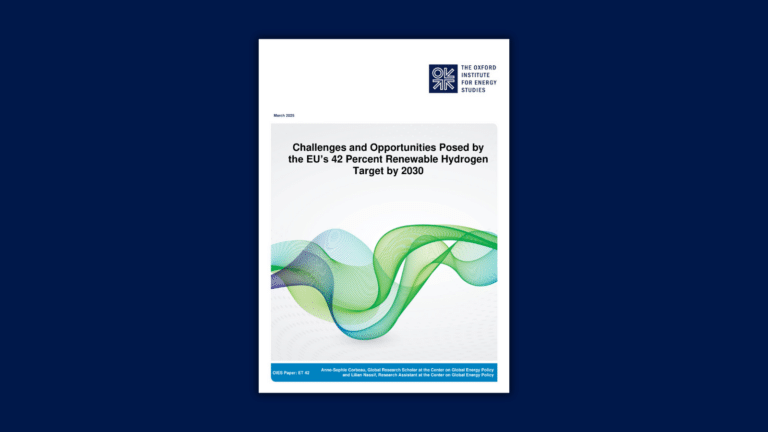
When the Inflation Reduction Act (IRA) was passed in August 2022, it triggered unprecedented enthusiasm among potential hydrogen suppliers.
China’s commitment to what it calls its “dual carbon” goals of carbon neutrality by 2060 and to ammonia’s potential role as a hydrogen derivative and carrier have fostered expectations that its renewable ammonia market will expand significantly and thus so will production.

Authors: Anne-Sophie Corbeau and Erik Rakhou. The focus of EU countries has long been on renewable hydrogen.

This blog post is a comparative analysis of the various production pathways each nation is considering.

As of April 2024, 58 national hydrogen strategies and roadmaps have been published, while many other countries have mentioned targets.