Cybersecurity is becoming a bigger focus for the United States as it strives to protect critical infrastructure from foreign adversaries and other intruders, and no infrastructure is more vital than that involving the delivery of electricity and other forms of energy.
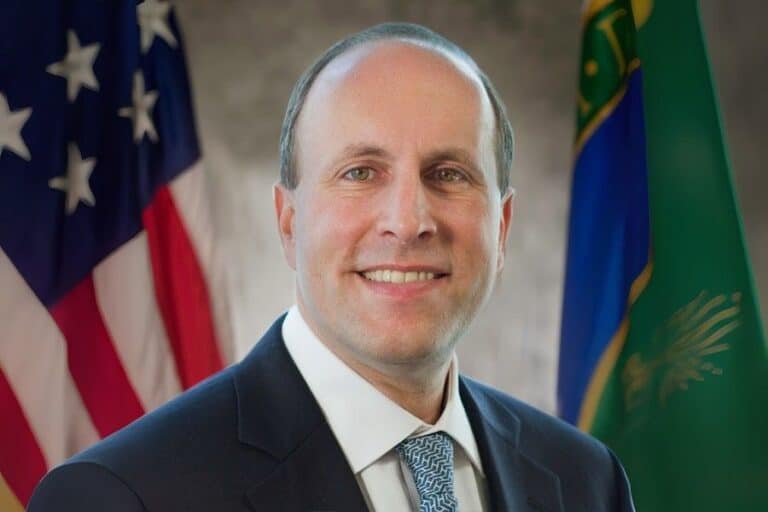
In this edition of the Columbia Energy Exchange, host Bill Loveless sits down with Karen S. Evans, a recently confirmed assistant secretary at the U.S. Department of Energy (DOE). Evans heads DOE’s Office of Cybersecurity, Energy Security and Emergency Response, which was established earlier this year by Energy Secretary Rick Perry to place more accountability at the agency for these critical responsibilities.
Bill stopped by DOE headquarters in Washington this fall to discuss with Evans what the establishment of her new office means for DOE’s responsibilities in cybersecurity and what she will focus on in the days ahead. They also talked about the type of risks facing the U.S. electric grid, how the government and industry are responding to them.
They also discussed the relationship between Evans’ cybersecurity responsibilities and a broader effort at DOE to promote resiliency throughout the U.S. grid, including coal, nuclear and other types of electric power generation.
As DOE’s highest official for cybersecurity, Evans brings a long record of experience in information technology, having served as Administrator of the Office of Electronic Government and Information Technology (IT) at the Office of Management and Budget during the administration of George W. Bush. More recently, she was national director of the U.S. Cyber Challenge, a public-private program to help address the skills gap in the cybersecurity field.