View / Hormuz limbo is now global oil’s top risk
Lost supply and a projected demand rebound have placed the oil market in a fragile equilibrium.
Get the latest as our experts share their insights on global energy policy.
President Trump issued a proclamation on August 6 imposing tariffs on polysilicon and solar products.

Hear in-depth conversations with the world’s top energy and climate leaders from government, business, academia, and civil society.
Abundance and affordability have become buzzwords among policymakers, who often have sharply different interpretations of how to attain them. To some, an energy abundance agenda means fewer regulatory...

Find out more about our upcoming and past events.
Join industry leaders, innovators, employers, and emerging talent for an evening exploring the technologies, trends, and career opportunities shaping the future of climate tech.

Director General CSE & TIME's 100 Most Influential People
India’s energy challenges are diverse and compounded by a growing global commitment to climate change, which has serious implications for India’s reliance on cheap coal to power its cities and villages alike. On this episode, host Jason Bordoff talks with Sunita Narain, Director General of the Center for Science and Environment, one of India’s leading environment NGOs based in Delhi, and one of TIME’s 100 Most Influential People for her work on climate change and the poor. They discuss: The role energy access and energy poverty play in India’s energy narrative; How to prevent fossil-fuel addiction among India’s citizens; The challenge of transitioning India off of cheap coal and the role of natural gas in the developing world; The need for smart fuel subsidies; Whether the Paris Agreement is a good deal for India and other developing nations.
Abundance and affordability have become buzzwords among policymakers, who often have sharply different interpretations of how to attain them. To some, an energy abundance agenda means fewer regulatory...
It started last year as a pressure campaign at sea, with the United States seizing tankers as part of what President Trump called a “total and complete blockade”...

Over the past five months, the Strait of Hormuz has been closed for extended stretches of time, disrupting roughly 10 to 15 million barrels of oil supply each...

As the demand for power surges across the US, the debate over how to build energy infrastructure has reached a fever pitch. And while both sides of the...
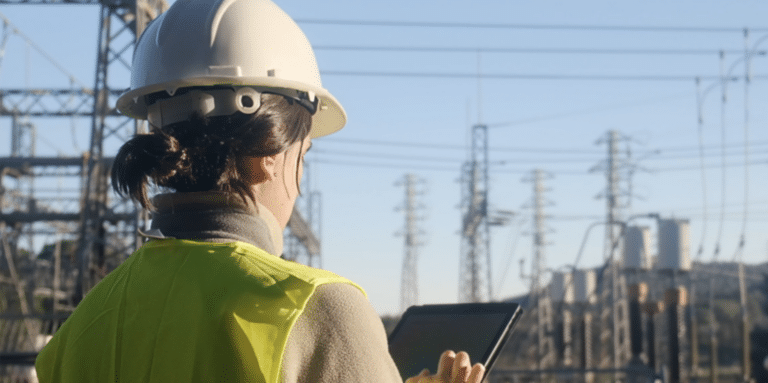
Why U.S. economic models must account for climate change and the clean energy transition to improve policymaking, forecasting, and public investment decisions.


The Inflation Reduction Act of 2022 (IRA) was built, sold, and attacked as the largest climate investment in U.S. history. […]
Recent scientific reassessments strengthen the case for rapid climate action rather than weaken it.