Could a strategic lithium reserve kickstart US supply chain development?
NEW YORK -- A strategic lithium reserve is being mooted as a solution to stabilize volatile prices that have hindered American mining projects, allowi
Current Access Level “I” – ID Only: CUID holders, alumni, and approved guests only
Get the latest as our experts share their insights on global energy policy.
This Energy Explained post represents the research and views of the author(s). It does not necessarily represent the views of the Center on Global Energy Policy. The piece...
Hear in-depth conversations with the world’s top energy and climate leaders from government, business, academia, and civil society.
If it seems like you're hearing a lot more about geothermal energy lately, that's because this clean, firm energy source is at a technological turning point. With roots...

Find out more about our upcoming and past events.
On January 1, 2026, the European Union's highly-anticipated Carbon Border Adjustment Mechanism (CBAM) will take effect. Introduced in 2023, CBAM will require the importers of certain carbon-intensive goods...
Global energy markets are in flux, from the rapid growth in renewable energy production and falling technology costs to talk of peak demand and calls for urgent action on climate change. At the same time, greenhouse gas emissions went up last year at the fastest rate they have since 2011, and we saw growth in coal, oil and gas production and consumption. When it comes to energy and climate issues, there’s tension between the rhetoric, our ambition, and the reality of the facts on the ground.
In this edition of Columbia Energy Exchange, host Jason Bordoff is joined by Dr. Christof Rühl, an internationally renowned economist specializing in macroeconomics and energy economics. Christof served as Chief Economist at BP for nearly a decade, and most recently, was the Head of Research at the Abu Dhabi Investment Authority.
Jason and Christof discuss how energy markets are impacting geopolitical risk and the global economy — from sanctions to trade wars and the escalating tensions in the Straits of Hormuz. They discuss the shale revolution, and its global implications as the U.S. becomes a major exporter of both natural gas and crude oil. They also discuss plastics, electric vehicles and new technologies from advanced nuclear to battery storage and hydrogen, and the role they might play in the energy transition.
If it seems like you're hearing a lot more about geothermal energy lately, that's because this clean, firm energy source is at a technological turning point. With roots...
Investment in clean energy technologies is on course to hit a record $2.2 trillion this year, according to the International Energy Agency. That’s more than twice the amount...

The national conversation around climate change is shifting. There’s more focus on energy affordability and demand, as well as on the dual role artificial intelligence plays as both...

The Federal Energy Regulatory Commission (FERC) regulates the United States’ energy transmission, pipeline networks, and wholesale rates for electricity. For much of its history, FERC was a little-known...

This Energy Explained post represents the research and views of the author(s). It does not necessarily represent the views of the Center on Global Energy Policy. The piece...
Geopolitical uncertainty associated with Russian gas exports could swing the range of those exports by an estimated 150 bcm per year.

From the east to west and north to south, in red states and blue states, attention to data centers is skyrocketing in state capitals across the United States.
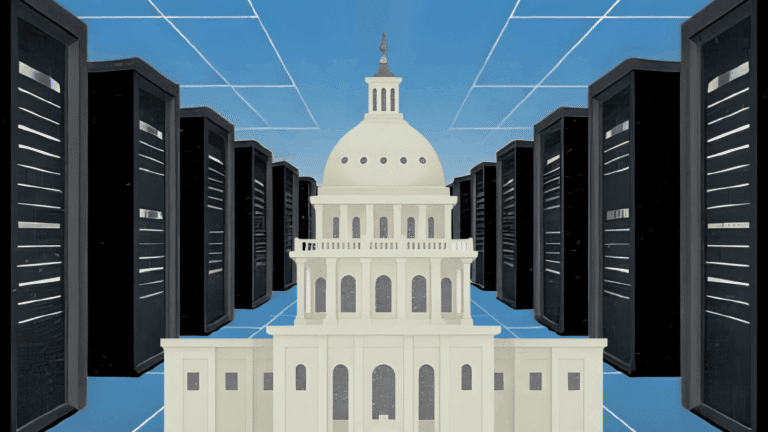
Trump’s latest proposal would cede the United States’ AI advantage.