Connect the World – Robin Mills
Powered by SnapStream Cloud Sharing
Current Access Level “I” – ID Only: CUID holders, alumni, and approved guests only
Get the latest as our experts share their insights on global energy policy.
On March 20, Governor Kathy Hochul proposed significant changes to New York’s Climate Leadership and Community Protection Act (CLCPA), the landmark climate law passed in 2019.

Hear in-depth conversations with the world’s top energy and climate leaders from government, business, academia, and civil society.
Today marks the last day of CERAWeek, the annual energy industry conference sometimes described as the Davos of energy. As oil and gas CEOs and government officials gathered...

Find out more about our upcoming and past events.
This roundtable is open only to currently enrolled Columbia University students. To register, you must sign in with your UNI. The Center on Global Energy Policy at Columbia...

Insights from the Center on Global Energy Policy
This Energy Explained post represents the research and views of the author(s). It does not necessarily represent the views of the Center on Global Energy Policy. The piece may be subject to further revision.
Contributions to SIPA for the benefit of CGEP are general use gifts, which gives the Center discretion in how it allocates these funds. More information is available here. Rare cases of sponsored projects are clearly indicated.
Artificial intelligence is driving a massive technological transformation that is already reshaping many aspects of daily life. The AI industry is expected to grow a staggering 42 percent and become a $1.3 trillion market by 2030. The backbone of this boom takes the form of massive “hyper-scale” data centers that are consuming electricity on a scale that rivals entire cities. As the US positions itself as a global AI leader, US tech companies are pouring millions of dollars into new and larger facilities that can meet their growing demand. The operation of these data centers requires in turn the rapid — and expensive — expansion of ratepayer funded generation, transmission, and distribution infrastructure.[1]
On its own, the buildout of this energy infrastructure to supply AI might not be so controversial. But it comes at a time when more than 33 million US households — or one in four households in the US — face energy insecurity,[2] struggling to pay utility bills or to heat or cool their homes. The juxtaposition between the energy haves and have nots is glaring. Moreover, as detailed below, the buildout may exacerbate energy insecurity as some of the associated costs are passed onto households least able to afford them. This blog explores how policymakers can leverage the rapid growth of AI to improve energy equity and affordability, particularly for energy insecure households, rather than having it compound the problem of energy inequality in the US.
The question of who should pay for the new energy infrastructure needed to meet data center demand remains an open one. Thus far, it appears that residential consumers in regions where data centers are located, including many who are already energy insecure, are footing much of the bill. In some of these regions, monthly wholesale electricity rates have increased as much as 267 percent compared to five years ago, leaving many residents struggling to understand why their bills were rising exponentially and how they would pay for it. But the lack of transparency in the ratemaking process makes it difficult to assess the extent to which residential customers are paying more than their fair share for infrastructure development that primarily benefits the data centers.
These data center–driven electricity price hikes have certainly raised eyebrows. In Virginia, for example, often dubbed the data center capital of the world, they were a major factor in this year’s gubernatorial election, and the candidate who advocated for making data centers pay their fair share — Democrat Abigail Spanberger — won by a wide margin. In many states, regulators have taken action to try to protect residential consumers. The public utility company AEP Ohio, for example, paused new data center approvals in that state until the Public Utilities Commission of Ohio can resolved who should pay for necessary transmission upgrades and guarantee payments for projected electricity demand. Yet even as states experiment with different approaches to ensure the equitable distribution of costs and burdens, the rapid pace of AI growth calls for replicable and scalable policy pathways.
Should policymakers and regulators decide to ensure that the AI boom strengthens rather than inhibits energy equity, the following four policy levers could be crucial.
Regulators can direct utilities to ensure that the costs of expanding the grid to accommodate energy-intensive data centers are distributed fairly, so that AI tech companies do not end up socializing their infrastructure costs onto residential ratepayers. Nevada offers a promising precedent. The recently approved Clean Transition Tariff (CTT) would make Google responsible for 100 percent of the costs of the new generation it requires in that state — protecting other ratepayers from higher bills. Similarly, in Pennsylvania, utilities are pushing for data centers to pay their fair share for grid usage instead of avoiding interconnection costs through co-location agreements. These approaches can shield low- and middle-income households from datacenter driven rate hikes.
States can strengthen or adopt low-income rate classes designed to insulate vulnerable customers from rising energy costs through discounts. Those that already have such rate classes in place, such as Massachusetts, can include new protections preventing across-the-board tariff hikes driven by data center energy demand. Those that don’t have them yet can consider putting them in place in ways that account for AI-related rate hikes. This can help target energy assistance more efficiently and channel the benefits of clean energy investments through on-bill credits.
The pace of data center construction is fueling renewed interest in gas-fired power plants and even restarting nuclear facilities. But siting new fossil fuel plants near already overburdened communities — such as those in Louisiana’s “Cancer Alley” or parts of Virginia — risks worsening pollution and public health disparities, and has already generated public opposition. An equity-focused siting policy begins with a simple principle: do no harm. That means prioritizing renewable energy sources, avoiding fossil development near vulnerable populations, and ensuring that new infrastructure investments do not exacerbate environmental injustices.
Clean energy–powered data centers can also create shared value for surrounding communities. In Europe, companies such as Meta and Google are already doing this by, for instance, recycling waste heat from their Danish and Finnish data centers to warm nearby homes. Similar in-kind energy transfers could directly benefit underserved US communities. For example, excess heat or generated energy from data centers could be repurposed for affordable housing complexes, hospitals, or schools—providing tangible energy savings and community benefits.
The energy challenges of AI are often framed in terms of reliability and capacity — how to keep the lights on as electricity demand surges. But the deeper challenge is one of distribution: who pays, who benefits, and who is left behind? As the US positions itself as a leader in AI, policymakers and industry leaders have a unique opportunity to turn AI’s energy needs into an opportunity to promote equity, protect vulnerable communities, and accelerate the transition to a sustainable energy future.
[1] For example, the Electric Reliability Council of Texas (ERCOT) predicts that due in large measure to the expansion of data centers, Texas’ electricity demand will double by 2030, requiring it to add 67 gigawatts of generation in the next 5 years — the equivalent of powering 60 million homes.
[2] Energy insecurity has severe consequences for health and human dignity, and it disproportionally impacts low-income and/or Black, Indigenous, or Latino households, renters, and households with children.
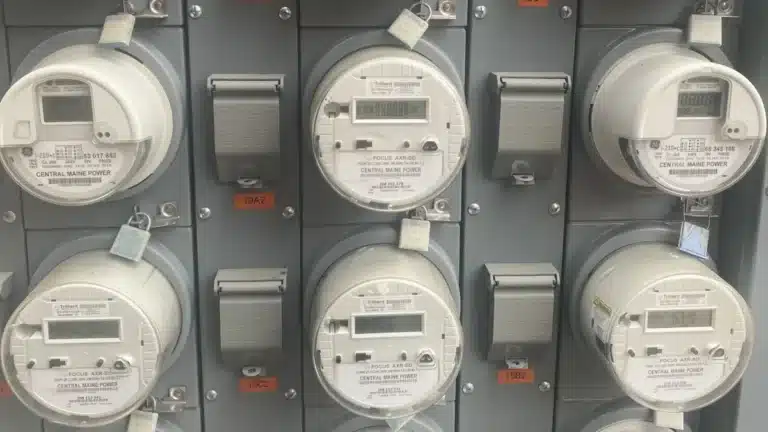
The US Secretary of Energy Chris Wright has directed the Federal Energy Regulatory Commission to make a rule that would help rapidly move electricity onto the US grid in large amounts.
Most African countries today are faced with a dual challenge: how to industrialize and expand electricity access at the same time.

CGEP scholars reflect on some of the standout issues of the day during this year's Climate Week

The commercial deals Trump struck on artificial intelligence cooperation will likely shift the global balance of power for one of this century's most critical technologies.

30 years ago last month, a brutal heatwave struck Chicago, killing more than 700 residents. As the city and much of the United States recently experienced another period of extreme heat, this anniversary serves as a reminder that heat remains one of the deadliest climate-related hazards — killing more people each year than hurricanes, floods and tornadoes combined — particularly for communities burdened by decades of disinvestment and structural barriers to health and safety.

This report explores how residents of North Lawndale, a predominantly Black and historically under-resourced neighborhood on Chicago’s West Side, experience the compounded effects of heat waves and power outages.
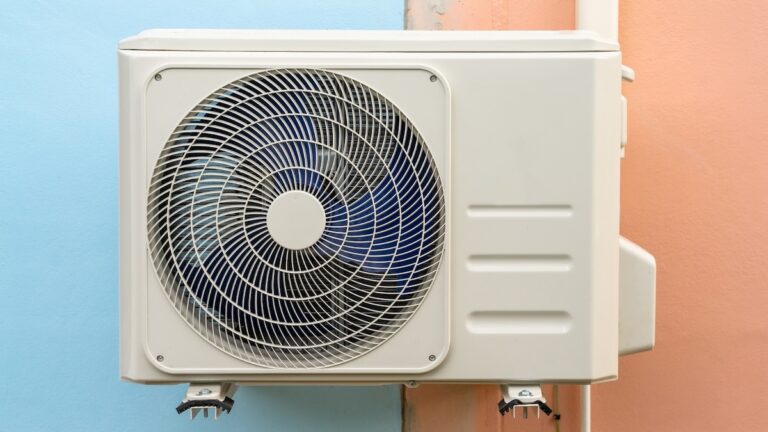
Even as the U.S. pursues an energy agenda centered on achieving affordability through abundance, utilities and local governments have tools to help families navigate energy insecurities.