U.S.-Iran MOU tension points are in Lebanon, says Columbia’s Karen Young
Karen Young, Columbia University, joins 'Power Lunch' to discuss the latest agreement between the U.S. and Iran, what could terminate the MOU and much more.
Get the latest as our experts share their insights on global energy policy.
Critical minerals were once again near the top of the agenda for G7 leaders as they met in Évian, France, this week, a year after the G7 launched the Critical Minerals Action Plan.

Hear in-depth conversations with the world’s top energy and climate leaders from government, business, academia, and civil society.
Yesterday, the US and Iran signed a memorandum of understanding starting the clock on a 60-day truce. The agreement intends to halt attacks, begin lifting the US naval...
Find out more about our upcoming and past events.
This event will take place in-person in Washington DC, at the Rayburn House Office Building, Room 2168 (Gold Room). Advance registration is required. Announcing New Columbia University Publications...
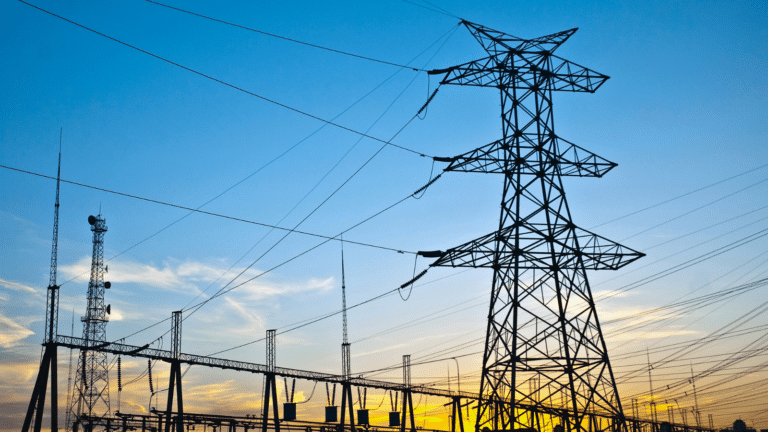
When it comes to reducing greenhouse gas emissions in the U.S., the private sector is playing a bigger role than ever before, and that goes for some energy providers, too. Among them is Xcel Energy, the first major U.S. utility to pledge to go entirely carbon-free.
In this edition of Columbia Energy Exchange, host Bill Loveless sits down with Ben Fowke, the chairman, President and CEO of Xcel Energy, which in December announced a bold commitment to provide 100% carbon-free electricity to its customers by 2050. Not only that, but Xcel also set a goal of cutting the company’s carbon emissions by 80% by 2030, compared to 2005 levels.
Since then, other utilities have also unveiled major carbon-cutting initiatives. Among them Idaho Power and Public Service Company of New Mexico, with goals of 100% carbon-free electricity by 2045 and 2040, respectively.
Ben doesn’t pretend that achieving Xcel Energy’s goals will be easy and he tells Bill why. Nevertheless, he’s confident that the Minneapolis-based company, with 3.6 million customers in Colorado, Michigan, Minnesota, Texas and four other states, is off to a good start.
Bill caught up with Ben while he was in Washington to testify on energy storage before the Senate Energy and Natural Resources Committee. They talked about his company’s ambitious carbon agenda, including its growing reliance on renewable energy and its movement away from coal for electric generation.
They also discussed the role that natural gas and nuclear energy will play in Xcel’s resource plans and the challenges of finding the technologies necessary to make carbon-free electricity a reality for Xcel and other utilities.
Not surprisingly, the Green New Deal came up in their talk as did proposals for a carbon tax and other options for policymakers to consider in addressing climate change.
Yesterday, the US and Iran signed a memorandum of understanding starting the clock on a 60-day truce. The agreement intends to halt attacks, begin lifting the US naval...
The 109-day-old Iran crisis is heading toward an off-ramp in the form of a not-yet-public Memorandum of Understanding to reopen the Strait of Hormuz. While energy markets are...

The clean energy transition had real momentum at the end of 2024. It was buoyed by federal support, billions of dollars of investment in new technologies, and broad...

For years, the energy transition was discussed as a shift that would happen in steady, predictable increments. But a massive surge in electricity demand in recent years—now colliding...

Critical minerals were once again near the top of the agenda for G7 leaders as they met in Évian, France, this week, a year after the G7 launched the Critical Minerals Action Plan.
Project-based carbon credit markets (PCCMs) facilitate the generation, trading, and retirement of carbon credits from projects that remove, reduce, or avoid greenhouse gas emissions.

The Center on Global Energy Policy is providing live updates on key developments related to the Iran crisis. Check back here for the latest.

The World Bank is revisiting one of its most entrenched positions, publicly questioning its long-standing emphasis on market-led approaches in economic policy.