China Briefing 20 August 2026: Oil and gas plan | Xi on climate change | Coal five-year plan
In this issue, Carbon Brief examines China’s five-year plan for coal.
Get the latest as our experts share their insights on global energy policy.
President Trump issued a proclamation on August 6 imposing tariffs on polysilicon and solar products.

Hear in-depth conversations with the world’s top energy and climate leaders from government, business, academia, and civil society.
Abundance and affordability have become buzzwords among policymakers, who often have sharply different interpretations of how to attain them. To some, an energy abundance agenda means fewer regulatory...

Find out more about our upcoming and past events.
PCCMs facilitate the generation, trading, and retirement of carbon credits from projects that remove, reduce, or avoid greenhouse gas emissions. By creating a revenue stream from verified climate...

Past Event
June 30, 2022
9:00 am - 10:00 am utc
The Iraq Kurdistan Region (IKR) is one of the few potential pipeline exporters to Europe that could increase natural gas supplies substantially in the next 2-3 years. In the wake of Russia’s invasion of Ukraine, and continuing sanctions on Iran, the IKR could potentially boost supply quantity and diversity.
The IKR holds most of Iraq’s discovered non-associated gas reserves. Production has advanced recently but there is further scope for major gains in output, technically up to 40 billion cubic meters (BCM) per year by the mid-2030s, as well as from capturing currently flared gas associated with oil production. This potential additional gas could be used to support more reliable power and industrial energy to the people of the IKR. It could also be used to replace polluting oil-based fuels, save more than 10 million tons per year of CO2 emissions, and potentially allow supplies to non-IKR Iraq, Turkey and Europe. Development of these resources could also support economic and social development.
The Center on Global Energy Policy hosted a webinar to present the results of a recent U.S. Department of Energy-supported study which aims to assist the Kurdistan Regional Government (KRG) in developing a commercially-robust and environmentally-sound gas market. The panel discussed the commercial and political attractions and challenges to realizing these aims.
Moderator:
Panelists:
—
On February 28, the United States and Israel launched an attack on Iran, resulting in the deaths of Iranian Supreme Leader Ali Hosseini Khamenei and senior Iranian leaders...


https://www.youtube.com/watch?v=vWh5WQVVMLc Global gas markets are set to undergo major changes by the end of the decade, with the coming wave of liquefied natural gas (LNG) production capacity poised...
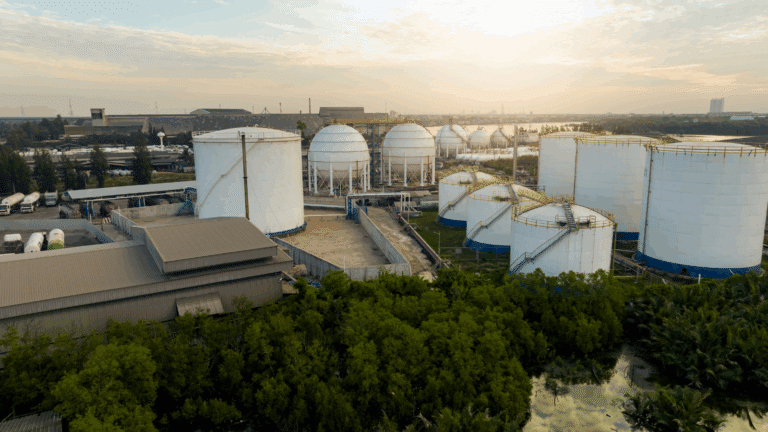
*Registration is closed for this event. The Center on Global Energy Policy at Columbia University SIPA's Women in Energy initiative, in collaboration with the Columbia Policy Institute, invites...

Women in Energy at the Center on Global Energy Policy at Columbia SIPA is pleased to host Anne-Sophie Corbeau.

The centre of gravity of the global energy system has definitively shifted eastward, driven by rapid industrialisation, expanding urban populations, and rising

Amid the surge in US gas demand coming from LNG exporters, there is a lack of equivalent new working gas storage capacity in the US.
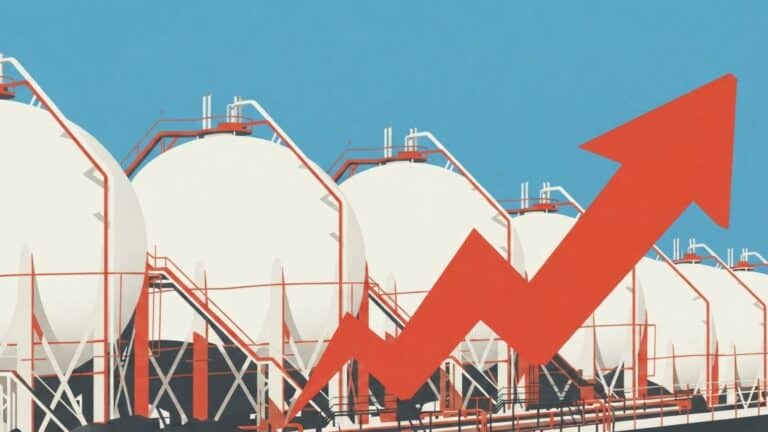
CHRONIQUE. Les Etats-Unis vont bientôt contrôler environ un tiers des capacités mondiales de GNL, bien plus que le Qatar. Sous l’administration Trump, le GNL est devenu un outil de politique étrangère, écrit Anne-Sophie Corbeau, chercheuse au Center on Global Energy Policy de l’Université Columbia
