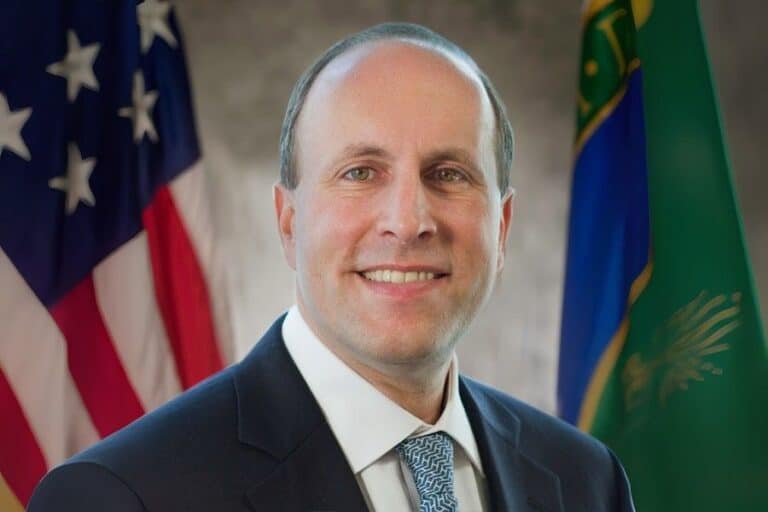
On January 21st, Thomas E. Donilon, former National Security Advisor and a member of the Center on Global Energy Policy’s Advisory Board, will deliver remarks about recent issues in energy geopolitics and national security, including the recent collapse in oil prices. His speech will keynote an event to present a new report, Navigating the U.S. Oil Export Debate, a collaboration between the Center on Global Energy Policy and the Rhodium Group. After his remarks, Mr. Donilon will engage in a moderated discussion with Center Founding Director Jason Bordoff about current issues in energy geopolitics, including the US oil export debate.
The event will also include a presentation of the new report, coauthored by Jason Bordoff and Rhodium Group Partner Trevor Houser. The report reviews the origin and current form of US crude export restrictions and analyzes the energy market, economic, security, geopolitical, trade and environmental implications of modifying or lifting those restrictions.
Following the report presentation and Mr. Donilon’s remarks, Jonathan Leff, Global Commodities Editor at Reuters, will moderate a discussion about US oil exports with:
- Jason Bordoff, Founding Director, Center on Global Energy Policy;
- Colin Fenton, Fellow, Center on Global Energy Policy and former Global Head of Commodities Research at J.P. Morgan;
- Trevor Houser, Partner, Rhodium Group;
- Ken Medlock, Fellow in Energy and Resource Economics and senior director of the Center for Energy Studies, Baker Institute for Public Policy, Rice University;
- Adrian Lajous, Fellow, Center on Global Energy Policy and former CEO of Pemex; and
- Amb. Carlos Pascual, Fellow, Center on Global Energy Policy and former Special Envoy and Coordinator for International Energy affairs, US Department of State.
Registration is required for in-person attendance. It will also be livestreamed at: energypolicy.columbia.edu/watch (no registration is required to view the livestream).
This event is open to press. Please direct all media inquiries to [email protected].
Most Center on Global Energy Policy events are also made available as podcasts via iTunes or our website and are usually available 3 to 5 days after the date of the event.
For more information contact: [email protected]