Everyone Wants in on Brazil’s Rare Earths
But is Brasília ready to meet the moment?
Get the latest as our experts share their insights on global energy policy.
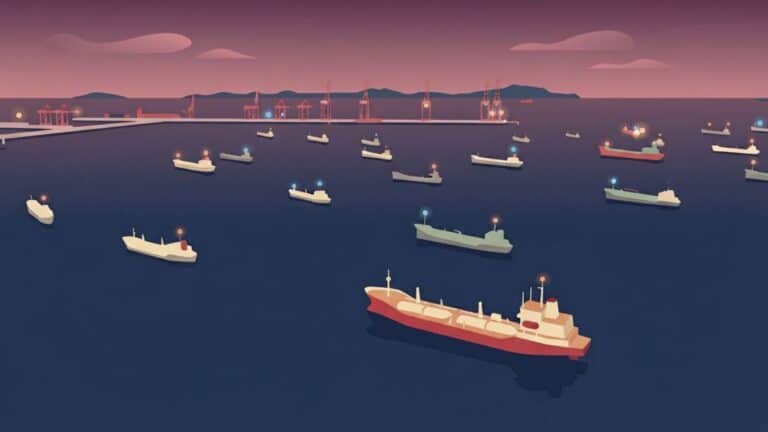
The Iran crisis, whenever it ends, will materially change how the LNG market operates.
Hear in-depth conversations with the world’s top energy and climate leaders from government, business, academia, and civil society.
Grid operators sit at the center of many of the biggest forces reshaping the global energy system. They’re navigating rising electricity demand, a lack of transmission infrastructure, shifting...
Past Event
October 9, 2018
6:00 pm - 7:30 pm
International Affairs Building, 420 W. 118 St., New York, NY 10027 1501
Past Event
October 9, 2018
6:00 pm - 7:30 pm
International Affairs Building, 420 W. 118 St., New York, NY 10027 1501
More than a month into the Iran conflict, the United States and Iran are at a critical inflection point.
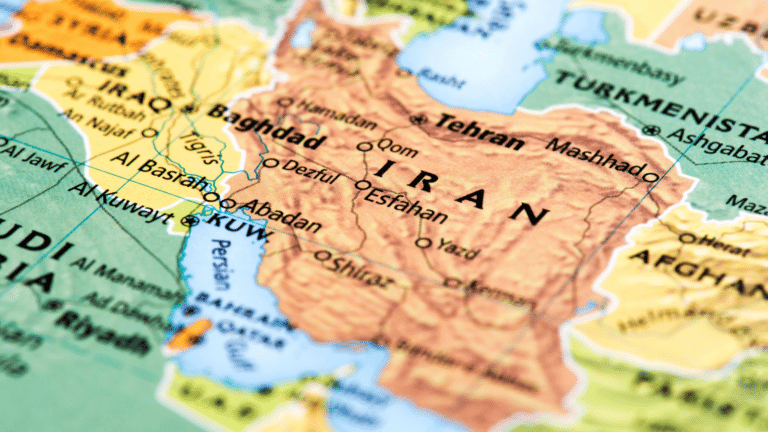

On February 28, the United States and Israel launched an attack on Iran, resulting in the deaths of Iranian Supreme Leader Ali Hosseini Khamenei and senior Iranian leaders...

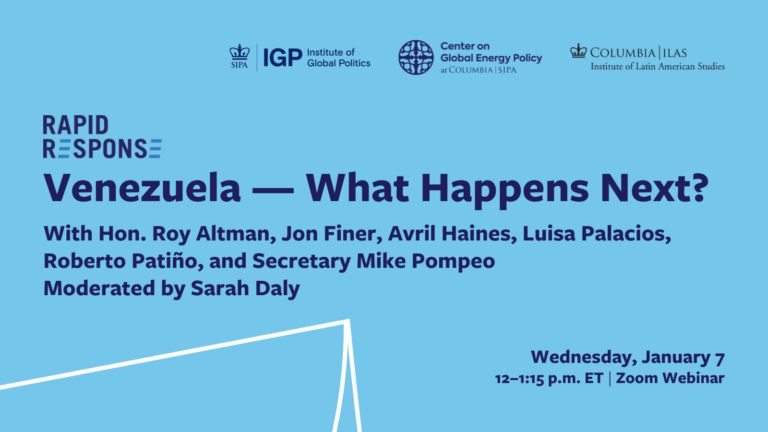
The recent military operation to remove Venezuelan President Nicolás Maduro and First Lady Cilia Flores raises several implications for the future of Venezuela and Latin America, geopolitics, and energy markets. Cosponsored by SIPA’s Institute of Global Politics (IGP) and Center for Global Energy Policy (CGEP), along with Columbia’s Institute of Latin American Studies (ILAS), this webinar will analyze the circumstances and impact of their capture and extradition to New York to face narcoterrorism and drug trafficking charges.
The Columbia Global Energy Summit 2026 is an annual event dedicated to thought-provoking discussions around the critical energy and climate challenges facing the global community.