Kuwait looks to the cloud as power grid feels the strain
Kuwait has invited bids to construct three power substations that will supply electricity to Google Cloud data storage centres
Current Access Level “I” – ID Only: CUID holders, alumni, and approved guests only
Get the latest as our experts share their insights on global energy policy.
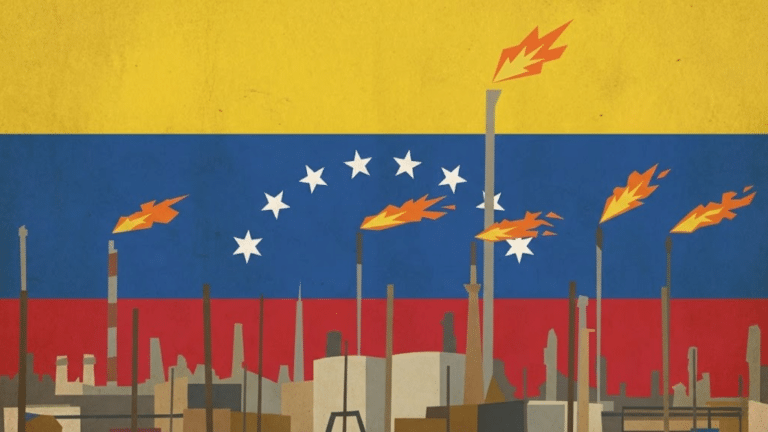
Venezuela holds 70% of Latin America's natural gas reserves, which it could export to Colombia and Trinidad to increase revenues.
Hear in-depth conversations with the world’s top energy and climate leaders from government, business, academia, and civil society.
From the affordability crisis and the data center boom, to the US government’s campaign to reinvigorate the Venezuelan oil market, energy is dominating headlines in unusual ways. And...

Find out more about our upcoming and past events.
The Center on Global Energy Policy at Columbia University SIPA's Women in Energy initiative and Accenture invite you to join us for an evening of conversation and networking...

Iraq is one of the world’s largest energy producers, but its people and its economy are hampered by pressures of electricity shortfalls and rising demand. The reliability of electricity services has long been an issue for the country, with violent protests breaking out last summer in the south due to blackouts from high demand. The disruption cost the old electricity minister his job.
In this edition of Columbia Energy Exchange, host Jason Bordoff is joined by Iraq’s new Minister of Electricity, Luay al-Khatteeb, the man responsible for addressing these problems and who, it has been said, has perhaps the toughest job in the Iraqi government, considering the history of challenges in the electricity sector.
Luay al-Khatteeb was a former non-resident fellow at CGEP as well as the Founder and Director of the Iraq Energy Institute. He’s had a vast career in business and in public policy, with positions at various international oil companies, as well as commercial banks and management consulting firms. He’s been a contributor to the Brookings Institution, Chatham House, the Kennedy School at Harvard, and other organizations.
Today, questions remain about how to manage power demand and supply, and whether new plans to rehabilitate transmission lines and build up resilience of the grid will pan out in light of security challenges, financing challenges, and international pressures. Jason sat down with Luay in Abu Dhabi at the World Energy Congress to discuss these challenges and much more.
From the affordability crisis and the data center boom, to the US government’s campaign to reinvigorate the Venezuelan oil market, energy is dominating headlines in unusual ways. And...
Great power competition—particularly between the United States and China—is intensifying. This rivalry is reshaping everything from technology supply chains and energy security to the future of artificial intelligence. ...

Early on January 3, 2026, the United States apprehended Venezuelan President Nicolás Maduro and his wife and removed Maduro from power. Maduro was transported to New York, where he now faces federal charges of narco-terrorism and drug trafficking.

This has been a crucial year for US energy policy. The passage of the One Big Beautiful Bill Act eliminated many of the clean energy incentives that were...

Venezuela holds 70% of Latin America's natural gas reserves, which it could export to Colombia and Trinidad to increase revenues.
Models can predict catastrophic or modest damages from climate change, but not which of these futures is coming.

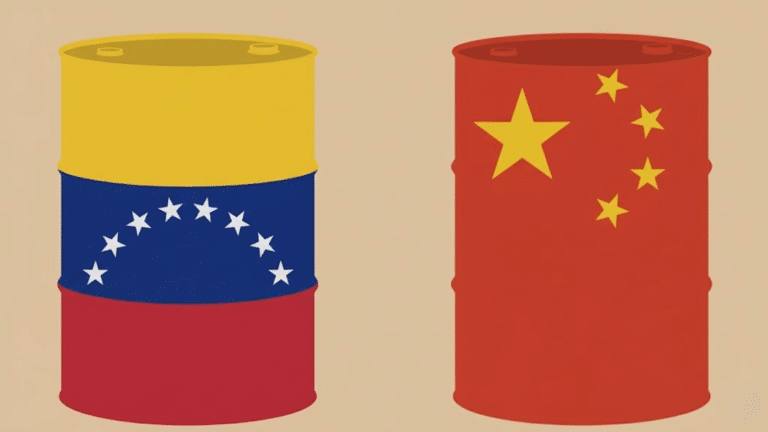
The US intervention in Venezuela may jeopardize both the flow of discounted Venezuelan oil to China's teapot refineries and the role of Chinese oil companies in Venezuela’s upstream business.
In discussing the dramatic seizure of Venezuelan President Nicolás Maduro and his wife, Cilia Flores, over the weekend, President Donald Trump declared that the United States would now “take back” the country’s oil. Yet he has offered little clarity on what exactly this means.