Did Carbon Actually Score A Quiet Win In Congress?
When Congress approved the Fiscal Year 2026 spending bills last month, many in the carbon sector braced for cuts but reality appears more optimistic.
Current Access Level “I” – ID Only: CUID holders, alumni, and approved guests only
Get the latest as our experts share their insights on global energy policy.
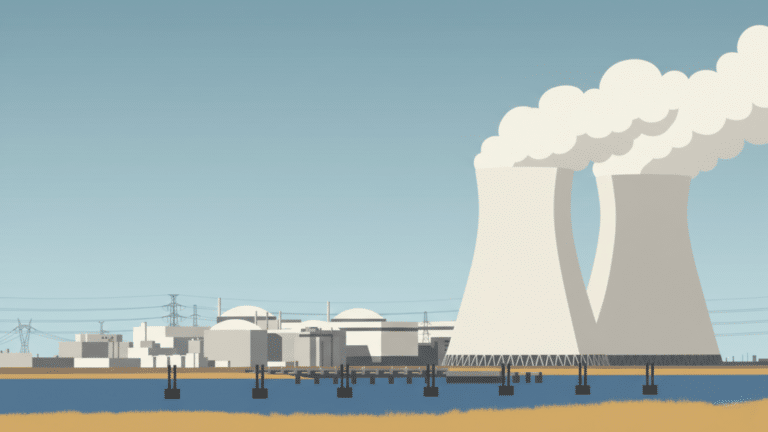
The United States is at a rare inflection point for nuclear energy, with unprecedented momentum behind deployment and regulatory reform as nuclear becomes central to energy security, AI competitiveness, and state and corporate climate goals.
Hear in-depth conversations with the world’s top energy and climate leaders from government, business, academia, and civil society.
As political support for clean energy has waxed and waned over the past twenty years, so has the government’s financial backing. In the 2010s, critics pointed to the...

Find out more about our upcoming and past events.
This workshop will be conducted in two parts: Part one on February 16 from 1:00 PM to 2:00 PM EST, and Part two on February 18 from 1:00 PM to...

What are the legal pathways to reducing carbon emissions? On this episode of Columbia Energy Exchange, host Jason Bordoff is joined by Michael Gerrard, Founder and Director of the Sabin Center for Climate Change Law at Columbia University. Michael Gerrard is a professor of environmental law, climate change law, and energy regulation, and a member and former Chair of the Faculty of the Earth Institute at Columbia. He is the author and editor of more than a dozen books, two of which were named Best Law Book of the Year by the Association of American Publishers. His latest effort, “Legal Pathways to Decarbonization in the United States,” is an extensive policy encyclopedia that presents a menu of recommendations for policymakers, the legal community, and students to enable and accelerate decarbonization in the U.S.
In a wide-ranging conversation, they discuss the playbook of legal options available to cut emissions and tackle the challenge of climate change – from fuel-switching to carbon capture, carbon pricing and identifying emission reduction pathways in trade and tax policy, they dissect policy recommendations for moving the U.S. toward a 2-degree pathway in order to meet the goals of the Paris Agreement on climate change.
As political support for clean energy has waxed and waned over the past twenty years, so has the government’s financial backing. In the 2010s, critics pointed to the...
With electricity prices on the rise, the future of our power grid is attracting a lot more attention. Surging demand is at the center of the story, but...

From the affordability crisis and the data center boom, to the US government’s campaign to reinvigorate the Venezuelan oil market, energy is dominating headlines in unusual ways. And...

Great power competition—particularly between the United States and China—is intensifying. This rivalry is reshaping everything from technology supply chains and energy security to the future of artificial intelligence. ...

The United States is at a rare inflection point for nuclear energy, with unprecedented momentum behind deployment and regulatory reform as nuclear becomes central to energy security, AI competitiveness, and state and corporate climate goals.
Multiple US–Iran conflict scenarios carry materially different risks for global oil infrastructure, transit routes, and prices.

China’s crude oil imports hit a record-high 11.6 million barrels per day in 2025, as geopolitical tensions, low oil prices, and global oversupply spurred China to increase its oil stockpiles, a trend likely to continue in 2026.