On with Kara Swisher: Venezuela After Maduro, Can Trump Control Caracas From Afar?
The arrest of Venezuelan President Nicolas Maduro, on Saturday, sent shockwaves across the globe. And although the targeted military operation was a success, th
Current Access Level “I” – ID Only: CUID holders, alumni, and approved guests only
Explore our expert insights and analysis in leading energy and climate news stories.
The arrest of Venezuelan President Nicolas Maduro, on Saturday, sent shockwaves across the globe. And although the targeted military operation was a success, th

Get the latest as our experts share their insights on global energy policy.
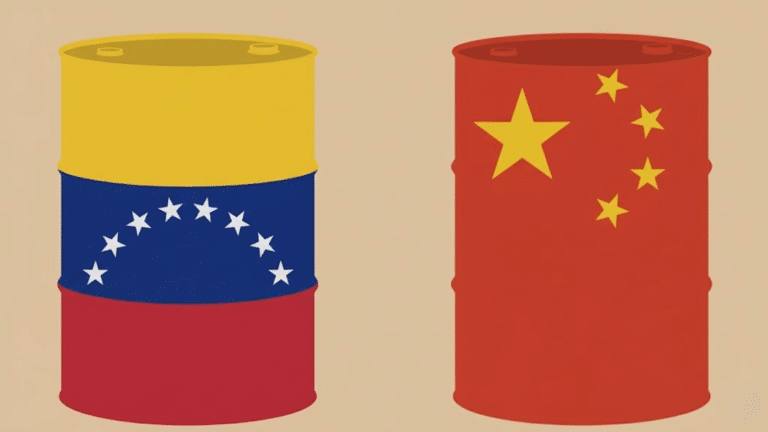
The US intervention in Venezuela may jeopardize both the flow of discounted Venezuelan oil to China's teapot refineries and the role of Chinese oil companies in Venezuela’s upstream business.
Hear in-depth conversations with the world’s top energy and climate leaders from government, business, academia, and civil society.
Early on January 3, 2026, the United States apprehended Venezuelan President Nicolás Maduro and his wife and removed Maduro from power. Maduro was transported to New York, where he now faces federal charges of narco-terrorism and drug trafficking.

Find out more about our upcoming and past events.
On January 1, 2026, the European Union's highly-anticipated Carbon Border Adjustment Mechanism (CBAM) will take effect. Introduced in 2023, CBAM will require the importers of certain carbon-intensive goods...
Columbia University Press Release
Contact: Leslie Patterson, 646-200-5326, [email protected]
The Center on Global Energy Policy (CGEP) at Columbia University’s School of International and Public Affairs (SIPA) announced today that José Sergio Gabrielli de Azevedo will be a non-resident fellow for the coming year, joining previously-announced fellows David Sandalow and Nobuo Tanaka. Gabrielli’s work will focus on the downstream market in Latin America and Africa and oil and gas production on both continents.
Gabrielli is currently the Secretary of Planning for the Government of the State of Bahia. Before that he served as the President and CEO of Petrobras, the fourth largest oil company in the world. Gabrielli was the longest serving President in the company’s history. He has been widely cited as an expert in energy and finance and has received numerous awards for his leadership, including being named Energy Executive of the Year in 2007.
“Our global energy challenges are closely linked to oil and gas production and there are few who know the industry better than José Sergio,” said Jason Bordoff, director of the Center on Global Energy Policy. “With his decades of experience and uniqueperspective he will play an important role in advancing the Center’s work.”
The Fellows Program will bring leading energy policy thought leaders to the Center on Global Energy Policy for 6-12 months at a time to research and write, lead not-for-credit study groups with students, and otherwise contribute to Columbia University’s robust and deepintellectual community focused on energy issues. Among his contributions, Gabrielli will participate in the Center’s Latin America conference in the Fall and spend several weeks at Columbia in the Spring.
The arrest of Venezuelan President Nicolas Maduro, on Saturday, sent shockwaves across the globe. And although the targeted military operation was a success, th
U.S. firms may be wary after years of socialism and mismanagement. - Alex Demas - Start a free trial today for full access.
The US intervention in Venezuela may jeopardize both the flow of discounted Venezuelan oil to China's teapot refineries and the role of Chinese oil companies in Venezuela’s upstream business.
In discussing the dramatic seizure of Venezuelan President Nicolás Maduro and his wife, Cilia Flores, over the weekend, President Donald Trump declared that the United States would now “take back” the country’s oil. Yet he has offered little clarity on what exactly this means.
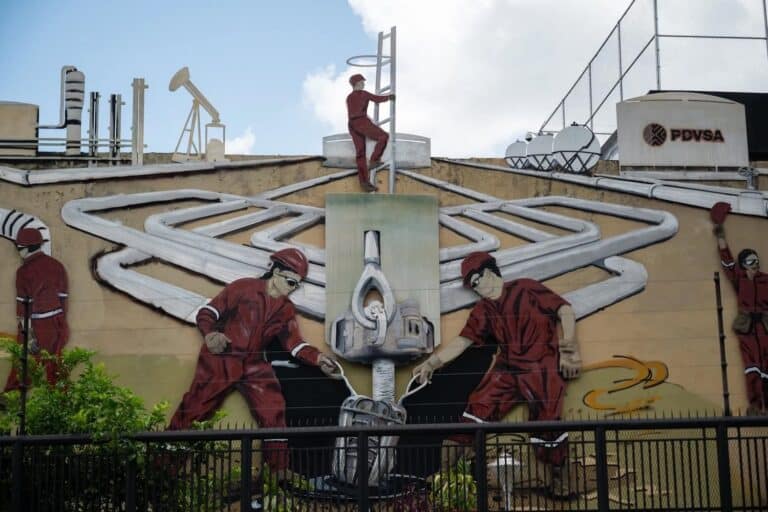
The country could see a relatively rapid recovery of some oil production, depending on the leadership that emerges.