Trump says ongoing talks are Iran’s ‘last chance’
Karen Young, senior research scholar at the Centre on Global Energy Policy at Columbia University, joins BNN Bloomberg to discuss the energy sector.
Get the latest as our experts share their insights on global energy policy.
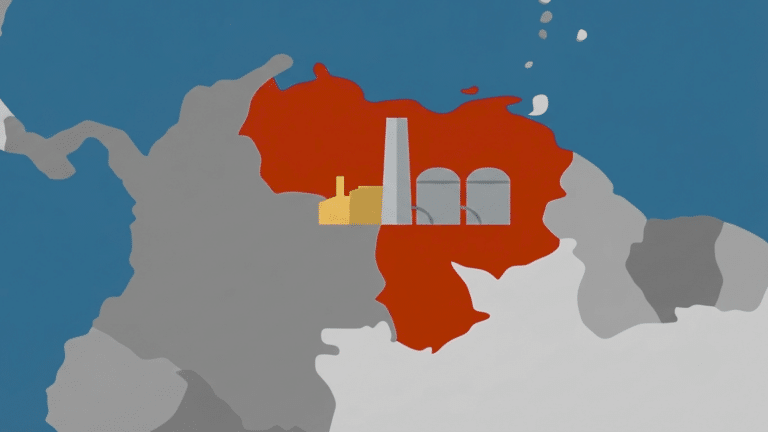
The economic and humanitarian consequences of the June 24 twin earthquakes in Venezuela continue to emerge.
Hear in-depth conversations with the world’s top energy and climate leaders from government, business, academia, and civil society.
Over the past five months, the Strait of Hormuz has been closed for extended stretches of time, disrupting roughly 10 to 15 million barrels of oil supply each...

Find out more about our upcoming and past events.
Join industry leaders, innovators, employers, and emerging talent for an evening exploring the technologies, trends, and career opportunities shaping the future of climate tech.

Insights from the Center on Global Energy Policy
This Energy Explained post represents the research and views of the author(s). It does not necessarily represent the views of the Center on Global Energy Policy. The piece may be subject to further revision.
Contributions to SIPA for the benefit of CGEP are general use gifts, which gives the Center discretion in how it allocates these funds. More information is available here. Rare cases of sponsored projects are clearly indicated.
In January 2026, the UK government publicly released an intelligence report analyzing the security implications of global environmental destruction. The report—an abridged version of a security threat assessment on global biodiversity loss that was prepared by the UK joint intelligence committee and leaked in unredacted form to The Times—warns that key earth systems may cross irreversible tipping points within the next two decades. Its description of how the global collapse of critical ecosystems supporting human food, water, economic, and political systems is likely to intensify existing geopolitical risks and create new ones underscores the urgent need for more environmental security risk analysis that anticipates these and other emerging threats.
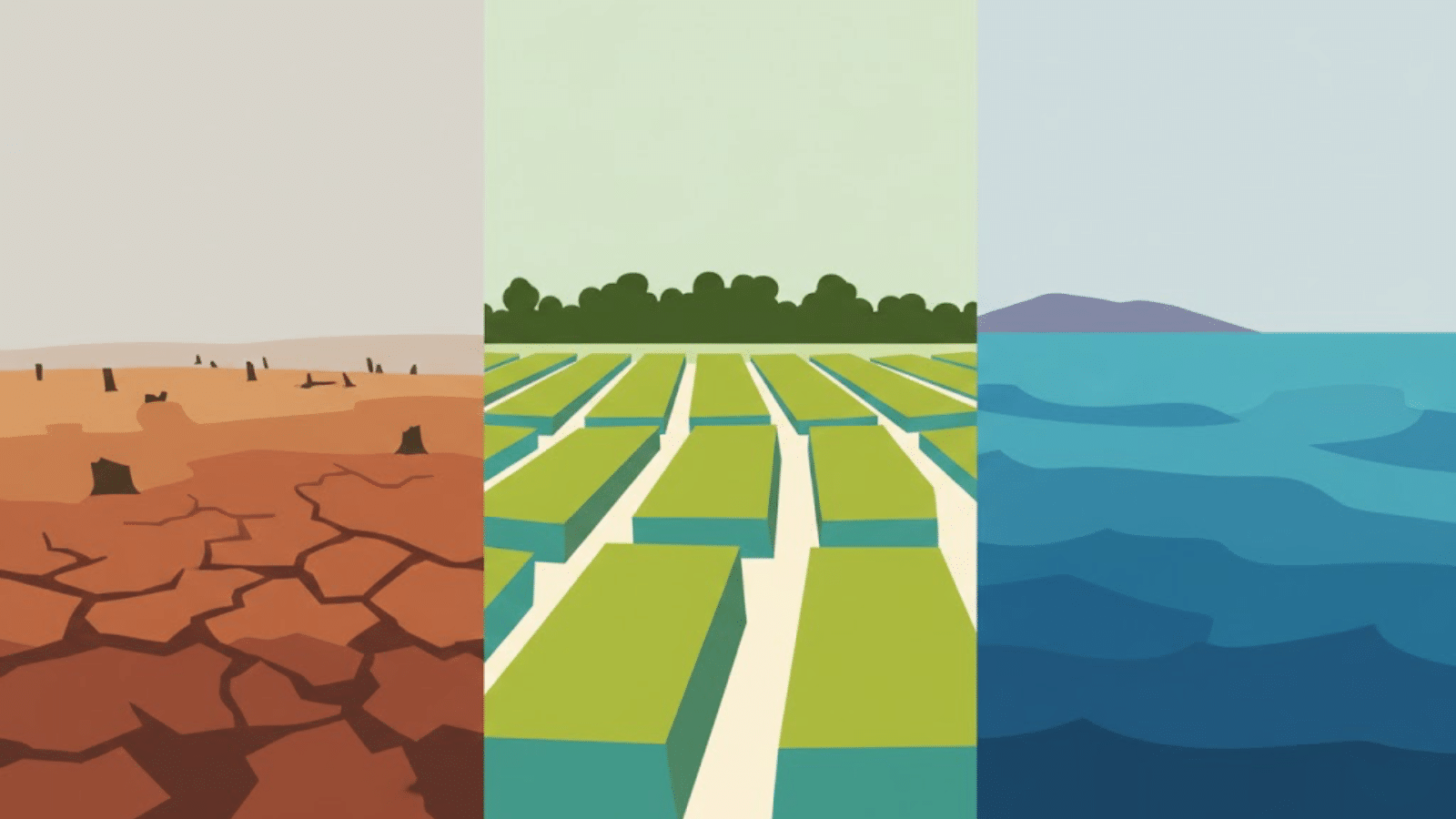
At the current rate of biodiversity loss worldwide, the new report states, “every critical ecosystem is on a pathway to collapse.” The key ecosystems identified by the report, based on the scale, speed, and potential impact of their collapse, include the Amazon and Congo Basin rainforests; the North American and Eurasian boreal forests; the Himalayan biome; and the mangroves and coral reefs of Southeast Asia and the South Pacific. Pressures on these ecosystems stem from global climate change, but also local pollution and land-use changes associated with the expansion of agriculture, mining, energy use, and resource extraction.
The report assesses that each of these ecosystems could cross known stability thresholds between 2030 and 2050, initiating a period of collapse and eventual transition to a new ecological state. Although ecosystem collapse would take time, crossing stability thresholds would itself have immediate and concurrent consequences such as freshwater scarcity, sea-level rise, and an increase in the frequency and intensity of extreme weather and seasonal events (e.g., flooding, wildfires, and droughts). As the ecosystems rapidly shift, they will likely release further greenhouse gases into the atmosphere, causing a feedback loop of further warming with knock-on effects to human food, water, and natural resource systems that the analysts suggest could be “catastrophic.”
If anything, the assessment may underestimate the magnitude of change, given that large sources of “hidden” natural emissions from thawing permafrost and burning forests are largely excluded from scientific climate models and carbon budgets. Moreover, weather patterns, ocean currents, and water systems interact across continents in ways that are difficult to model, meaning that the repercussions of collapsing critical ecosystems will likely unfold in unpredictable ways.
Far from remaining contained to the natural world, critical ecosystem collapse will cause cascading shocks across heavily populated regions and critical sectors—including agriculture, water, energy, infrastructure, and health—undermining economic and political stability. At the national level, the report highlights that competition over dwindling water and food resources will exacerbate political polarization, organized crime and terrorism, disinformation, and governance fragility. At the international level, it forecasts growing economic insecurity, military escalation, pandemic and health risks, migration pressures, and interstate conflict and instability.
On a geopolitical level, tensions between powerful countries will grow as they vie for control over productive lands, waters, minerals, and transit routes. For example, as flooding disasters and water scarcity worsen in the Himalayan region, nuclear-armed China, India, and Pakistan will compete for increasingly scarce strategic water, land, and energy resources. Fragile states across West and Central Africa are already seeing new conflicts between nonstate actors over dwindling resources. This growing instability could play out even in seemingly “stable” countries, causing millions to flee growing violence and poverty and migrate to wealthy countries.
Against this backdrop, states and individuals able to pay for resilience—in supply chains, resource control, securitization, and hardening infrastructure—will likely do so. Those unable to pay to rebuild after increasingly frequent disasters may be left to fend for themselves. Global development finance and investment in vulnerable regions is already being scaled back due to a shift in priorities toward domestic concerns, including responding to military aggression, migration backlash, and stubborn inflation. Similarly, as developing countries in vulnerable regions of the world struggle to respond to environmental shocks, and demand for their energy and critical minerals resources grow, they will increasingly find themselves at risk of resource capture.
The UK report builds on efforts over the past two decades by global military and intelligence services to analyze the security risks posed by so-called “actorless” threats through rigorous uncertainty frameworks, as the intelligence community has regularly done for threats posed by malicious actors. Working closely with academia, intelligence analysts have sought to trace the implications of these threats across the health, cyber, environmental, maritime, and energy domains. As scientific forecasts on the severity of climate and environmental change have become clearer, the security establishment has begun to recognize the need for deeper and more specific analysis of the potential impacts of future global environmental shocks to various security interests and sectors. For example, in 2021 under President Biden, the US intelligence community released a National Intelligence Estimate—its highest-order, authoritative assessment of a given issue—on the security impacts of climate change. Similarly, NATO has published multiple versions of its Climate Change and Security Impact Assessments since 2022.
However, the pace of climate change impacts continues to outstrip governments’ efforts to address them, particularly as many of these efforts have stalled or been halted altogether. In the United States, the Trump administration has rescinded federal policies to confront the security risks posed by climate and environmental threats—which had included a whole-of-government strategic framework, new structures within the intelligence community, and planning efforts across the Pentagon—framing them as a “distraction.” While NATO continues to include climate resilience in its planning and operations, it no longer prioritizes it at the same level as even a few years ago—in large part due to growing resource contestation, energy weaponization, and threats of conflict among NATO countries themselves.
Yet dwindling resources, supply chain shocks, extreme disasters, and growing fragility will threaten the security of all sectors—from national and local governments to the private sector. While political priorities may shift, threat analyses of these topics remain critical to understanding the rapidly changing security environment. Without them, leaders cannot fully understand the implications of these changes for economic value, national security, or great power contestation. Researchers and analysts can build on the UK biodiversity report’s threat assessment model by deepening analysis of identified risks and more fully integrating it into security and geopolitical decision making. As demonstrated by the report’s stunning scenarios for the coming years, the magnitude of these threats is too great to ignore.
The UNFCCC process is marred by gridlock in the COP multilateral framework, threatening joint efforts by countries to mitigate the climate crisis.
On March 20, Governor Kathy Hochul proposed significant changes to New York’s Climate Leadership and Community Protection Act (CLCPA), the landmark climate law passed in 2019.

As diplomats meet in Brazil for COP30, global resolve to tackle the climate challenge appears badly frayed.
As the host of COP30, Brazil has an unprecedented platform to demonstrate its climate leadership.

Why U.S. economic models must account for climate change and the clean energy transition to improve policymaking, forecasting, and public investment decisions.


The Inflation Reduction Act of 2022 (IRA) was built, sold, and attacked as the largest climate investment in U.S. history. […]