Could a strategic lithium reserve kickstart US supply chain development?
NEW YORK -- A strategic lithium reserve is being mooted as a solution to stabilize volatile prices that have hindered American mining projects, allowi
Current Access Level “I” – ID Only: CUID holders, alumni, and approved guests only
Get the latest as our experts share their insights on global energy policy.
This Energy Explained post represents the research and views of the author(s). It does not necessarily represent the views of the Center on Global Energy Policy. The piece...

Hear in-depth conversations with the world’s top energy and climate leaders from government, business, academia, and civil society.
Over the past week, President Trump has intensified pressure on Venezuelan president Nicolás Maduro by targeting the regime’s economic lifeline—oil. The United States has seized two oil tankers...

Find out more about our upcoming and past events.
On January 1, 2026, the European Union's highly-anticipated Carbon Border Adjustment Mechanism (CBAM) will take effect. Introduced in 2023, CBAM will require the importers of certain carbon-intensive goods...

Chairman, BeyondNetZero
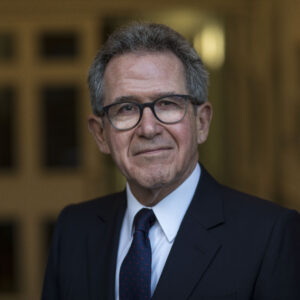
Lord Browne is Chairman of BeyondNetZero, a climate growth equity fund established in partnership with General Atlantic. He served as Group Chief Executive of international energy company BP from 1995 to 2007, having joined the company in 1966 as a university apprentice.
He led BP through a period of significant growth and transformation, including a merger with Amoco in 1998. His landmark speech at Stanford University in 1997 established BP as a global leader in the way it thought about and sought to address climate change. In 2007, Lord Browne joined Riverstone, where he was co-head of the world’s largest renewable energy private equity fund until 2015. He is Chairman of Windward, a global maritime predictive intelligence company and Chairman of SparkCognition, an artificial intelligence technology company.
Lord Browne is independent co-Chairman of the Prime Minister’s Council on Science and Technology, Chairman of the Francis Crick Institute, Chairman of the Courtauld Institute of Art, and a former Chairman of the Queen Elizabeth Prize for Engineering as well as a past President of the Royal Academy of Engineering.
Lord Browne was educated St John’s College, Cambridge, where he earned a BA degree in physics. In addition to his degree in physics from the University of Cambridge, he holds an MS degree in business from Stanford University, California. He is a former Chairman of the Advisory Board of the Cambridge Judge Business School.