Current Access Level “I” – ID Only: CUID holders, alumni, and approved guests only
Campus open to active affiliate Columbia University ID (CUID) holders and approved guests only.
Columbia students, faculty, and staff can use the guest registration portal to register up to two same-day guests. Alumni can use the portal to register for campus same-day access as well. Learn more below.
This website uses cookies as well as similar tools and technologies to understand visitors’ experiences. By continuing to use this website, you consent to Columbia University’s usage of cookies and similar technologies, in accordance with the Columbia University Website Cookie Notice.
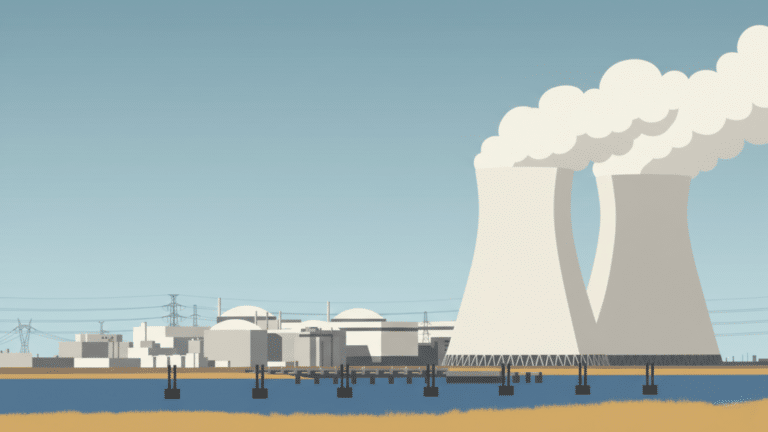
The United States is at a rare inflection point for nuclear energy, with unprecedented momentum behind deployment and regulatory reform as nuclear becomes central to energy security, AI competitiveness, and state and corporate climate goals.
As political support for clean energy has waxed and waned over the past twenty years, so has the government’s financial backing. In the 2010s, critics pointed to the...
This workshop will be conducted in two parts: Part one on February 16 from 1:00 PM to 2:00 PM EST, and Part two on February 18 from 1:00 PM to...
Event
• Center on Global Energy Policy
1255 Amsterdam Ave, New York, NY 10027
About Us
We are the premier hub and policy institution for global energy thought leadership. Energy impacts every element of our lives, and our trusted fact-based research informs the decisions that affect all of us.
Please join the Center on Global Energy Policy for a presentation and discussion with Nobuo Tanaka, non-resident Fellow at the Center, President of the Sasawaka Peace Foundation, and former Executive Director at the International Energy Agency. Tanaka-san will offer remarks on the current landscape of nuclear power and its outlook in Japan. After the remarks, Center Fellow Richard Nephew will moderate a discussion where Tanaka-san will be joined by Chris Gadomski, Head of Research, Nuclear, at Bloomberg New Energy Finance. Registration is required for in-person attendance. It will also be livestreamed at: http://energypolicy.columbia.edu/watch. This event is open to press. A podcast of this event (in addition to other past Center events) will be available ~3 to 5 days after the date of the event through iTunes or via our website. For more information contact: [email protected]
The Center on Global Energy Policy at Columbia University SIPA's Women in Energy initiative and Accenture invite you to join us for an evening of conversation and networking...
Event
• Accenture – One Manhattan West
395 9th Ave, New York
*Registration is closed for this event. The Center on Global Energy Policy at Columbia University SIPA's Women in Energy initiative, in collaboration with the Columbia Policy Institute, invites...
Event
• International Affairs Building,
Columbia SIPA
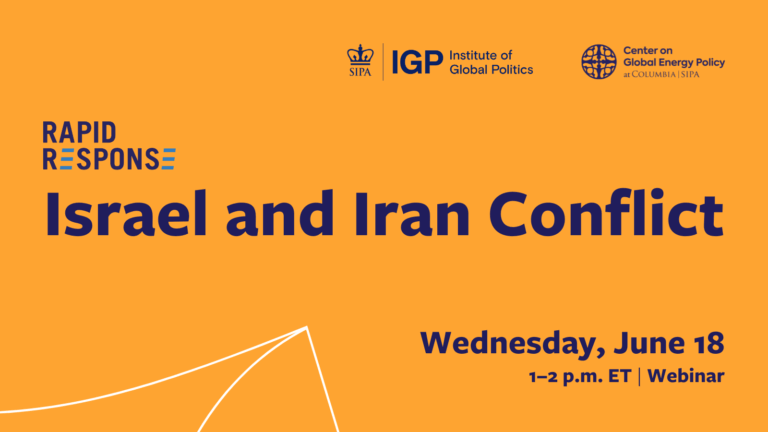
On the night of June 12, the Israeli military conducted widespread strikes on sites in Iran that targeted the country’s nuclear program and its senior military leadership.
On May 23, President Donald Trump signed four executive orders that aim to reform the United States Nuclear Regulatory Commission, streamline National Laboratory processes for reactor testing, advance...
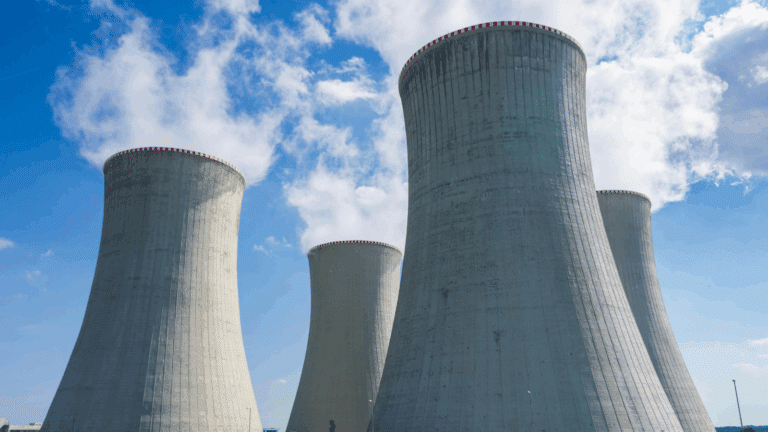
The United States is at a rare inflection point for nuclear energy, with unprecedented momentum behind deployment and regulatory reform as nuclear becomes central to energy security, AI competitiveness, and state and corporate climate goals.
The NRC is already experimenting and making improvements in reducing licensing review times without changing the diligence or substance of its evaluations, and the results are promising. If the projected volume of applications materializes, the NRC will need to continue to apply the new approaches it has begun using, as well as seek out additional efficiencies. This paper lays out actionable recommendations on what NRC can do now—under existing statutory authority—to further compress schedules while preserving safety, due process, and analytical quality.