Venezuela After Maduro: Can Trump Control Caracas From Afar?
The arrest of Venezuelan President Nicolas Maduro, on Saturday, sent shockwaves across the globe. And although the targeted military operation was a success, th
Current Access Level “I” – ID Only: CUID holders, alumni, and approved guests only
Explore our expert insights and analysis in leading energy and climate news stories.
The arrest of Venezuelan President Nicolas Maduro, on Saturday, sent shockwaves across the globe. And although the targeted military operation was a success, th

Get the latest as our experts share their insights on global energy policy.
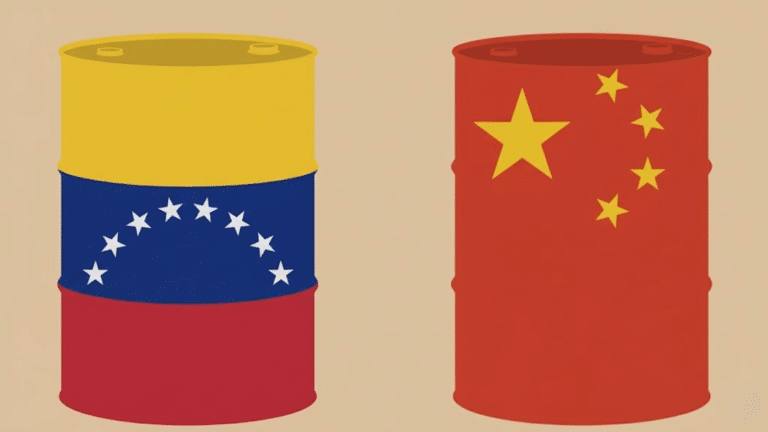
The US intervention in Venezuela may jeopardize both the flow of discounted Venezuelan oil to China's teapot refineries and the role of Chinese oil companies in Venezuela’s upstream business.
Hear in-depth conversations with the world’s top energy and climate leaders from government, business, academia, and civil society.
Early on January 3, 2026, the United States apprehended Venezuelan President Nicolás Maduro and his wife and removed Maduro from power. Maduro was transported to New York, where he now faces federal charges of narco-terrorism and drug trafficking.

Find out more about our upcoming and past events.
On January 1, 2026, the European Union's highly-anticipated Carbon Border Adjustment Mechanism (CBAM) will take effect. Introduced in 2023, CBAM will require the importers of certain carbon-intensive goods...
Past Event
September 24, 2020
12:00 pm - 1:30 pm
Food systems contribute 21-37% of global greenhouse gas emissions, according to the best estimate. But food systems have received far less attention than power and transport systems in the global response to climate change. Very few countries take a comprehensive view of the food system in their climate action plans (known as “Nationally-Determined Contributions” or “NDCs”) submitted to the UN Framework Convention on Climate Change (UNFCCC). Columbia University, New York University, and the Agricultural Model Intercomparison and Improvement Project (AgMIP), in collaboration with FAO’s statistical experts, have launched a program to improve data on food system emissions, develop better policy responses and educate the public on the food-climate connection. Please join us for a discussion of these issues, with a particular focus on the opportunities to include food system measures in the updated NDCs that national governments submit to the UNFCCC in the next year. Panelists: –Matthew Hayek, Assistant Professor, Department of Environmental Studies, New York University –Cynthia Rosenzweig, Senior Research Scientist, NASA Goddard Institute for Space Studies and the Earth Institute’s Center for Climate Systems Research, Columbia University; Co-Founder, AgMIP –David Sandalow, Inaugural Fellow, Center on Global Energy Policy at Columbia SIPA –Francesco N. Tubiello, Team Leader, Environmental Statistics, Food and Agriculture Organization — This webinar will be hosted via Zoom. Advance registration is required. Upon registration, you will receive a confirmation email with access details. The event will be recorded and the video recording will be added to our website following the event. This event is open to press, and registration is required to attend. For media inquiries or requests for interviews, please contact Artealia Gilliard ([email protected]) or Genna Morton ([email protected]). For more information about the event, please contact Caitlin Norfleet or Nicolina DueMogensen ([email protected]).
The Columbia Global Energy Summit 2026 is an annual event dedicated to thought-provoking discussions around the critical energy and climate challenges facing the global community.
This event is open to Columbia University students only. Join the Center on Global Energy Policy’s Women in Energy initiative for an interactive discussion on human rights and...
*Registration is closed for this event. The Center on Global Energy Policy at Columbia University SIPA's Women in Energy initiative, in collaboration with the Columbia Policy Institute, invites...

While various efforts continue to be made to estimate fashion’s environmental footprint, major gaps remain in how to decarbonize material production and reshape business practices.

On November 6, 2025, in the lead-up to the annual UN Conference of the Parties (COP30), the Center on Global Energy Policy (CGEP) at Columbia University SIPA convened a roundtable on project-based carbon credit markets (PCCMs) in São Paulo, Brazil—a country that both hosted this year’s COP and is well-positioned to shape the next phase of global carbon markets by leveraging its experience in nature-based solutions.
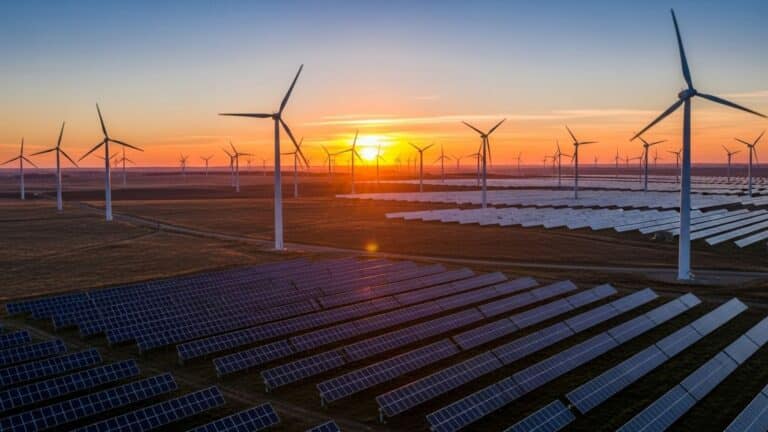
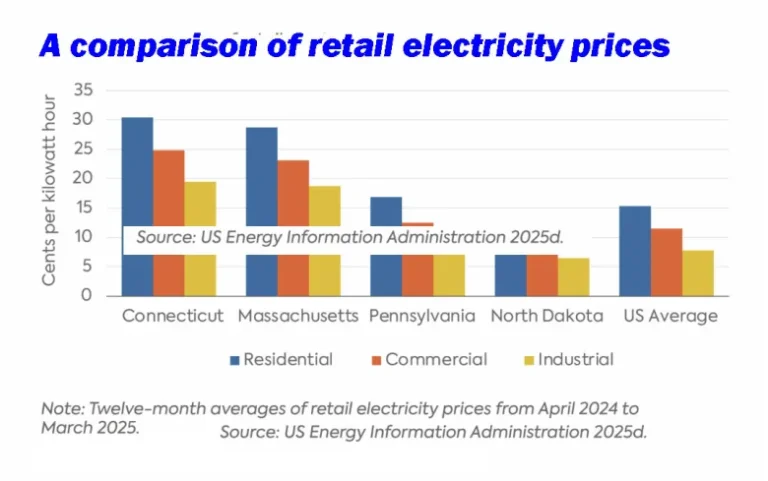
Connecticut needs an honest debate, and fresh thinking, to shape a climate strategy fit for today, not 2022.