The World’s Mineral Powers Seize Their Moment
Resource-rich countries haven’t always benefited from extraction. Can this time be different?
This website uses cookies as well as similar tools and technologies to understand visitors’ experiences. By continuing to use this website, you consent to Columbia University’s usage of cookies and similar technologies, in accordance with the Columbia University Website Cookie Notice.
Our work is committed to independent and nonpartisan research that meets the high standards of academic integrity and quality at Columbia University.
Our initiatives and programs are designed to address critical needs in key focus areas around energy and climate policy.
Explore our expert insights and analysis in leading energy and climate news stories.
Resource-rich countries haven’t always benefited from extraction. Can this time be different?
Get the latest as our experts share their insights on global energy policy.
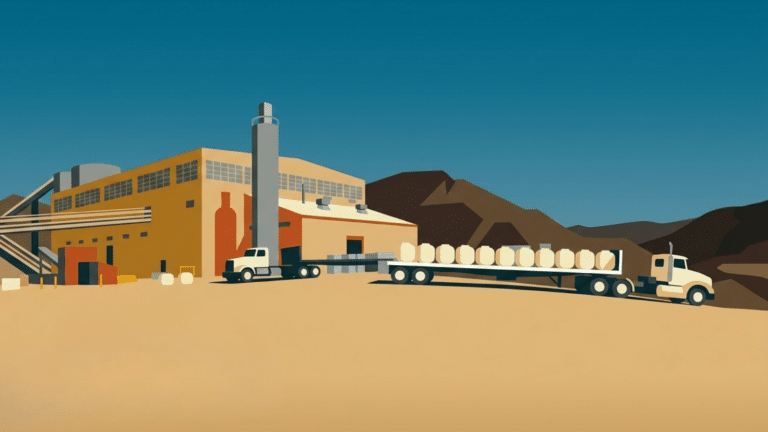
The US Export-Import Bank is preparing to close the first funding tranche of Project Vault, a public-private partnership establishing the US Strategic Critical Minerals Reserve.
Hear in-depth conversations with the world’s top energy and climate leaders from government, business, academia, and civil society.
For years, the energy transition was discussed as a shift that would happen in steady, predictable increments. But a massive surge in electricity demand in recent years—now colliding...

Find out more about our upcoming and past events.
We are the premier hub and policy institution for global energy thought leadership. Energy impacts every element of our lives, and our trusted fact-based research informs the decisions that affect all of us.
Vice President in Energy, TD Securities

Dr. Amir Azar is Vice President in Energy at TD Securities. Prior to TD Securities, Dr. Azar served as a Relationship Manager and Assistant Vice President at Sumitomo Mitsui Banking Corporation, leading the development of corporate advisory pitches for Fortune 500 clients. Dr. Azar holds a Ph.D. in engineering from the City University of New York and a Master of International Affairs from Columbia University. Prior to energy, Dr. Azar’s research was focused on application of satellite images in water resources with published papers and proceedings in IEEE International Geoscience and Remote Sensing Symposium (IGARSS) and Journal of American Water Resource Association (JAWRA).
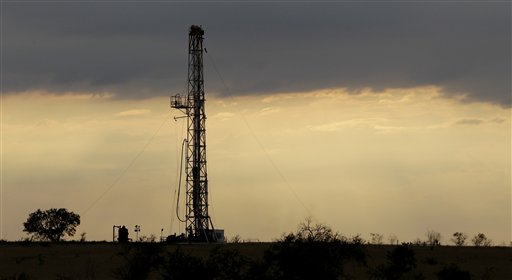
US oil production rose 74 percent, from 5.4 million barrels per day in 2009 to 9.4 million barrels per day in 2015,[1] with shale oil driving more than 92 percent of the growth.[2] The rapid expansion of shale oil and gas production in the United States from 2009 to 2014 has been associated with a period of historically low interest rates and sustained high oil prices.
Get the latest news and research on energy & climate policy.
"(required)" indicates required fields